
Book Review: "Pulphead" by John Jeremiah Sullivan
5/5 - get ready for a deep-dive into every essay in this book...I am obsessed

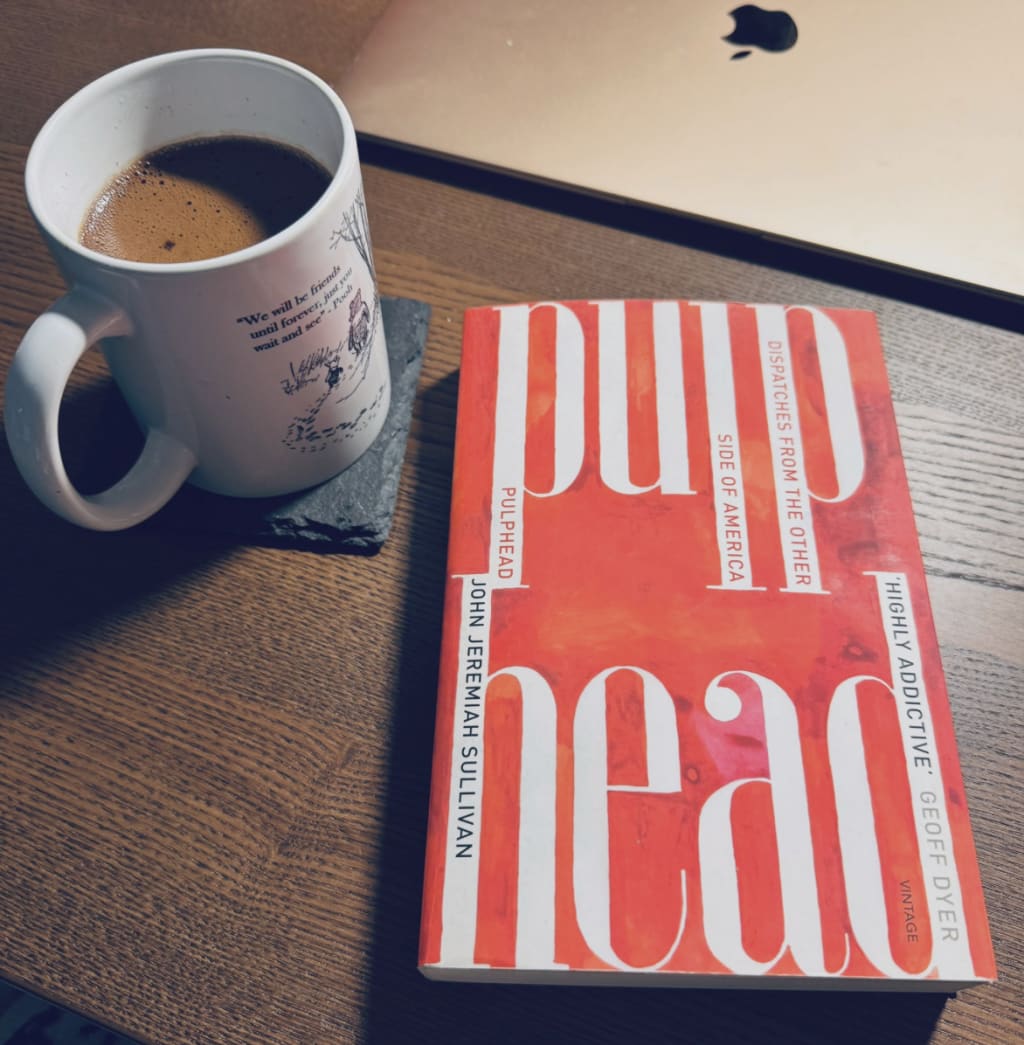
Note: This review is over 3'000 words long and there will be no TL;DR. I am not apologising. You really need this book in your life.
This one is going to be a long one so crack your knuckles, grab a cup of coffee, sit back and read whilst begging me to shut up. I've got a lot to say about this one so let's start at the beginning where we normally start: how did I come across this book? Well, it's a simple answer. I saw someone else reading it around town. They weren't indulging in the book but rather carrying it under their arm. It looked fairly interesting, I tilted my head to see the title and then, like a coverspy, sought out the book. It was the single greatest decision for reading I have made in a long time. This is one of those books that leaves you thinking: why did I not discover this before?
Let's go chronologically through this fantastic anthology, not covering everything but covering perhaps the things that gave me food for thought, phrases and sections that interested me and why they did so. I'm kidding: let's go through it all.
Here we go...
Upon This Rock
The opening essay Upon This Rock chronicles his immersive experience at the Creation Festival, an annual Christian rock event in Pennsylvania. Sullivan, not a devout Christian himself, approaches the assignment with a mix of skepticism, curiosity, and open-mindedness. The essay vividly captures the atmosphere of the festival, describing the massive gatherings, energetic music, fervent worship, and the palpable sense of community among attendees. Sullivan delves into the lives and motivations of the festival-goers, many of whom are young Christians seeking connection, spiritual fulfillment, or simply a sense of belonging. He highlights the contradictions within Christian rock culture, noting the tension between faith and the commercialised music industry. Through humorous and strange anecdotes, Sullivan paints a picture of the festival’s participants, from earnest believers to those grappling with doubts.
Feet in Smoke
The next essay, (and possibly my favourite) is entitled Feet in Smoke recounts his brother Worth’s near-death experience following a severe electrocution. The essay begins with the harrowing details of the accident, during which Worth’s heart stops multiple times. Sullivan vividly describes the chaos and trauma of the event, blending grim reality with flashes of dark humour.
As Worth begins his slow recovery, Sullivan reflects on the physical and psychological scars left by the ordeal. Worth’s survival, deemed miraculous by doctors, is juxtaposed with the profound vulnerability of the human body. Sullivan captures the surreal aspects of his brother’s recovery, including the fragmented and dreamlike memories Worth recalls from his time near death. These recollections, bizarre and poignant, reveal Worth’s perception of having inhabited a strange liminal space between life and death.
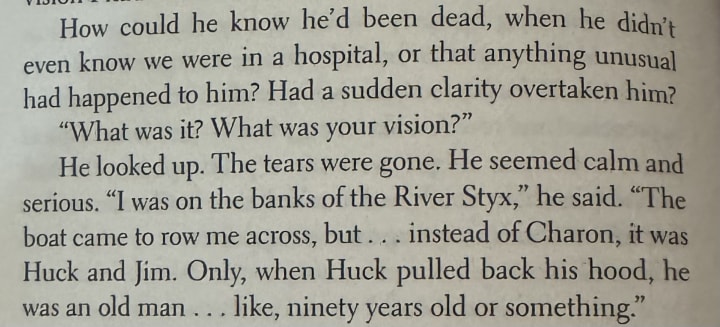
There's a fantastic scene in this essay where the narrator states his half-brother described a vision to him in which he was by the River Styx waiting for the hooded Charon to appear when floating down the river came a boat with this same image. When the figure removed its hood however, it was not Charon but instead, an aged Huckleberry Finn, sitting opposite the character Jim. They row right beside him, leaving him behind. The narrator ruminates on the rowing, stating he was glad Huck and Jim left his brother behind because, as of the book being published, he continued to live unconditionally.
Mr Lytle: An Essay
This essay chronicles Sullivan’s youth as an aspiring writer and his experience as a caretaker for the elderly Lytle at his crumbling Tennessee estate. Through vivid prose, Sullivan captures the eccentricities, wisdom, and decline of the literary icon, presenting him as both a mentor and a symbol of a fading era. It intertwines the mundane and profound aspects of their relationship. Sullivan recounts moments of literary instruction and philosophical musings, alongside humorous and tender observations of Lytle’s daily routines. Lytle, though frail and cantankerous, remains deeply engaged with storytelling and the legacy of Southern literature, embodying a vanishing cultural identity rooted in agrarianism, tradition, and storytelling.
Sullivan’s reflections extend beyond his time with Lytle, exploring themes of memory, mortality, and the passage of cultural and personal legacies. He examines his youthful idealism and the complexities of hero worship, as his admiration for Lytle evolves into a nuanced understanding of the man’s flaws and humanity. Be that as it may, his reflections also extend beyond his time with Lytle, exploring themes of memory, mortality, and the passage of cultural and personal legacies. He examines his youthful idealism and the complexities of hero worship, as his admiration for Lytle evolves into a nuanced understanding of the man’s flaws and humanity.
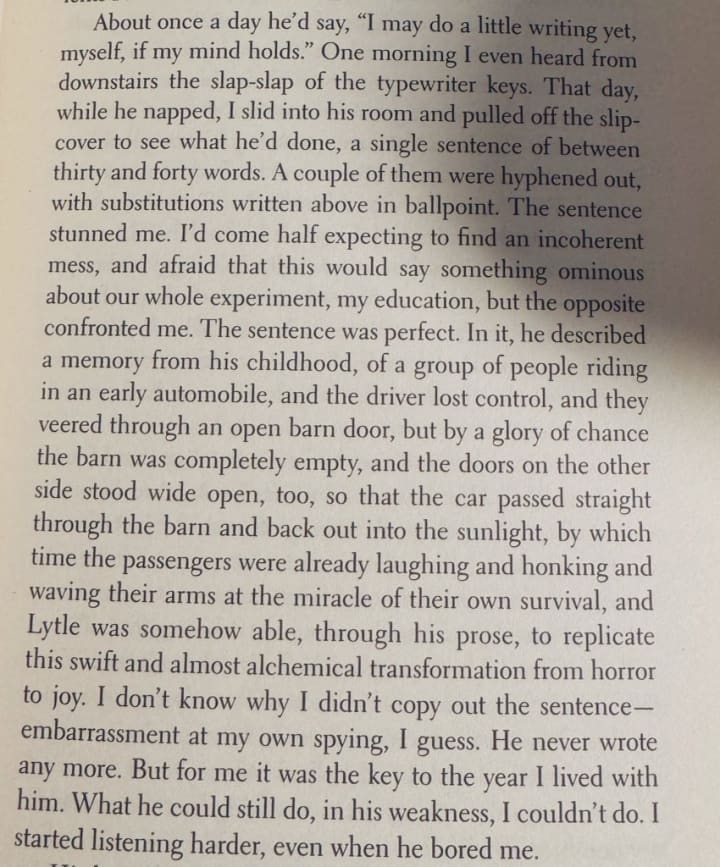
There are several scenes in this essay I enjoyed thoroughly and instead of subjecting you to reading how I'm going to describe them, I've left a photograph of the best one below. It is where our narrator describes Lytle writing a sentence. Just one. The sentence is about something bizarre but it's a perfect sentence nonetheless.
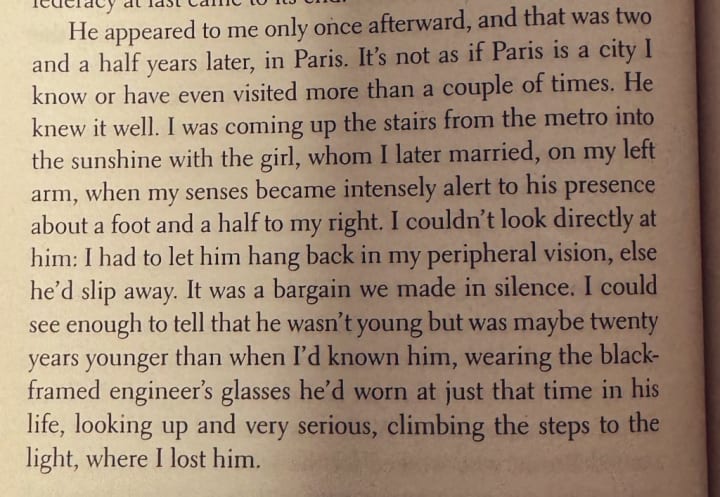
There's another one where he sees the old man's ghost whilst in Paris and I just think this sort of writing needs to be shared. I probably read this paragraph five or six times - and each time it simply didn't lose its pull. There's something hauntingly beautiful yet darkly comical about it. Take a look at this:
At a Shelter (After Katrina)
This is a reflective and intimate essay detailing his time volunteering at a shelter in the aftermath of Hurricane Katrina. The essay captures the chaos, humanity, and profound emotional weight of providing aid to those who lost everything in the disaster. Through his vivid prose, Sullivan paints a raw and empathetic picture of the shelter’s residents, many of whom are grappling with trauma, uncertainty, and the erosion of their former lives. Sullivan describes the shelter as a liminal space, where displaced individuals from all walks of life coexist, united by shared loss. He introduces readers to some of the shelter’s residents, offering glimpses into their personal stories and resilience. Through these encounters, Sullivan explores the complexity of human responses to catastrophe—ranging from despair and anger to humour and hope.
The end of this essay has a great scene about being stuck in a traffic jam without much fuel left and a reflection on the end of the world as he tried his best to remain a kind and composed human being. I won't post much more about it, but it truly is brilliantly written.
Getting Down to What is Really Real
This is an exploration of the world of Christian reality television and its intersection with faith, culture, and performance. The essay focuses on Travel the Road, a reality show following two young Christian missionaries as they journey to remote and often dangerous parts of the world to spread the gospel. Through incisive and often humorous observations, Sullivan examines the tensions between genuine faith and the constructed nature of reality television. He dissects the show’s portrayal of missionary work, noting the blend of authentic spiritual conviction and the performative elements demanded by the medium. The essay captures the surreal juxtaposition of deeply religious moments with dramatic editing, soundtracks, and the inherent artifice of reality TV. Sullivan raises questions about the ethics of turning such personal and potentially exploitative endeavours into entertainment, while also acknowledging the sincerity of the missionaries’ beliefs.
At the heart of the essay is a broader critique of how modern media commodifies and reshapes religious experiences. Sullivan reflects on the ways in which faith can be both magnified and distorted by its translation into popular culture. His writing balances scepticism with empathy, providing a nuanced perspective on the complexities of living and sharing faith in a media-driven world.
Michael
This essay is a deeply personal and reflective piece about his connection to Michael Jackson’s music, legacy, and the cultural phenomenon surrounding the pop icon. Written shortly after Jackson’s death, the essay explores the complexities of Jackson’s life, from his unparalleled talent and fame to the controversies and personal struggles that defined his later years. Sullivan examines Jackson’s cultural significance, offering insights into how he became both a symbol of artistic genius and a figure of global scrutiny. The essay weaves Sullivan’s own memories of encountering Jackson’s music with a broader exploration of the star’s influence on the world. He vividly describes the magnetic pull of Jackson’s performances and the ways in which his artistry transcended boundaries of race, age, and geography. At the same time, Sullivan confronts the darker aspects of Jackson’s life, including the allegations of child abuse, his profound isolation, and the toll of living under the unrelenting gaze of fame.
Sullivan’s writing captures the paradoxes of Jackson’s identity—a man who was simultaneously adored and vilified, a groundbreaking artist whose personal life became a spectacle. The essay meditates on the cultural and emotional impact of losing an icon, as well as the complicated legacy Jackson left behind.
I believe that for any Michael Jackson fan like myself, this essay serves as important reading to give us a view of Michael Jackson from the media that we haven't had before - a balanced one. One that we can understand and reason with, one that requires our critical thinking and ultimately, one that can let us appreciate a man who was quite possibly larger than life itself.
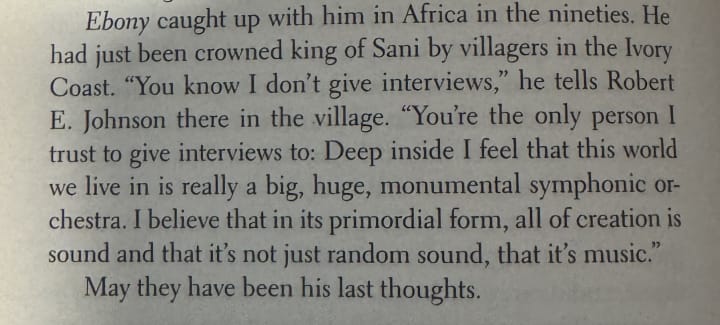
The Final Comeback of Axl Rose
The essay centres on a chaotic Guns N’ Roses performance in New York City, where Sullivan witnesses the fervour of fans eager for Rose’s return. He captures the electrifying energy of the concert and the sheer power of Rose’s presence, even as the singer navigates the pressures of reclaiming his former glory. Sullivan examines Rose’s struggle with fame, his infamous temper, and his reclusive years, juxtaposing these with his undeniable artistry and the enduring impact of Guns N’ Roses on rock music.
Sullivan’s narrative is both critical and empathetic, exploring the tension between Rose’s image as a rock icon and the human vulnerabilities that lie beneath. He reflects on the cultural significance of comebacks, the fleeting nature of stardom, and the relentless demands placed on artists by their fans and the music industry. Even though I am not really much of a Guns 'N' Roses fan, I did appreciate this essay and its ruminations.
American Grotesque
This essay examines the unsettling yet captivating history of a series of macabre photographs taken during the infamous 1928 Snyder-Gray murder case. The case involved Ruth Snyder and her lover, Judd Gray, who conspired to kill Ruth’s husband, Albert Snyder, in what became one of the most sensationalised trials of the 20th century. Sullivan’s essay delves into the cultural and ethical implications of the photographs, particularly the iconic image of Snyder in the electric chair, captured at the moment of her execution. He explores the lurid fascination these images evoke and their enduring place in the American consciousness. He reflects on how the media frenzy surrounding the case transformed the participants into grotesque caricatures of themselves, exploiting their tragedy for public consumption. The essay also grapples with the role of photography in shaping perceptions of crime and justice, questioning the voyeuristic impulse to document and disseminate moments of human suffering.
Through his analysis, Sullivan highlights the tension between the stark realism of the photographs and the sensationalism of the narrative surrounding the case. He considers the broader cultural context of 1920s America, a time of rapid modernisation and shifting moral boundaries, which amplified the public’s appetite for such shocking spectacles.
Lahwineski: Career of an Eccentric Naturalist
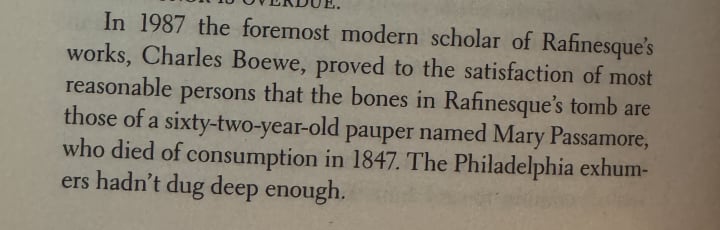
is a richly detailed exploration of the life and work of Constantine Rafinesque, a 19th-century polymath and naturalist whose brilliance was matched by his eccentricity. Sullivan brings Rafinesque’s obscure story to life, examining his unconventional methods, groundbreaking discoveries, and the struggles he faced in gaining recognition during his lifetime.
The essay traces Rafinesque’s journey from Europe to the United States, where he embarked on a career marked by an insatiable curiosity about the natural world. Sullivan highlights his pioneering contributions to botany, zoology, and linguistics, as well as his unorthodox approach to science, which often alienated him from the academic establishment. Rafinesque’s work, though sometimes dismissed in his era, proved to be ahead of its time, influencing fields as diverse as evolutionary biology and Native American studies.
Sullivan also delves into the personal dimensions of Rafinesque’s life, portraying him as a solitary figure driven by both genius and obsession. Through vivid anecdotes and incisive analysis, the essay captures the quirks and contradictions of a man who was as much a product of the Enlightenment as he was a precursor to modern scientific thought.
I was actually reading this essay at the beginning of a conference I had to go to for work and it was intriguing me so much, I didn't even notice my coworkers had walked in and sat down beside me. It was a fantastic essay.
Unnamed Caves
This is a meditative exploration of ancient cave art and humanity’s primal connection to creativity and expression. Sullivan recounts his journey to a remote cave in Tennessee, where he encounters centuries-old petroglyphs, carved and painted by early Native Americans. Through vivid descriptions and personal reflection, he examines the significance of these ancient artworks and what they reveal about the people who created them.
The essay delves into the mystery and beauty of the cave art, portraying it as both a tangible link to the past and an enigmatic expression of the human spirit. Sullivan ponders the motivations behind the images—whether they served religious, practical, or purely aesthetic purposes—and considers their enduring power to evoke awe. His narrative conveys the profound sense of wonder that arises from standing in the presence of something so ancient and yet so recognisably human.
Sullivan also reflects on the fragility of these artefacts, highlighting the tensions between preserving cultural heritage and the natural processes that threaten its survival. He situates the cave art within a broader context of human creativity, drawing connections between the timeless impulse to create and the stories we tell about ourselves. As someone who loves stories, I also think that this is one of the most important essays in the whole book.
Unknown Bards
This essay is an evocative exploration of the origins and cultural significance of African American spirituals, tracing their evolution as a foundational element of American music and identity. Through a combination of historical analysis and personal reflection, Sullivan examines the deep emotional and spiritual resonance of these songs, created by enslaved people as expressions of faith, resistance, and hope.
Sullivan delves into the mysterious origins of spirituals, highlighting their improvisational nature and communal creation. He reflects on how these songs carried profound meaning for the people who sang them, serving as both a means of survival and a form of coded communication. Sullivan connects the spirituals to broader themes of African American resilience and creativity, underscoring their role in shaping the trajectory of American music, from gospel to blues and beyond.
The essay also explores Sullivan’s personal engagement with this musical tradition, including his encounters with recordings and performances that left a lasting impact. His writing conveys a deep reverence for the artistry and humanity of the unknown individuals who created these songs, often in the face of unimaginable hardship.
The Last Wailer
This is an immersive exploration of reggae music, its cultural roots, and the enduring legacy of Bob Marley and the Wailers. Centred on an interview with Bunny Wailer, the last surviving member of the original group, the essay delves into his life, artistry, and the profound influence of reggae on global music and culture. Sullivan travels to Jamaica, immersing himself in the rich musical and spiritual landscape that shaped Bunny and the Wailers. Through vivid descriptions and detailed observations, he captures the complexities of Bunny’s character—a man both enigmatic and deeply committed to his Rastafarian faith and ideals. Bunny emerges as a figure of resilience, guarding the integrity of reggae while reflecting on the loss of Marley and Peter Tosh, his bandmates and brothers in music.
The essay contextualises reggae as a product of Jamaica’s social and political struggles, exploring its role as a voice for the oppressed and a vessel for spiritual expression. Sullivan also examines the global commodification of reggae, contrasting the purity of its roots with the pressures of international fame.
The Violence of the Lambs
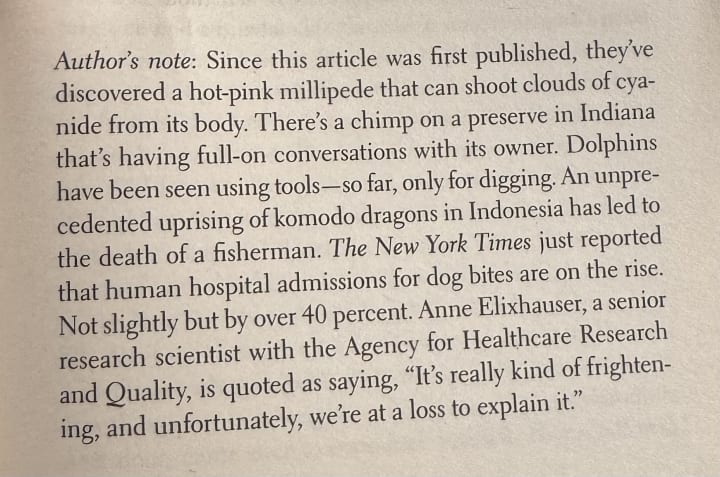
This essay is a playful yet thought-provoking exploration of humanity’s relationship with animals, framed around the bizarre question of whether animals might one day rise up against humans. Combining wit, satire, and genuine curiosity, Sullivan blurs the line between serious inquiry and absurd speculation, crafting a narrative that examines our understanding of animal behaviour and the ethical dimensions of human-animal interactions. It begins with Sullivan recounting a peculiar claim made by a scientist about animals increasingly attacking humans. From this premise, he embarks on a wide-ranging investigation, blending anecdotes, interviews, and historical accounts. He examines cases of unexpected aggression by animals, such as dolphins or birds, and considers their possible implications. Along the way, Sullivan delves into evolutionary biology, environmental changes, and humanity’s exploitation of the natural world, all while maintaining a tone of sceptical humour.
Beneath the essay’s playful surface lies a deeper reflection on the fragility of humanity’s dominance over nature. Sullivan subtly critiques human arrogance and our tendency to dismiss animals as mere resources or entertainment. By imagining a scenario where animals rebel, he invites readers to reconsider the boundaries between humans and other species.
I quite liked the little author's note at the end of the essay, kind of like a warning about what might be to come in a quirky and kind of funny way.
Peyton's Place
This is a deeply personal and nostalgic exploration of American football’s cultural significance, as seen through the lens of his hometown’s fervent devotion to the sport and the rise of NFL quarterback Peyton Manning. The essay weaves Sullivan’s reflections on the game with a broader examination of its mythic status in American life, blending intimate memories with incisive cultural analysis. Sullivan traces the trajectory of Manning’s career, from his high school days in New Orleans to his legendary performances in the NFL, situating him as both a local hero and a symbol of football’s transformative power. He highlights Manning’s discipline, charisma, and unparalleled skill, which elevated him into the pantheon of great athletes. Alongside this, Sullivan reflects on his own experiences with football as a boy growing up in the South, grappling with the sport’s violence, beauty, and the communal identity it fosters.
The essay also delves into football’s darker elements, including its physical toll on players and the sometimes toxic fanaticism it engenders. Sullivan navigates these contradictions with nuance, capturing both his admiration for the sport and his unease about its impact.
Epilogue: Hey Mickey!
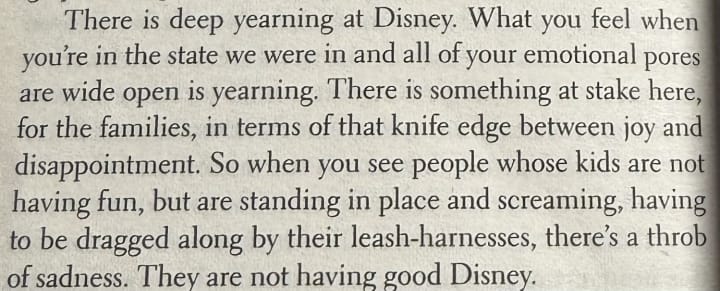
This is a reflective and bittersweet meditation on the intersection of celebrity, nostalgia, and personal memory, framed around the figure of Mickey Mouse. Sullivan uses Disney’s iconic character as a lens through which to examine the cultural and emotional resonance of shared childhood experiences, as well as the complexities of modern corporate storytelling. The essay begins with Sullivan’s recollection of his own youthful fascination with Mickey Mouse, tracing the character’s evolution from a mischievous cartoon figure to a global symbol of innocence and corporate power. Sullivan contrasts the simplicity of early Mickey cartoons with the character’s current status as a carefully managed brand, exploring how Disney has shaped collective childhood memories while simultaneously commodifying them.
Sullivan also reflects on his visit to Disneyland, where he observes how the park functions as both a celebration of creativity and a meticulously controlled environment. He considers the broader implications of this tension, questioning what it means to find genuine emotional connection in something so commercially driven.
Conclusion
This is an incredible anthology and I am so sorry that I have kept you for this long. But, I'm sure from all of this you have agreed to have a read of this fantastic collection.
About the Creator
Annie Kapur
I am:
🙋🏽♀️ Annie
📚 Avid Reader
📝 Reviewer and Commentator
🎓 Post-Grad Millennial (M.A)
***
I have:
📖 280K+ reads on Vocal
🫶🏼 Love for reading & research
🦋/X @AnnieWithBooks
***
🏡 UK
Keep reading
More stories from Annie Kapur and writers in Geeks and other communities.
5 Ways to Read More
I really do think I've answered this question before but it is cropping up a lot yet again. The question comes from primarily online spaces but it is simply this: how do you read so much? And my friends, neither is this difficult nor is it impossible - it is simply a different type of lifestyle. People in real life often give me odd looks or think I'm a bit weird because of how much I love reading, but this is you easy guide to making more space for it in your life. So get ready to put down your social media application, make yourself a cup of tea and curl up with a good book.
By Annie Kapur12 months ago in Geeks
Silver Screen Magic with Mae West
American actress and singer Mae West became a popular film actress during the Great Depression. She started entertaining in vaudeville, then performed on Broadway, and finally went to Hollywood. She signed up with Paramount Pictures and made her debut in the 1932 film “Night After Night.” She also starred in musicals, comedies, and crime dramas. The American Film Institute named her one of the best classic Hollywood actresses.
By Rasma Raisters4 days ago in Geeks
“Deport Nicki Minaj Back to Trinidad” Movement Continues Amid Growing Outcry
The petition crossed 50,000 signatures in early January, and that number had risen to more than 58,000 at publication. Nearly 60,000 people have signed an online petition demanding that the U.S. government deport popular rapper Nicki Minaj to Trinidad because of what many fans say are her shifting political beliefs.
By Dena Falken Esq4 days ago in Geeks
Wild Card Weekend Recap: What Happens Now?
I think I figured out why I love Wild Card Weekend so much. It's because it's the first playoff anything of the calendar year. The NFL season starts in the fall, and once upon a time, the champion was crowned either on or slightly before New Year's. The evolution of the NFL schedule has resulted in the playoffs starting just into the New Year, and currently, the final week of the season falls on the first weekend of the New Year, with Wild Card Weekend coming a week after that. So yes, chronologically, the NFL's Wild Card Weekend serves as the first playoff anything of the calendar year.
By Clyde E. Dawkins5 days ago in Unbalanced



Comments
There are no comments for this story
Be the first to respond and start the conversation.