
Book Review: "Native Realm" by Czeslaw Milosz
4/5 - A masterpiece that recounts one of the most terrifying eras in human history...

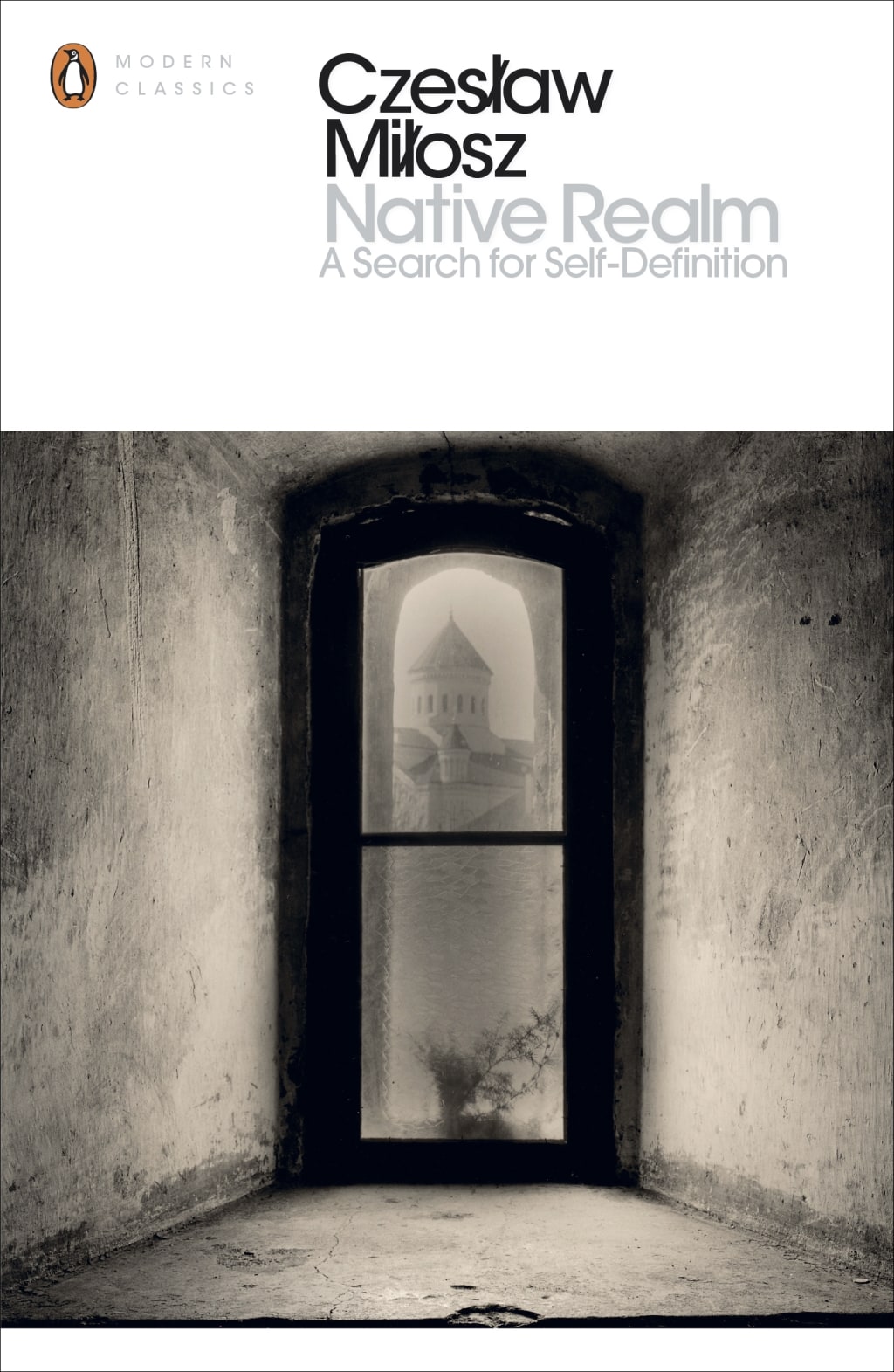
Czeslaw Milosz is a writer I have been interested in for a while and I have read a couple of his works before reading "Native Realm: A Search for Self-Definition". I have previously read the book of selected poetry published by penguin books and I have also read a brilliant book entitled "The Captive Mind". Milosz is always great at portraying the most difficult and confusing emotions to articulate through a series of vivid an psychological descriptions of the human mind put straight into anxieties. As we know, Milosz lived in a turbulent time and was obviously in Poland during this time and honestly, I cannot see anything more horrifying than having to see one of the worst atrocities in human history being committed in your very own country.
"Native Realm" not only covers his feelings about this but also covers the emotions of the artist, the requirement for art and the needs to remain sane through these incredibly pushing times - especially in that quotation about the librarians who stayed behind, it made me shiver.
The way in which Czeslaw Milosz writes is alway with this urgent vibrance which shows us that there is a glimmer of hope in these trying eras in which the creative requires patience and patience requires silence. Silence is a virtue and people cannot get it. The philosophical argument is the book itself. Milosz writes whilst this is all happening around him, he requires to survive like everyone else and so his art is a direct representation of this survival. The creative lives through his own works. The question is, what does everyone else live through?
Let us now take a look some quotations that I thought were really thought provoking throughout this book. By the end of it, I have to say, it completely blew me away. It is mind-boggling to the core:
“No, I will never imitate those who erase their tracks, repudiate their past and are dead, even if with intellectual acrobatics they pretend to be alive. My roots are down there, in the East, there is no doubt about that. Even if I find it difficult and unpleasant to explain who I am, you have to try to do it. "
Now you know what I mean by Czeslaw Milosz's writing being very urgent, vibrant and philosophical. He's got this existential glare in some of these quotations, especially this one above, and I absolutely adore that. You can kind of almost imagine it being some sort of battle cry on the field were philosophers fight each other with rubber knives.
And now, a quotation about the reality of the war when Germany invaded Poland, took over and made everything their own and part of their administration. Art was part of the state as it was an act of revolution:
"Like all libraries, it was closed to the public and under the German central administration, but retained the old staff, who, despite having starvation wages, remained in place for corporate patriotism - librarians on the other hand are a race special, able to feed only on the love for one's books. "
Germany's invasion of Poland changed Poland forever but at the time and place, Czeslaw Milosz discusses the way in which they were living with fear and paranoia practically every single day of their lives. There was no real knowing what was going to happen next and there was never a single doubt that one step out of line would probably get you killed.
Here is a quotation that shows us just what he is talking about.
“Today I sometimes think that the Elephant's neighbour could have been the future Gestapo officer who would torture him during interrogations. The Elephant was not meant to be in prison because he was a member of some clandestine organisation, he was not meant to endure sprained joints and slaps nor, with broken legs after an escape attempt in suicide, to understand with relief, in a remnant of awareness, that his poor body was dying. But the jovial elephant was born to live in harmony and peace, between good-natured jokes and chats with friends over a glass of wine. He was liberal, skeptical, and unwilling to tempt heroism. In my opinion, his death and that of his fellows weigh on the Wandervögelour peers far more than the death of many young fanatics. "
All in all, it is a brilliant book with a philosophical, strange and often paranoid look into the invasion years, bringing Poland to a stand-still and watching the Germans throw a blanket of dictatorship over state and population.
About the Creator
Annie Kapur
I am:
🙋🏽♀️ Annie
📚 Avid Reader
📝 Reviewer and Commentator
🎓 Post-Grad Millennial (M.A)
***
I have:
📖 300K+ reads on Vocal
🫶🏼 Love for reading & research
🦋/X @AnnieWithBooks
***
🏡 UK
Keep reading
More stories from Annie Kapur and writers in Geeks and other communities.
A Filmmaker's Guide to: Paradoxes
In this chapter of ‘the filmmaker’s guide’ we’re actually going to be learning about literature and film together. I understand that many of you are sitting in university during difficult times and finding it increasingly hard to study and I understand that many of you who are not at university or not planning on it are possibly stuck of what to do, need a break or even need to catch up on learning film before you get to the next level. This guide will be brief but will also contain: new vocabulary, concepts and theories, films to watch and we will be exploring something taboo until now in the ‘filmmaker’s guide’ - academia (abyss opens). Each article will explore a different concept of film, philosophy, literature or bibliography/filmography etc. in order to give you something new to learn each time we see each other. You can use some of the words amongst family and friends to sound clever or you can get back to me (email in bio) and tell me how you’re doing. So, strap in and prepare for the filmmaker’s guide to film studies because it is going to be one wild ride.
By Annie Kapur5 years ago in Geeks



Comments
There are no comments for this story
Be the first to respond and start the conversation.