
A Filmmaker's Guide to: Paradoxes
Film Studies (Pt.54)

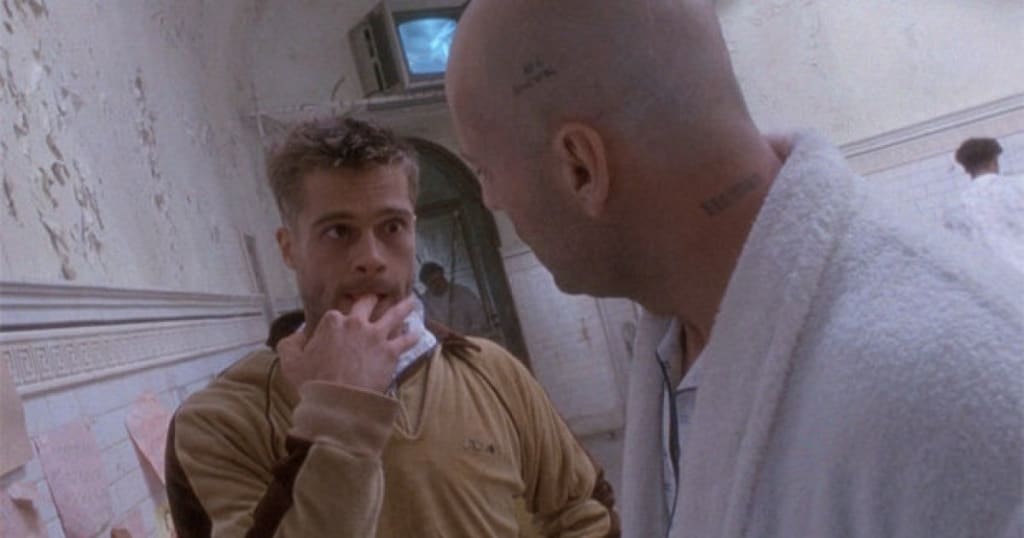
In this chapter of ‘the filmmaker’s guide’ we’re actually going to be learning about literature and film together. I understand that many of you are sitting in university during difficult times and finding it increasingly hard to study and I understand that many of you who are not at university or not planning on it are possibly stuck of what to do, need a break or even need to catch up on learning film before you get to the next level. This guide will be brief but will also contain: new vocabulary, concepts and theories, films to watch and we will be exploring something taboo until now in the ‘filmmaker’s guide’ - academia (abyss opens). Each article will explore a different concept of film, philosophy, literature or bibliography/filmography etc. in order to give you something new to learn each time we see each other. You can use some of the words amongst family and friends to sound clever or you can get back to me (email in bio) and tell me how you’re doing. So, strap in and prepare for the filmmaker’s guide to film studies because it is going to be one wild ride.
Paradoxes
What are they?
The dictionary defines a paradox as:
"...a seemingly absurd or contradictory statement or proposition which when investigated may prove to be well founded or true."
Examples of paradoxes are:
"Nobody goes there anymore, it is too crowded."
Well, if nobody went there anymore, it would not be crowded. But the fact that it is crowded means that some people must be going there. This is context-dependent. The 'nobody' is being used as a generalised population that the speaker of this sentence knows rather than a representation of the entire population of people who go 'there'. In fact, both of the statements in this sentence are therefore, completely true.
And then there's the classic example...
"A time traveler goes back in time and murders his own great-grandfather."
If the time-traveler murders his own great-grandfather then he ceases to exist. But if he ceases to exist, can he murder his own great-grandfather? In this statement, there is no logical conclusion available. It is purely there to be thought about because we have no way of proving or disproving it. We do not have time-travellers unfortunately.
Paradoxes in Literature
In literature, I would say the best place to look for literary paradoxes would be in Shakespeare. Especially in the play "Hamlet" where one of the paradoxes states that:
I must be cruel only to be kind
- Hamlet III.IV
Think about it. To be cruel can mean to be honest, or worse, brutally honest. In fact, the brutal honesty of Hamlet is well documented in the scene where he confronts his mother and kills Polonius. But he must do this in order to be 'kind' or save his mother from a grave mistake she has, in all respects, already made.
Logical Paradoxes
Zeno's Paradox of Point A to Point B - as I like to call it - is possibly the most well-known example of a paradox ever. It goes somewhat like this - I will state it in easier terms so we all understand and are all on the same page.
You are standing ten feet away from a wall.
You travel half the distance to the wall.
Then you continue travelling half the distance to the wall, which now drops to two and a half feet of distance.
If you continue at this rate of halves, you never reach the wall.
Reaching the wall is impossible.
Think about that whilst you continue reading. Is it literal? Is it a metaphor? What do you think about it?
What about in film?
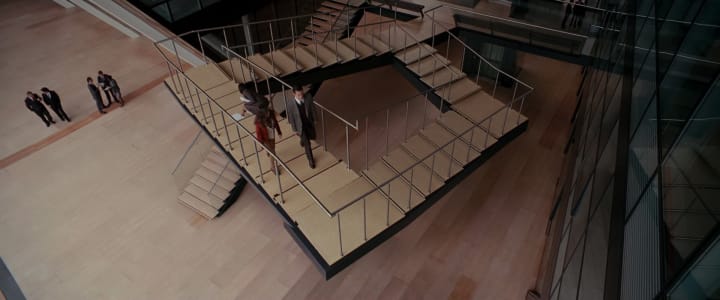
Film presents paradoxes in different ways. First of all, they can play a part in the plot. They can change the plot or have an impact on the decision-making of the characters. Then, we have the items and symbols littered around the film in order to make us think about the storyline in more depth and understand the characters and plot more. Thirdly, we have the paradoxes that happen as a result of something in the storyline. There are many examples of paradoxes in film, some of which are intentionally there and some of which are hidden and require many watches to uncover. Here are some examples:
- Predestination
- Source Code
- Inception
- Looper
- Memento
- Cube 2
- 12 Monkeys
- Donnie Darko
- The Seventh Seal
- The Third Man
I'm sure there are many more but these are the ones I could think of at the time. Obviously, not all of them have to do with Science Fiction and Fantasy Films, but many of them like to use the Time Traveler paradox because it is far easier to be recognised by the mainstream audience. I mean, we recognise and relate more to the paradoxes that are in our face than the ones that are enclosed in speech and action like in "The Seventh Seal" which is: does your active avoidance of death actually cause your death? It is the hyper-action and inaction argument in which:
If you know about situation A that will definitely happen in the future,
Does acting upon it not just perpetuate the outcome that A will happen?
Would situation A happen if you did not know about it?
Want to learn more about that paradox? Read Shakespeare's Macbeth.
Anyways, enough thinking for one day, here's some further reading.
Further Reading:
- Shakespeare, W (2008). Hamlet: The Oxford Shakespeare: The Oxford Shakespeare. 2nd ed. UK: Oxford World's Classics
- Shakespeare, W (2008). The Tragedy of Macbeth: The Oxford Shakespeare. 2nd ed. UK: Oxford World's Classics
- Waterfield, R (2009). The First Philosophers The Presocratics and Sophists. UK: Oxford World's Classics
About the Creator
Annie Kapur
I am:
🙋🏽♀️ Annie
📚 Avid Reader
📝 Reviewer and Commentator
🎓 Post-Grad Millennial (M.A)
***
I have:
📖 300K+ reads on Vocal
🫶🏼 Love for reading & research
🦋/X @AnnieWithBooks
***
🏡 UK
Keep reading
More stories from Annie Kapur and writers in Geeks and other communities.
5 Books I Dislike
I don't like every single book on the planet even though sometimes, it might seem that way. I have read books in my time that have made me think that it would be less painful to put my head through a brick wall. I have read books that I have often thought about for ages afterwards and then garnered the result: I hate them. But I would never say that I hated or disliked a whole author. If I don't like a book by them, I always give them the benefit of the doubt and read another book they have written with an open mind. It's more of me hoping that I dislike an entire author's work.
By Annie Kapur5 years ago in Geeks
Chess the Musical Back on Broadway!
Have I ever mentioned how much of a fan of the musical Chess I am? I know the answer is “No,” because if it were “Yes,” this one-off story of my day, taking a nibble out of the Big Apple, would become Chapter 327 of my new novel Bishop’s Gamble: The Chess Variations of the ABBA Musical.
By Meredith Harmona day ago in Geeks
Tatt~Master
— Assembly Line Tatt Machine ~ Impressions to Impress — As I begin to understand more about the Tattoo Phenomenon. I've written silly, yet verbatim, dating site anecdotes in 'Frazzled.' So let me ask you: Would you be More attracted to someone slathered with tattoos, or Less?
By Jay Kantor6 days ago in Humor


Comments
There are no comments for this story
Be the first to respond and start the conversation.