
Book Review: "Mozart's Letters" ed. by Eric Blom
5/5 - a mind-blowing insight into one of the most intelligent people to ever live...

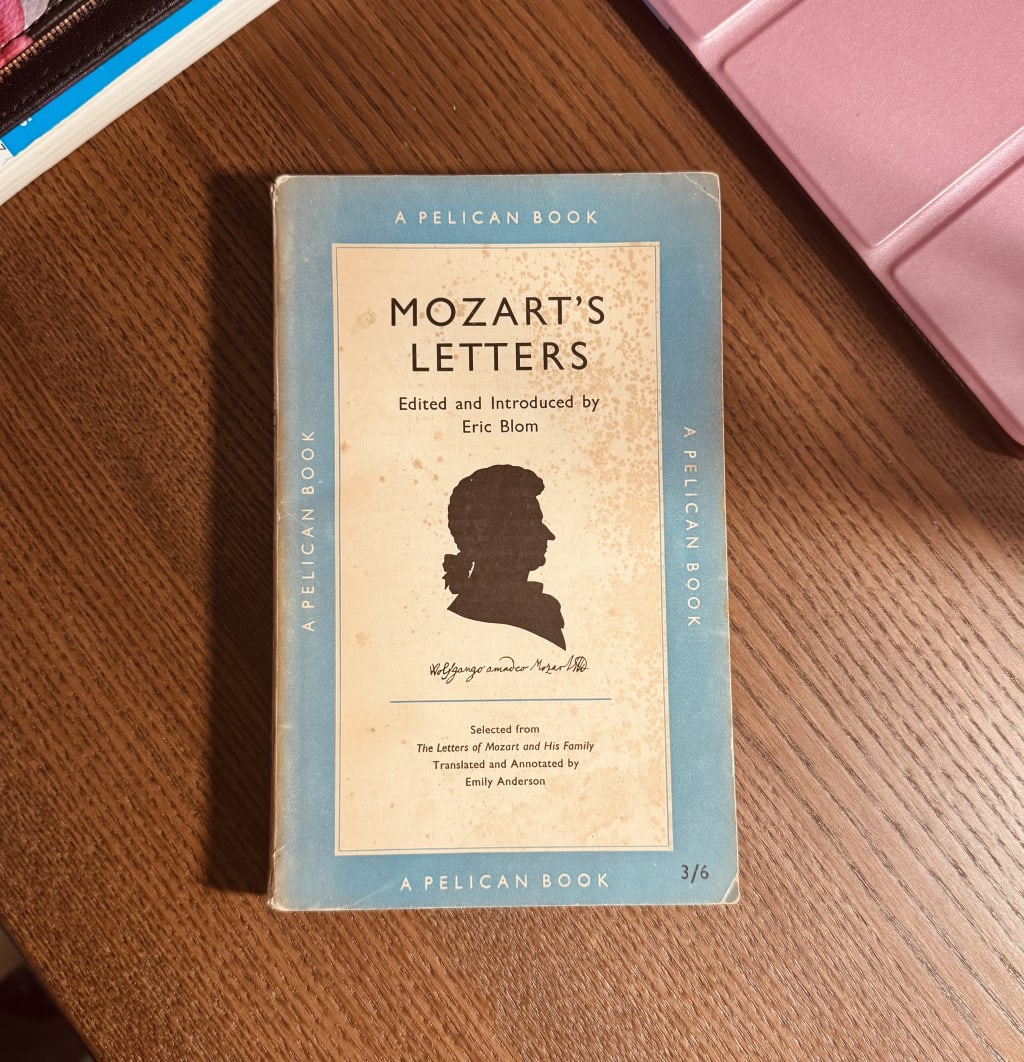
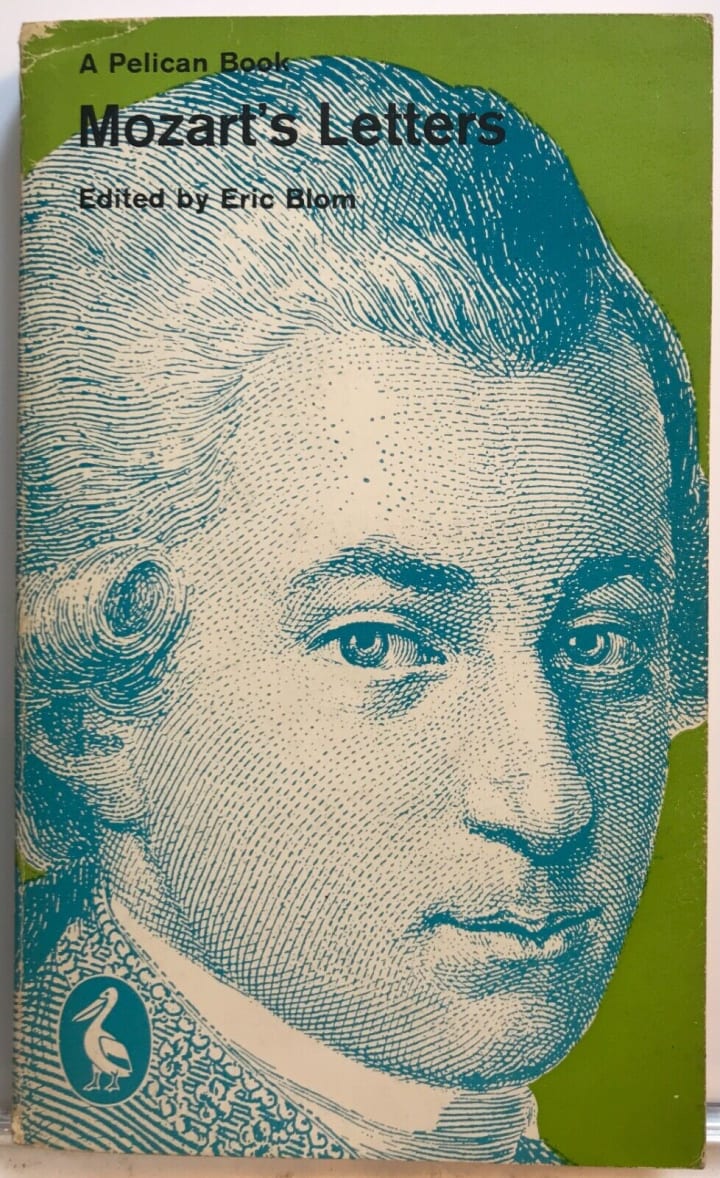
Recently, I found myself scrolling through the list of black Penguin Classics and I think I saw one of those books where there's a painting of Mozart on the front and it read 'Mozart's Letters' underneath. I always wanted to know what Mozart was thinking whilst doing his great works but apart from that I was thinking about where I had seen this book before. It seemed too familiar. Again, I rummaged through the old books I had brought from my mother's house and within I found a Pelican Book published in 1956 entitled 'Mozart's Letters'. So, even though the Penguin Classic book perhaps looked more 'social media' - we know how much I care about social media. I read my copy for free instead.
The collection begins with letters written during Mozart’s early tours across Europe, where he performed as a child prodigy under the management of his father, Leopold. These letters highlight the close bond between Mozart and his family, particularly with his father, who acted as both his mentor and manager. Mozart’s writings from this period are filled with youthful exuberance, as he marvels at the grandeur of European courts and recounts his interactions with royalty and nobility. His letters often convey a mix of wonder and frustration, reflecting the challenges of navigating courtly politics and the exhausting demands of constant travel. When we read Mozart's Letters the one thing we realise is that Mozart, from a very early age, was extremely intelligent. It is compelling to read about such a young person being so aware - perhaps because teenagers of today aren't aware at all. But that's beside the point.
The letters from Mozart’s Vienna years provide fascinating insights into his creative process and the challenges of his profession. They are peppered with references to his compositions, including some of his most famous works, such as The Marriage of Figaro, Don Giovanni, and The Magic Flute. Mozart frequently writes about the practicalities of securing commissions, the difficulties of pleasing his patrons, and his frustrations with the fickle nature of public taste. These letters also showcase his sharp wit and sense of humour, often laced with playful wordplay and jovial anecdotes. This is a reflection of Mozart that is more along the lines of familiarity for everyone who watched Amadeus more than once. This is a playful and often out-there eccentric Mozart who loves to play with words, showing his proficiency for language. I can imagine though, it probably sounded better without the translation.
Mozart’s personal relationships are a recurring theme in his letters, offering a deeply human perspective on the composer. His affectionate and often teasing letters to his wife, Constanze, reveal a loving and tender side, as well as a playful irreverence. Conversely, his letters to his father and sister provide a window into the more strained and dutiful aspects of his family dynamics. The correspondence with his father, in particular, reflects a mixture of reverence, resentment, and a deep longing for approval. Mozart's wife is perhaps one of the most interesting people in all of the history of music. Not only is she a muse and a paradox, but she is also a very intelligent woman in her own right. I think history has painted a lovely portrait of her and it pains us all that we will probably never know more about her than we do right now.
As Mozart’s health begins to decline, his letters take on a more reflective and poignant tone. He writes with a sense of urgency, pouring his energy into his final compositions, including the unfinished Requiem. These late letters reveal a man deeply aware of his own mortality but also profoundly dedicated to his art. Despite the hardships he faced, Mozart’s writings convey an enduring passion for music and a belief in its transformative power. We all know that Mozart died in his 30s, but he achieved an incredible amount in that time and though he wanted to finish the Requiem I think it is safe to say that he achieved more by 30-something than many of us will ever achieve in our entire lives. His letters are this great window into the life of a man who will definitely go down fighting.
All in all, there is something great and insightful into these letters. Yes, we see the man portrayed in the movie Amadeus but we also see the complexities of this human being who was basically born great. An unbelievable person, Mozart is still perhaps one of the most intelligent people who has ever lived and these letters are testament to that.
About the Creator
Annie Kapur
I am:
🙋🏽♀️ Annie
📚 Avid Reader
📝 Reviewer and Commentator
🎓 Post-Grad Millennial (M.A)
***
I have:
📖 280K+ reads on Vocal
🫶🏼 Love for reading & research
🦋/X @AnnieWithBooks
***
🏡 UK
Keep reading
More stories from Annie Kapur and writers in Geeks and other communities.
Love in the Time of Cholera by Gabriel Garcia Marquez
Gabriel García Márquez's Love in the Time of Cholera was first published in Spanish in 1985 under the title El amor en los tiempos del cólera. The novel was eagerly anticipated, as García Márquez had already established himself as a literary giant with works like "One Hundred Years of Solitude." Published by Editorial Oveja Negra in Colombia, the novel quickly gained acclaim for its lush, poetic prose and its profound exploration of love and human connection.
By Annie Kapur12 months ago in Geeks
Silver Screen Magic with Mae West
American actress and singer Mae West became a popular film actress during the Great Depression. She started entertaining in vaudeville, then performed on Broadway, and finally went to Hollywood. She signed up with Paramount Pictures and made her debut in the 1932 film “Night After Night.” She also starred in musicals, comedies, and crime dramas. The American Film Institute named her one of the best classic Hollywood actresses.
By Rasma Raisters5 days ago in Geeks
Fallout Season 2 Episode 2 Review: "The Golden Rule" Explained
Let’s dive headfirst into Fallout Season 2 Episode 2, an hour stuffed with Easter eggs, callbacks, and wild lore reveals. This one is titled “The Golden Rule,” and trust me—it’s not just a cute thematic nod. This episode lives in that moral tug-of-war between Lucy, The Ghoul, and the messy ethics of post-apocalyptic civilization.
By Bella Anderson7 days ago in Geeks




Comments (1)
Hey, I have this one! Got a free copy from a book box! Thanks for this review!