
Book Review: "Making Evil: The Science Behind Humanity's Dark Side" by Julia Shaw
4/5 - an enjoyable read about the idea of 'evil' and how it is influenced by how humans react to things that may not be...

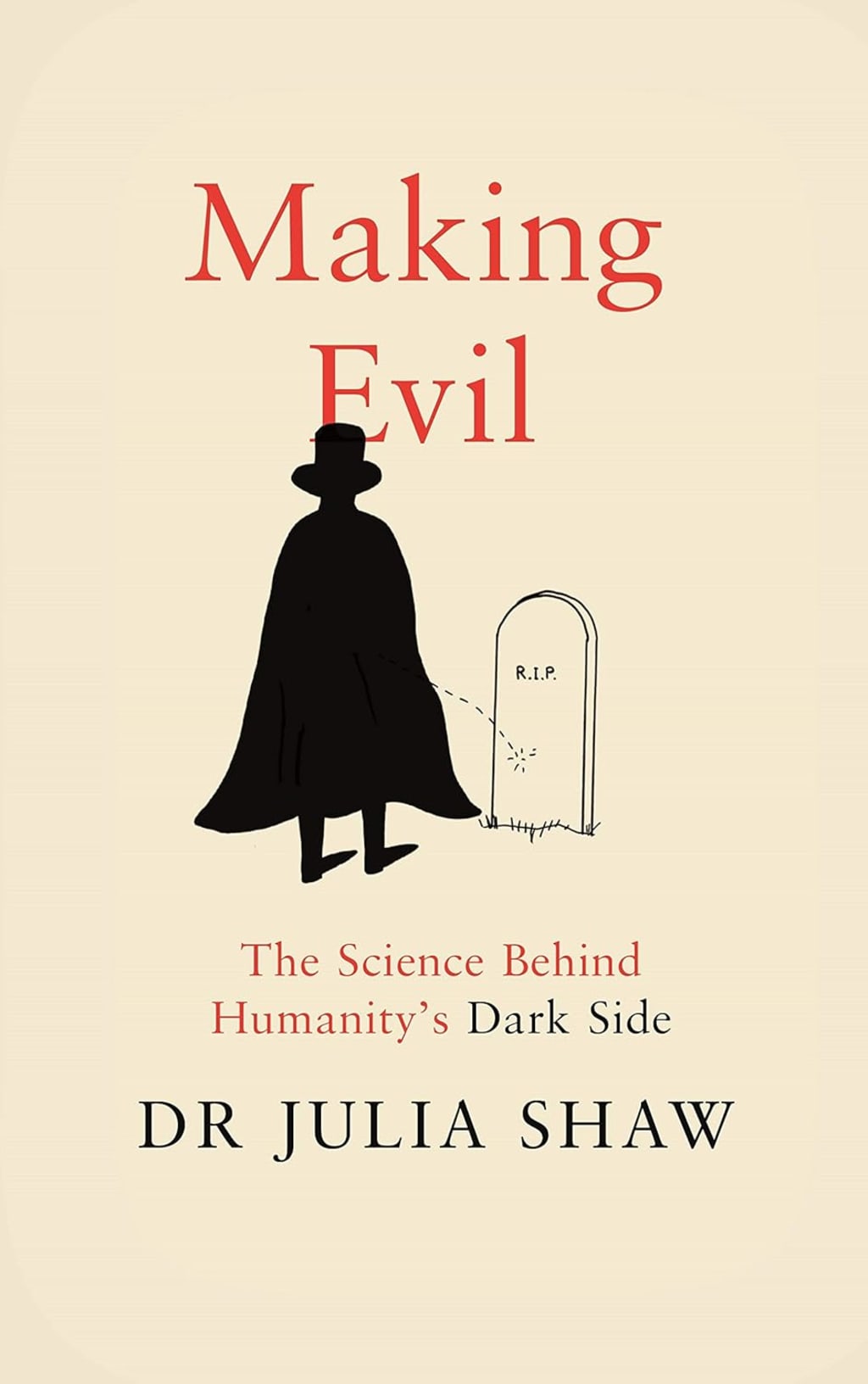
Have you ever wanted to read a book but wanted to also wait until you were financially comfortable before going on another bookish shopping spree? Yeah, me neither. I got this book only recently, after paying a ton of bills and so - I was lucky it wasn't too expensive. Making Evil is a book that I was initially quite excited about, however after I began to read it I found a few holes here and there, and some things that I wanted to be defined most definitely were not. Be that as it may, it was an enjoyable book on the whole. So let's have a look at what this book has to offer...
Shaw begins by questioning the very concept of evil, proposing that it’s not a clear-cut category but rather a construct that societies use to label behaviours they find deeply disturbing or immoral. She suggests that what is deemed evil is subjective, varying across cultures, historical periods, and personal contexts. For Shaw, this subjectivity highlights the importance of understanding the factors influencing moral judgement, as behaviours considered unforgivable in one context may be normalised or even praised in another. There are a number of sources in this definition and so, I have no problem with it. It actually happens to be one of the most articulate parts of the whole book.
Shaw explains how empathy plays a crucial role in moral behaviour but is also susceptible to manipulation. Empathy is not limitless, and people often reserve it for those they see as part of their "in-group." When individuals or groups are dehumanised – stripped of characteristics that make them relatable – it becomes psychologically easier for others to harm or disregard them. Dehumanisation has been used as a tool in war and propaganda, turning perceived enemies into less-than-human figures, which facilitates violence and aggression. This part was all well and good before she started talking about toxic masculinity without actually defining it properly. I find that everyone I have spoken to has a different definition for what this is and therefore, I cannot simply trust the phrase being thrown around in research. It sounds too 'pop culture' as a phrase.
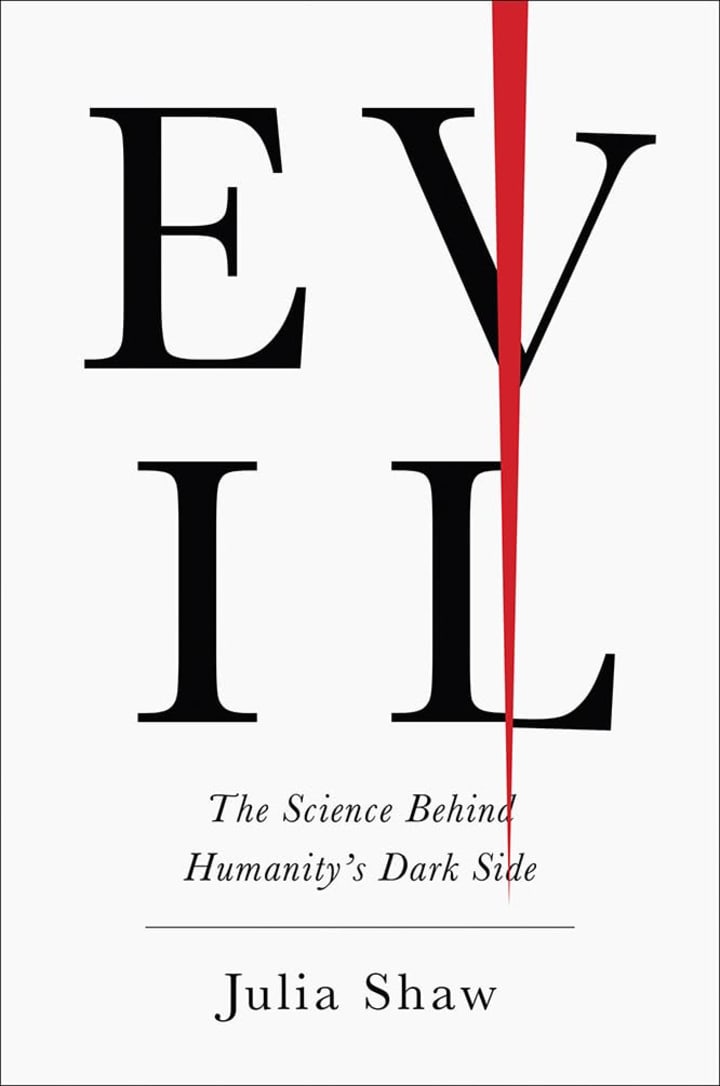
Shaw introduces the concept of moral disengagement, a process by which people justify their unethical actions to themselves, effectively shutting off their moral compass. Mechanisms of disengagement include minimising the harm done, blaming the victim, or justifying actions by comparing them to even worse behaviours. This psychological distancing allows individuals to avoid feelings of guilt, making it easier for them to carry out harmful acts while maintaining a positive self-image. This part was actually fairly interesting and again, had quite a lot of research to back it up. It was well-articulated and in-depth in its study.
Shaw explores the public’s obsession with true crime, arguing that our fascination with dark, often violent stories is rooted in an evolutionary need to understand potential threats. By studying the extreme behaviours of others, we believe we gain insight into the boundaries of human nature. However, Shaw cautions that our interest in true crime can veer into voyeurism, where real suffering is treated as entertainment, potentially leading to the glorification or romanticisation of criminals, which warps our view of justice and crime. There is a large concentration on the idea of the 'halo effect' in the book and there is a lot of research for it - however, I think the research on which people are assumed as 'creepy' is a little bit outdated for our own common times in which social media also plays a huge part in how we view people due to crowd theory.
Shaw addresses the controversial topic of sexual deviance, arguing that society often misinterprets and harshly stigmatises behaviours that deviate from the norm. She distinguishes between paraphilias – atypical sexual interests – that are benign and those that are harmful. Shaw emphasises the importance of separating fantasy from action, explaining that many people may have unusual fantasies without any intent to act on them. Her aim is to reduce the stigma around consensual non-harmful behaviours while continuing to protect against truly dangerous or exploitative practices. This part was weird and disgusting but honestly, you can see why it's been included. This is where we get the argument about whether Jeffrey Dahmer was really evil (I think he was but that's besides the point). Shaw gives us a ton of research and articulate arguments to show us both sides of this insight.
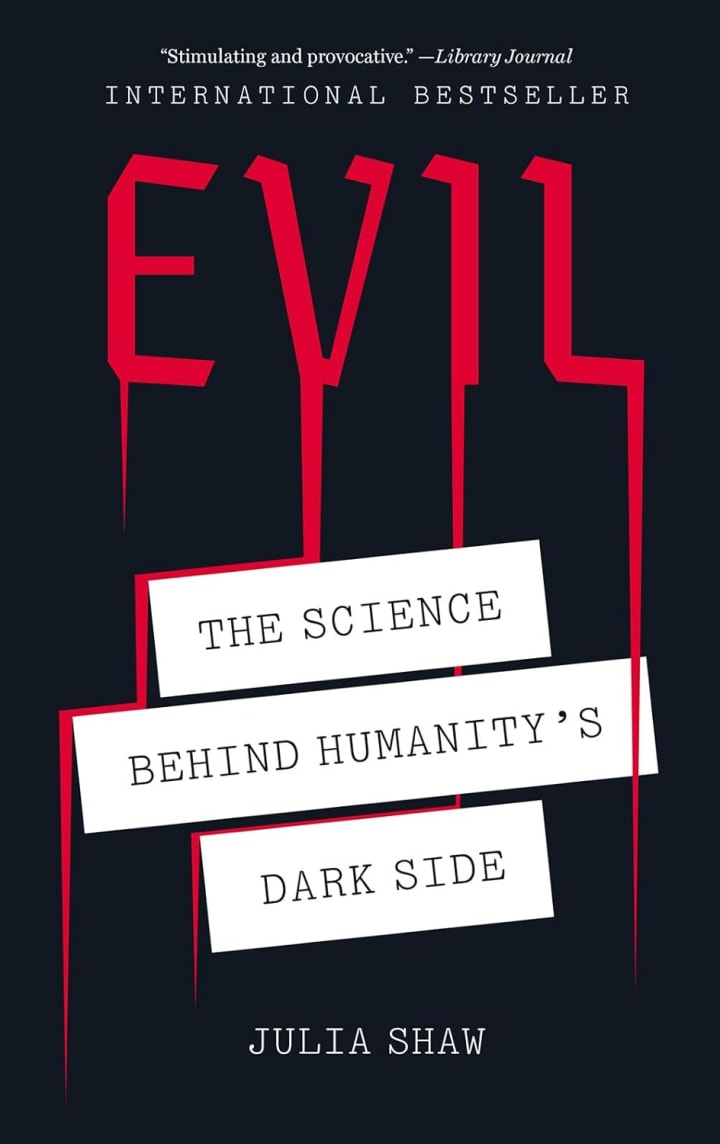
Shaw explores prejudice as a socially constructed form of evil, examining how biases are ingrained in individuals from a young age through cultural and societal cues. Implicit biases, or unconscious attitudes, significantly shape our interactions with others, often leading to discriminatory behaviours even when no overt malice is present. Shaw suggests that understanding these biases is crucial in combating prejudice, as it allows individuals to reflect on and mitigate their unconscious prejudices before they lead to harm. I read about how the fact that people who were mentally unwell were often perceived to be evil or creepy even if they are not and that there is research stating that those in a mental health waiting room would not choose to sit next to people who had outward displays of mental illness because they were perceived as dangerous - even if they are not dangerous at all.
Shaw closes with a discussion on society’s approach to punishment and forgiveness. She argues that the justice system often prioritises retribution over rehabilitation, driven by a desire to label offenders as irredeemable. Advocating for restorative practices are all well and good, but in practice it would take a very long time to do so with some resources that these institutions simply don't have. And if someone tells you that it shouldn't take a long time then it's simple: it isn't like there's a mental health crisis that came out of people being locked away from society for over a year...oh wait...
About the Creator
Annie Kapur
I am:
🙋🏽♀️ Annie
📚 Avid Reader
📝 Reviewer and Commentator
🎓 Post-Grad Millennial (M.A)
***
I have:
📖 280K+ reads on Vocal
🫶🏼 Love for reading & research
🦋/X @AnnieWithBooks
***
🏡 UK
Keep reading
More stories from Annie Kapur and writers in Geeks and other communities.
Book Review: "Table for Two" by Amor Towles
This review was written on the 5th of November 2024. As of today, I'm not very well. I'm sick and nauseous and I've already had to take a day off work which means I'm also anxious about all the work I've done that may have been undone by someone else. I haven't got better yet so I don't know how long this will go on for. Welcome to the era of the winter bugs in which many people are taking days off work because there's horrid stuff going around. A day ago I finished Amor Towles' book of short stories Table for Two. I have read the previous books by this author and have enjoyed them enough to be confident in these stories as well. Let's take a look at them...
By Annie Kapurabout a year ago in Geeks
Silver Screen Magic with Mae West
American actress and singer Mae West became a popular film actress during the Great Depression. She started entertaining in vaudeville, then performed on Broadway, and finally went to Hollywood. She signed up with Paramount Pictures and made her debut in the 1932 film “Night After Night.” She also starred in musicals, comedies, and crime dramas. The American Film Institute named her one of the best classic Hollywood actresses.
By Rasma Raisters6 days ago in Geeks
Millie Bobby Brown Debuts New Bob on Vacation
Millie Bobby Brown Takes a Stylish Break in the Sun Millie Bobby Brown is enjoying some fun in the sun and showing off a new ‘do. The Stranger Things actress is on vacation and is free to have any hairstyle she chooses.
By Dena Falken Esq5 days ago in Geeks




Comments
There are no comments for this story
Be the first to respond and start the conversation.