
Book Review: "Love in a Wych Elm and Other Stories" by H.E Bates
4/5 - bucolic, beautiful and lost in passing silences, this anthology is often gorgeous

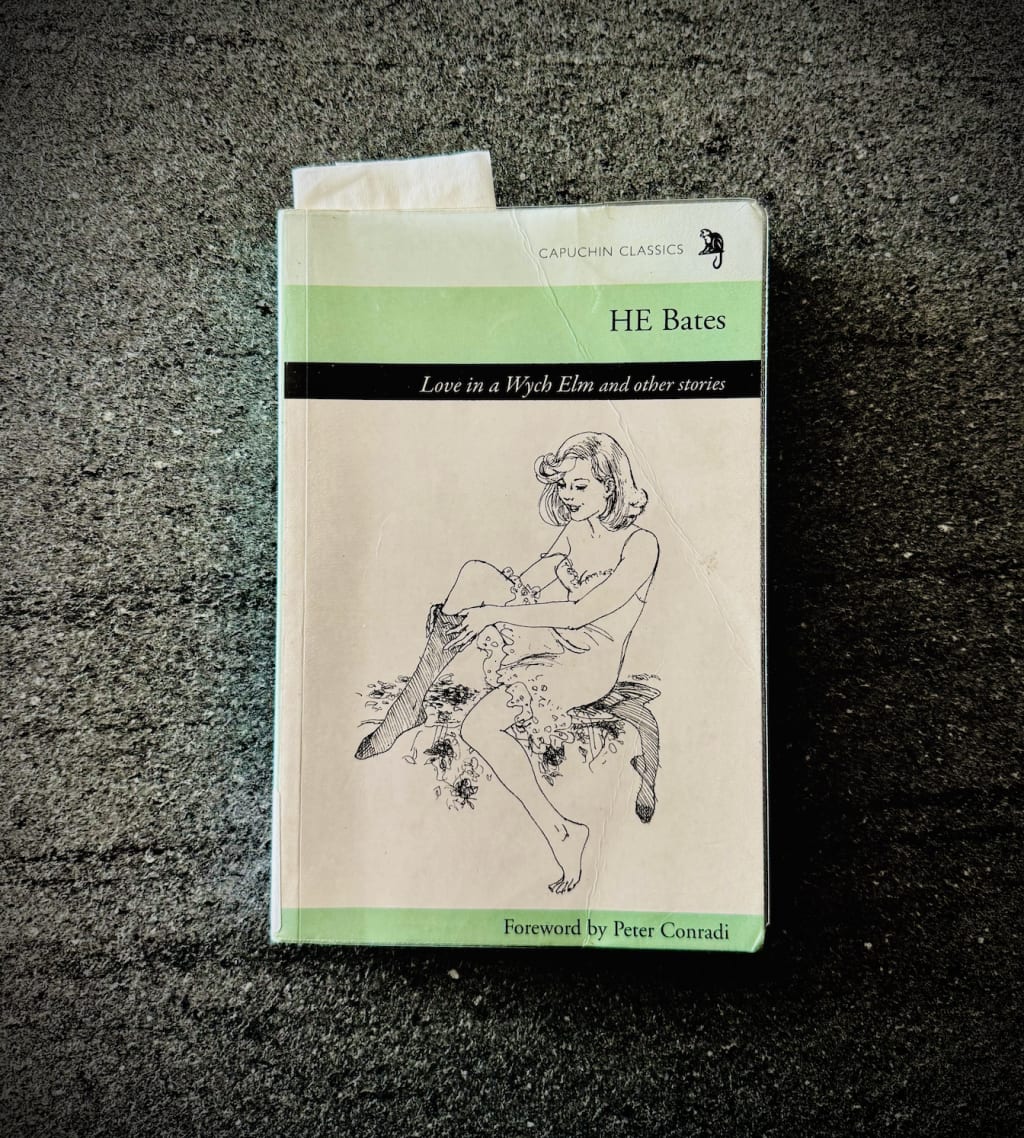
I haven't read much H.E Bates. I think it's been roughly five or six years at least since I read Fair Stood the Wind for France. H.E Bates can be a quite interesting writer and when I noticed the book in the library which was labelled under short story anthologies - I couldn't help but think if it would be any good. For those of you who don't know, Bates was an author during the mid-20th century and wrote a whole host of novels and anthologies. For some reason this is only my second reading of any of his works. And so, let's take a look at Love in a Wych Elm and Other Stories by H.E Bates.
The title story Love in a Wych Elm is about a girl called Hilda whom the narrator becomes captivated with. She's preparing for a dance and he helps her fasten her necklace. It is at that moment where he falls deeply in love with her, noticing everything from her face and her beauty to the very smell of her perfume. This is weird because her sister, Stella is nothing like that at all. Stella, instead of being beautiful and outstanding, is awkward and common. The story is looked back on from adulthood, noting the way in which memory and adolescence can transform opinion in the fact that two sisters appear so different in personality and style. I thought this story was quite speculative if not that, not very interesting to read. I couldn't feel any connection with the narrator - it just seemed like he's simply there.
The Grasshopper is a story set just after the First World War and concerns a soldier who is trying to resume his normal life in a quiet English village. He becomes fascinated with a woman who owns a grasshopper figurine which translates as a symbol of triviality that comes to feel strangely profound. Their brief, tentative connection reveals how war has left him emotionally fractured and wary of hope. I quite liked this story's way of presenting this fractured state of character through speech and gestures rather than just through the storyline. Not every tranquil setting is always tranquil and many of them have characters that contain massive complexities.
We also have a story called The Lighthouse in which a woman arrives one day by boat on to the shore in order to seek shelter from a storm and she meets the lighthouse keeper. She disrupts his silence and reminds him of life outside the lighthouse of: touch, warmth, and perhaps lost possibilities. I'm not going to lie, this was probably one of the best stories because even though nothing happens, we can understand how beautiful the story is, we can understand the characters where they are both alone for different reasons and even though romantic attraction is only implied, we get it. It is wonderfully written.
Another story in the anthology is called The Watercress Girl. In a working-class district, a young boy develops an innocent friendship with a girl who sells watercress to help support her family. Their brief companionship is marked by simple joys: picking plants, sharing stories, running through fields. But their social worlds are incompatible. When her family moves, the friendship ends without ceremony. The author captures this heartbreak really well and honestly, again this is another one of those brilliant stories in the anthology where we really do feel like we know the characters well.
Another story is Harvest which is the story which actually opens the anthology I read. A mother of four watches her children play on a late summer afternoon while reflecting on her fifth pregnancy. Her thoughts wander from the simplicity of the harvest season to the deeper rhythm of her own life. She considers the exhaustion of motherhood, the mysteries of creation, and her husband's quiet steadiness. There’s no conflict, only a gentle shift in mood as she contemplates the recurring nature of life, both comforting and wearisome. There's a lot of natural imagery in this poem and the writer is definitely trying to capture the true weight of being a human. I quite enjoyed how quiet and moving this story felt.
The last story (which I have no idea why I missed out, I was meant to talk about this one first) is called The Cowslip Field. Two childhood friends reunite after many years. As they walk through fields that once symbolised shared adventures, the man realises he was always in love with her, though neither spoke of it. She, too, remembers, but with resignation rather than nostalgia. Their meeting is polite, restrained, and achingly distant. The field of cowslips, once alive with spring colour and laughter, now appears faded and subdued. There's a sense of unrequited love and unfinished friendship here and the author really does present us with the silence of the situation.
All in all, many of these stories were quite good, definitely by different degrees. Some of them which presented silence and natural imagery, those that presented resignation and heartbreak were more or less better than the others. Honestly, I enjoyed reading this book and if you need a calming and often bucolic anthology then this one is for you.
***
Don't forget to enter my unofficial challenge!
About the Creator
Annie Kapur
I am:
🙋🏽♀️ Annie
📚 Avid Reader
📝 Reviewer and Commentator
🎓 Post-Grad Millennial (M.A)
***
I have:
📖 280K+ reads on Vocal
🫶🏼 Love for reading & research
🦋/X @AnnieWithBooks
***
🏡 UK
Keep reading
More stories from Annie Kapur and writers in Geeks and other communities.
Book Review: "Home is Where the Bodies Are" by Jeneva Rose
Ooh I've been patiently waiting for the right time to read this book and let me tell you, it did not disappoint. Home is Where the Bodies Are is an intense scrutiny of truth and lies, set in two different timeliness and covering about four different people. We have alternating narratives in the present day between three adult children named Beth, Nicole and Michael. Then, we have a narrative from 1999 from their mother, Laura. Concerning their father's disappearance into thin air, this book really gets twisted. I absolutely loved it.
By Annie Kapur7 months ago in Geeks
Silver Screen Magic with Mae West
American actress and singer Mae West became a popular film actress during the Great Depression. She started entertaining in vaudeville, then performed on Broadway, and finally went to Hollywood. She signed up with Paramount Pictures and made her debut in the 1932 film “Night After Night.” She also starred in musicals, comedies, and crime dramas. The American Film Institute named her one of the best classic Hollywood actresses.
By Rasma Raisters7 days ago in Geeks
Selena Gomez Just Matched Her Bronze Manicure to Her Makeup—and It Works
Bronze makeup is often reserved for summer, but Selena Gomez is proving it works year-round. (TBH, I love a beauty rule breaker.) At a Rare Beauty launch celebrating the new Warm Wishes Soft Matte Powder Bronzer, she wore a rich brown dress paired with matching bronze makeup and nails. The monochromatic look felt elevated, warm, and undeniably chic—making a strong argument for bronze as the ultimate winter pick-me-up.
By Dena Falken Esqabout 6 hours ago in Geeks
Miss Persephone's Manual to a Seemingly Ordinary Life
Miss Persephone was found at the dining table, her blue eyes swollen, her tears arriving and retreating like the tides of the ocean. Earlier that day, her family had visited her in the retirement home where she had lived for eight years. It was her eightieth birthday.
By Imola Tóth5 days ago in Fiction



Comments (1)
This was such a beautifully detailed review—quiet, reflective, and full of heart, just like the stories themselves. You’ve definitely convinced me to pick this anthology up. 🌿📖