
Book Review: "Into the War" by Italo Calvino
4/5 - an excellent exploration on the absurdity of the political landscape through war...

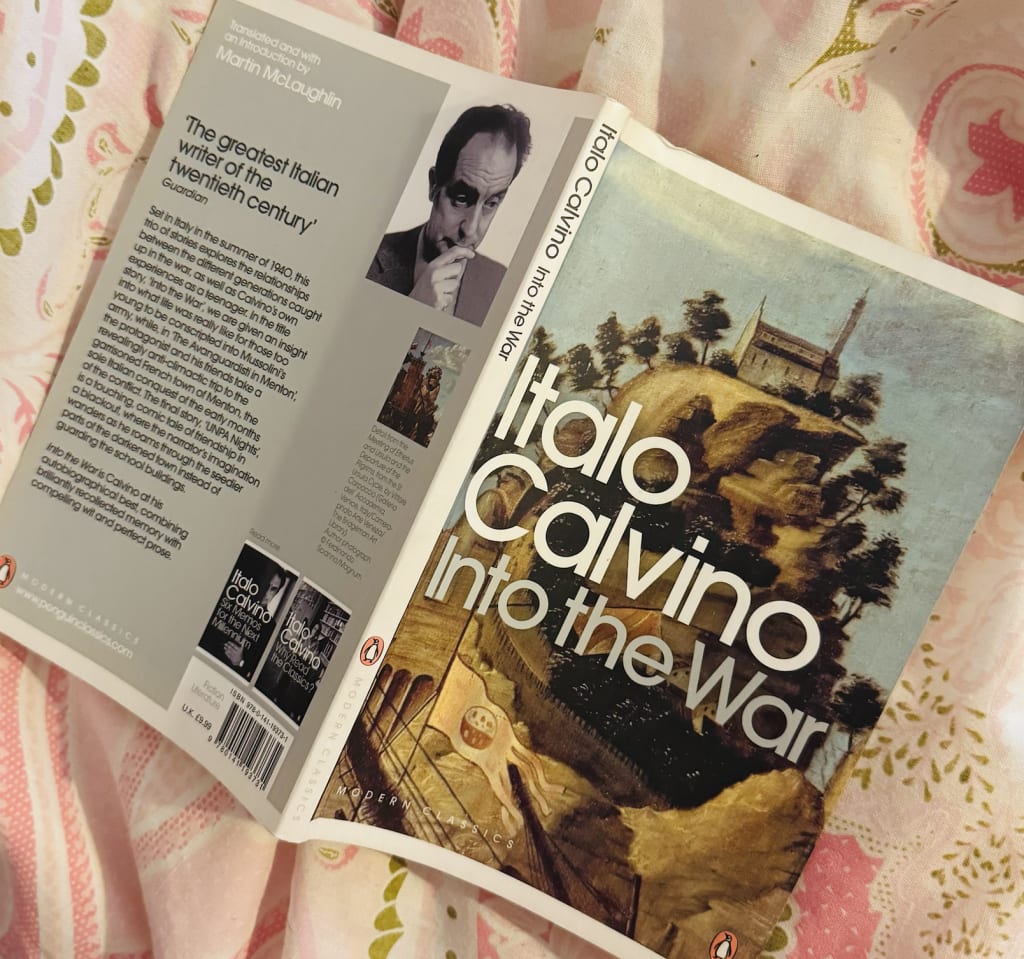
Used bookstores can be so much help when looking for a good deal on paperbacks. As we speak, I've pretty much finished Into the War by Italo Calvino and I'm sitting in the afternoon light with a cup of coffee, a glass of sparkling water and I'm watching Hitchcock (2012) which is probably not as great as people have been telling me it is despite starring Anthony Hopkins and Helen Mirren. Well, I should actually be more honest - it was awful. At least Calvino's novella wasn't awful though...
The book takes place in 1940, when Mussolini proclaims Italy’s entry into World War II. The narrator, a high school student in Sanremo (Calvino’s hometown), listens to the radio announcements and watches the propaganda swirl around him. His feelings are conflicted because though he realises the inevitability of the future, he also gets swept into the propaganda and carnival of the uniforms, parades, marches and weird slogans that decorate the country. I love the way Calvino's characters often remain so self-aware in a time of stress, change and rising tension. This book definitely depicts that same kind of character. This character fully knows they are being propelled into the adult world by war. He is on that strange brink where he is neither child nor adult, but depending on circumstance, is treated as both.
Along with his schoolmates, the narrator is summoned to join the Gioventù Italiana del Littorio (Italian Fascist Youth Battalion). Their task is not to fight at the front but to serve in auxiliary roles: guard duty, drills, and “support” missions designed more for show than substance. They are issued ill-fitting black shirts and rifles that are often defective. The narrator notices the absurdity: the regime treats them like soldiers, but everyone knows they are children. This is a direct metaphor for the discipline inflicted on people by Fascist regimes. Though there are children everywhere, the regime does not care for them as children, wishes them to grow up faster and depends on them to reach adulthood with as little complaint as possible. Though the reality is that they are still children in their minds (and possibly their bodies) - the regime, instead of teaching them how to grow, traumatises them into growing up.
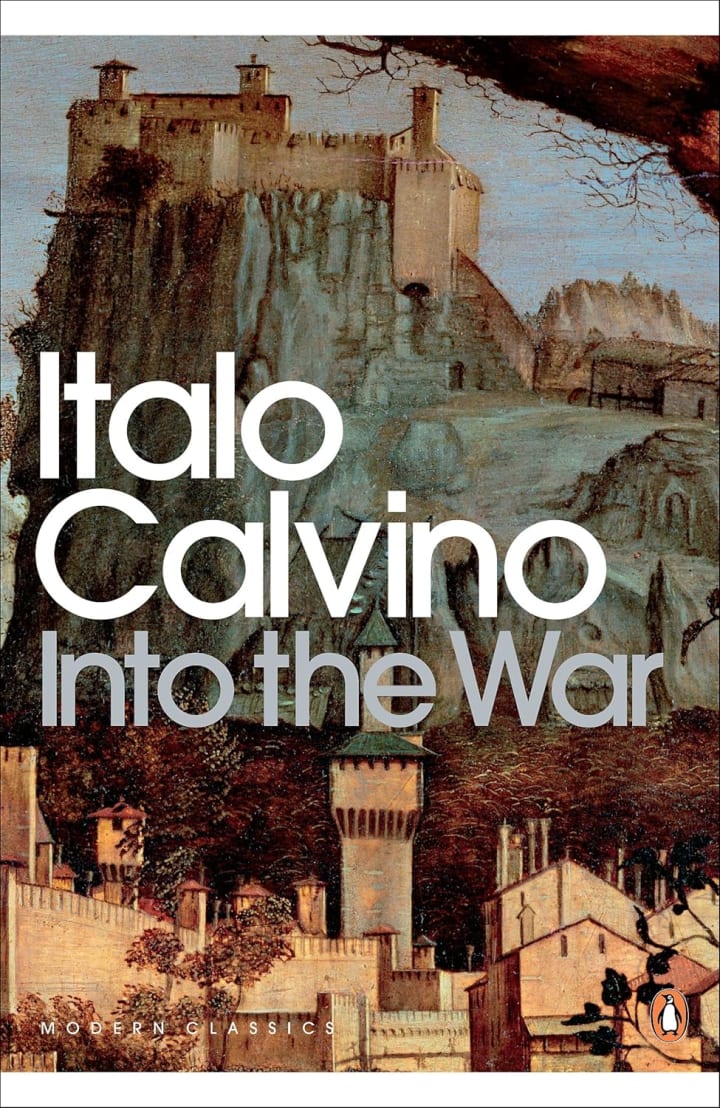
The boys are sent out to the countryside, where their role is to “protect” farms and installations supposedly vulnerable to enemy attack. The narrator describes the Ligurian summer landscape with sensory precision: the dusty fields, the oppressive heat, the smells of manure and cut hay. These descriptions slow the narrative right down - allowing the reader to take in the atmosphere. Italo Calvino is always a master of atmosphere and well, I can't think of someone more fitting to show us farmland during a time of absolute crisis.
Life in the battalion means rigid timetables, harsh discipline, and constant surveillance. Meals are tasteless, often consisting of watery soup or stale bread, and the boys are punished for minor infractions. Officers enjoy privileges while recruits endure petty degradations. The narrator conveys this with a detached, observational style, noting how the smallest abuses of power shape the boys’ morale. I think this could also be true of various institutions (though I won't name which) in our modern day and how they constantly wear down the resistance and freedom of thought that is most commonly associated with being a functional human. The worlds of school and work are probably best as fitting into the metaphor. Instead of being involved, we are encouraged to be detached. Being treated and expected to work as though you are not human is really part and parcel of the experience and is definitely based on the kind of beating down we see in the military regimes of literature like here.
The boys’ interactions with local farmers and townspeople provide some of the most telling moments. The peasants, worn down by poverty and rationing, see the boys as nuisances at best, intruders at worst. They humor them with a mix of sarcasm and resignation. What we are seeing are the real victims of the war, the real issues that war creates. These are poverty, hunger, food shortages and more. The resources run dry and everyone who is not given a ration because they are in the military is then left to starve. A circle of political logic is stating that they are going to war to save the country and then using up all of its resources doing so, allowing the people to die.
The awareness of absurdity grows and grows throughout the book and more and more of the boys notice it. It is a brilliant and short book which explores the irony in the rhetoric of Fascism and how politicians will definitely lead you down a horrific rabbit hole of patriotism when none of them are actually patriots themselves.
About the Creator
Annie Kapur
I am:
🙋🏽♀️ Annie
📚 Avid Reader
📝 Reviewer and Commentator
🎓 Post-Grad Millennial (M.A)
***
I have:
📖 280K+ reads on Vocal
🫶🏼 Love for reading & research
🦋/X @AnnieWithBooks
***
🏡 UK
Keep reading
More stories from Annie Kapur and writers in Geeks and other communities.
Book Review: "Junky" by William S. Burroughs
Here we go, we're back with some William S. Burroughs. If you haven't read my previous stuff about him then here's a quick shortcut of an introduction: I'm on the fence about a lot of his writing. Back in university I read the book he wrote with Kerouac entitled And the Hippos Were Boiled in their Tanks and amongst the phoney bohemians had to almost pretend like I enjoyed it. My review of The Soft Machine can be read by clicking the link here. And also a more 'on the fence' review of The Wild Boys can be read here.
By Annie Kapur4 months ago in Geeks
Silver Screen Magic with Mae West
American actress and singer Mae West became a popular film actress during the Great Depression. She started entertaining in vaudeville, then performed on Broadway, and finally went to Hollywood. She signed up with Paramount Pictures and made her debut in the 1932 film “Night After Night.” She also starred in musicals, comedies, and crime dramas. The American Film Institute named her one of the best classic Hollywood actresses.
By Rasma Raisters4 days ago in Geeks
Fallout Season 2 Episode 2 Review: "The Golden Rule" Explained
Let’s dive headfirst into Fallout Season 2 Episode 2, an hour stuffed with Easter eggs, callbacks, and wild lore reveals. This one is titled “The Golden Rule,” and trust me—it’s not just a cute thematic nod. This episode lives in that moral tug-of-war between Lucy, The Ghoul, and the messy ethics of post-apocalyptic civilization.
By Bella Anderson6 days ago in Geeks


Comments
There are no comments for this story
Be the first to respond and start the conversation.