
Book Review: "Influenced" by Brian Boxer Wachler
5/5 - a revelation of how influence hacks the brain...


Disclaimer: This article deals with topics that may not be healthy for all to view. If you require help then please visit your local mental health facility and do not rely on social media for your wellbeing.
Thank you.
On with the review.
Review: "Influenced" by Brian Boxer Wachler
The reason I chose to read this book was because I had seen it in my Amazon Recommendations. Yes, my recommendations have turned into a trawl of modern political philosophy and social science books. The amount I have read so far has been extraordinary. Now, I’m all for the argument that I’m opening up my mind to new ideas, but I worry that I might be doom-binge-reading my way into a loss of hope in humanity as the problems are there in black and white and yet, many of the solutions sound unrealistic or even reductive at times. Many books are guilty of that and yet, this book is slightly different in the fact it offers solutions that have been worked by the author.
The author found themselves addicted to social media after a series in which he ‘went viral’ on TikTok. But, as he states that “one rose does not a bouquet make”, he seizes this opportunity to become a social media influencer by trying to get it to happen multiple times. His series is about debunking TikTok health myths. I have to admit it, I have never actually been on TikTok. I know it exists and that is more than enough for me. This man seemed to become addicted to it and when he did, he noticed that he wasn’t spending as much time with his daughters and he was actively getting upset or anxious when he stuff wasn’t viewed as much as the last viral post he made. On top of all of that, he got shadow-banned.
This is where his anxiety hit the ceiling and he started to realise the real damage of the social media addiction faced by many, many younger and younger people in our society. It is designed to make you sad, anxious and competitive for views so that you spend more time on the application. Basically, this is what I have been saying for ages. (Thankfully, Vocal seems like the kind of community where people support each other’s writing instead of being competitive with each other. I like it so much more here than any other social media platform).
I would like to make a comment here about slang. I am not very good at understanding Gen-Z slang and therefore, find myself trying to look things up when my students say something to me that I don’t understand. The use of the word ‘cap’ in this book is pretty informative as the author initially tells us what it means and this leads into his use of the word in his social media TikTok videos featuring a baseball hat of some kind. This must be an American thing, because I am unaware of how a hat links to honesty or lying. All in all, I found the initial story of the social media stardom of the author to be quite amusing and also, quite eye-opening. This is most probably why the solutions he offers might work - he has already tried them out on himself. But, we also understand it isn’t a one-size-fits-all and, as he explains in the book - it is far worse for children and teenagers to be on social media than it is for adults.
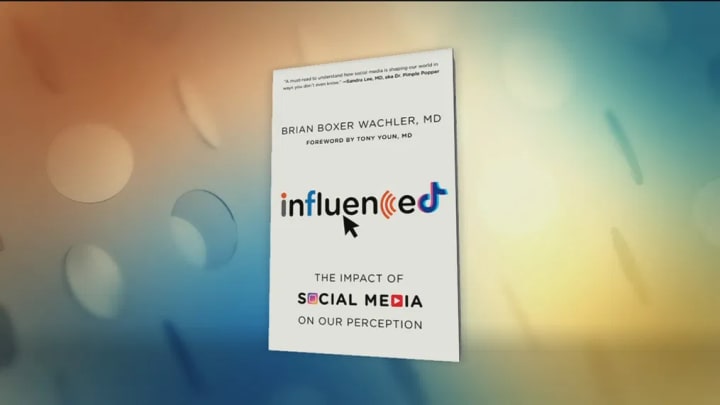
Being addicted to social media has become detrimental to every aspect of life, from critical thinking to how dopamine works in the brain. Described as having a similar impact as drug and alcohol addiction, social media addiction can raise blood pressure and make people anxious in withdrawal in the same way as any addictive substance. High blood pressure can lead to a whole host of disorders, but it only proves that the addictive substance is not to blame - the addiction itself is. The author explains how addicted we are through the use of these medical relations, even going through what ‘Text Neck’ is. ‘Text Neck’ is an idea from the millennial era which relates to texting and looking down at your phone so much that your neck becomes permanently bent slightly forwards. This is terrible for posture and something I have been actively trying to fix being part of the generation that went from financial problems to back problems.
When it comes to Gen-Z and Gen-Alpha, social media is even more of a problem because they have not yet developed the correct skills to be able to tell truth from fiction - this is what makes the author’s presence on social media so important. He wanted to make sure children were receiving the correct information and thus, donned a blue baseball cap to do so in a simple way. Even to the detriment of his own wellbeing eventually. But even though what the author was doing was good and altruistic, it makes us see how much social media can influence the life and behaviours of children and teenagers.
This develops into the author talking about influencer culture. Now, I don’t follow any ‘influencers’ on social media, I tend to follow companies - so I was excited to learn about the different categories of influencers and the things that they do. It’s not that I’m too old (many influencers seem to be a part of my own generation), I’m just not chronically online (for example: I only found out who ‘Mr Beast’ was in 2024 and I still haven’t seen a single video of the man. I just don’t have the time to sit on YouTube or wherever he is. I must regrettably say though apart from that, the other influencers mentioned in the book are completely alien to me). Children are more susceptible to believing what is said by these people because they look ‘aspirational’ to them. But it does not always mean that what these people are selling, pushing or saying is true.
Adults who us social media tend not to do so for the same reason as children and teenagers. It is widely acknowledged that children and teenagers want to act and be treated older than they are - this is not a concept that is just true of social media. No matter how much we see them as little kids, they are constantly pushing back (I’m a teacher, I know). For children and teenagers, being able to do something a 20-something is doing is considered ‘cool’ and ‘adult’. But, the author recognises that this, by influencers, is usually used maliciously to exploit the young brain into believing the most bizarre things. It becomes a competition of who can say something the most shocking, inflammatory, controversial and wild in order to get the most views. Therefore, going with the theory that whatever the monkey sees, the monkey does (and all humans are in fact, derived from the same ancestor as the monkey), the children copy this behaviour and become themselves: chronically online.

I have this theory which is: the more chronically online the child becomes the less able they are in telling reality from fiction. The author proves my theory in looking at how influencers need to be viewed as inspirational, aspirational and ‘beautiful’, but also need to be viewed as authentic. Why? Influencers normally attract ‘drama’ and so, within the ‘drama’ that unfolds, there will be sides taken by the children who think and believe that their particular influencer is the most ‘authentic’. This is where I learnt about someone called ‘James Charles’ - no I don’t know who he is or what he does, but I’m assuming he argues with people online because the author used this man as an example of attracting ‘social media drama’. But, he has an insane influence in the social media stratosphere as well, which means that children and teenagers who follow very quickly turn into hate-mobs for or against this man whenever there is a soap opera playing out on his profiles.
The mob is another thing that the author focuses on in various forms and this is not actually simply limited to children and teenagers, adults do it too (just to an extend which is different). First of all, we have agreeability. People agree with the mob or the herd that is in the comments section because they want to be part of the group (and the end of the day we are pack animals, we do not want to be singled out for holding controversial views). So, regardless of our own views, we are more likely to morph them according to what the group at the time thinks.
This means that critical thinking skills are likely to be dropped in favour for being part of the popularity contest that is social media. But when this pack mentality of agreeability evolves into a public shaming (read: ‘So You’ve Been Publicly Shamed’ by Jon Ronson for more information on what that is), it can have real consequence in people’s lives. This includes things like stalking and doxxing, putting people in very real danger and sometimes even causing them to have to move house and city so that they are out of danger. This is a behaviour reserved either for young adults or over 25s who are chronically online.
In the 1590s, King James I (then simply the King of Scotland) would lecture in Saint Andrews’ University in Scotland and then, convince people to help him out on his witch hunts. The King was obviously an aspirational person to many, representing the Divine Right on earth. This is one of the ways he would influence many people to take part in hurting and killing innocent people over the course of the witch hunts for very little reason - normally just that the King didn’t like them. Honestly, this is not far-fetched if you look at public shaming and cancel culture.
This social media usage driven by the want to belong to a group has overloaded into the neurological world in which we now know that due to the reduction of critical thinking and the dopamine addiction, social media is changing our brain chemistry and not for the better. It is worse for children who’s brains are still developing and teenagers who are carving out their identities. We already know that children and teens build unhealthy habits and expectations of themselves from being chronically online, but the author argues that it is much worse - social media is a compliancy problem.
The more compliant they become with the content online, the less likely they are to be compliant in the real world or even contented. This is shown through the lack of face-to-face contact that they can actually perform. Too scared to talk to people, order food or even walk up to the bar and get served, Gen-Z and Gen-Alpha are at a huge risk of becoming generations that simply do not speak to each other. Apart from this, they are also at risk of not having healthy relationships with their education or personalities that are still, at their time of life, developing.
These critical thinking skills that are reduced by being chronically online are needed for children to be able to see through an influencers sometimes nefarious intentions, but the author does also refer to this group as ‘easy prey’ for influencers because of their lack of knowledge about what to look for and their lacking ability to actually perform critical thinking. The fostering of low self-esteem is not an accident, it becomes easier to sell someone ‘buy this to fix your unhappiness’ when you were the one who made them unhappy. Keeping kids poor, sad and stupid is part and parcel of the circular logic that perpetuates the career of the social media influencer.
Let’s stop here and appreciate that when the author stated that adults are less nefarious than younger folks with their social media influence, he also goes on to say that Mr Rogers was the original influencer. He wanted to teach kids to be nice to each other and have good manners, he was getting kids to learn about values through teaching social lessons. Now, we have some social media influencer telling kids as young as nine to use anti-ageing products because they will be prettier this way. The reality, us adults know, is a lot different. The younger you use products, the worse your skin will get. Take it from a millennial with skin ravaged from years of heavy makeup - it is not the right way to go.
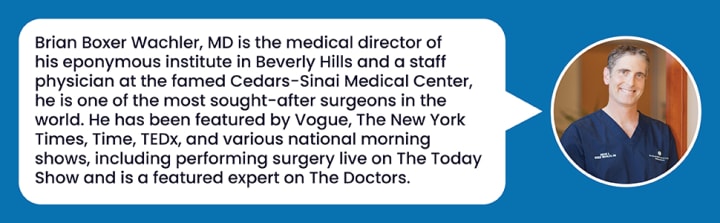
The close proximity to the celebrity also has an impact - the author states. At no other time in history have we been able to comment directly on posts made by actors (or at least, an actor’s social media team) and other famous people. As children and teens look up to social media influencers, they feel as though they are in close proximity to people who are aspirational and therefore, feel like they are even more special and thus, more likely to believe what they are told. So, in my mind it is pretty much the same way religion works. At least with religion, it’s the adult’s job to look after the children involved, there are no child labour laws online and so - everything from children influencers to over-sharing about your children is as common as the sky is blue.
This, I was weirded out to learn, also comes in the form of parents publicly shaming their own children for misbehaviours or doing things they don’t like. Posting their children on social media for the hate-mob to rain down is something that I consider to be child abuse. Why? Children cannot consent. That doesn’t just go for sexual situations, that also goes for being posted about on social media. On top of all this, the only concern for most people is becoming ‘irrelevant’.
From glamorising vaping to people eating on social media (yes, you read that correctly. There are literal cultures of videos concerning over-eating things. What a strange place!) - social media proves to be more and more dangerous for young children to be present on. They don’t find the bad content, the bad content will find them.
I also learnt another quite disturbing fact: many teens seem to link their suicidal tendencies to social media. Suicidal tendencies. Let that sink in. This propensity for children to want to kill themselves because of not being able to look like the person in the photograph is strange yes, but it is not new. Back when I was young it was magazine photoshop that was the issue. I didn’t personally hop on the Instagram train until I was about 21 and by then, it had only been famous for about 5 years. We were already over the hill of being influenced. From this I can only understand that Instagram is the Devil. My own experience on Instagram was a stint of about three years in which I became insanely bored - nowhere near what teenagers are experiencing today. It is much much worse today than even the magazine era.
From fake followers and fake comments to #ad boosting engagement for some reason, from the dark and dangerous side of social media influence in which people drink bleach and climb milk crates as a ‘challenge’ to the idea that Lemmings commit mass suicide being wrong - social media is a devious mistress. Call-out culture turns to cancel culture, copycat suicides after the unfortunate death of Robin Williams, the show ’13 Reasons Why’ and the Fyre Festival to Lizzo presenting authenticity and being decimated for it - making young girls feel terrible about themselves - social media is the big nightmare of society and there is little we can do about it. I would like to say that due to all of this evidence, I support the ban on under-16s using social media and I hope it comes into full effect very, very soon. This is terrifying. Now is the time to protect the children.
About the Creator
Annie Kapur
I am:
🙋🏽♀️ Annie
📚 Avid Reader
📝 Reviewer and Commentator
🎓 Post-Grad Millennial (M.A)
***
I have:
📖 280K+ reads on Vocal
🫶🏼 Love for reading & research
🦋/X @AnnieWithBooks
***
🏡 UK
Keep reading
More stories from Annie Kapur and writers in Geeks and other communities.
Book Review: "Grey Dog" by Elliott Gish
“A good woman. How odd that the phrase has such a particular meaning. One might say “a good man” and mean anything — there are as many ways of being a good man, it seems, as there are of being a man at all. But there is only one way to be a good woman. It is such a narrow, stunted, blighted way to be that I wonder any woman throughout history has been up to the task. Perhaps none of us ever have.” - "Grey Dog" by Elliott Gish
By Annie Kapur2 years ago in Geeks
Silver Screen Magic with Mae West
American actress and singer Mae West became a popular film actress during the Great Depression. She started entertaining in vaudeville, then performed on Broadway, and finally went to Hollywood. She signed up with Paramount Pictures and made her debut in the 1932 film “Night After Night.” She also starred in musicals, comedies, and crime dramas. The American Film Institute named her one of the best classic Hollywood actresses.
By Rasma Raisters9 days ago in Geeks
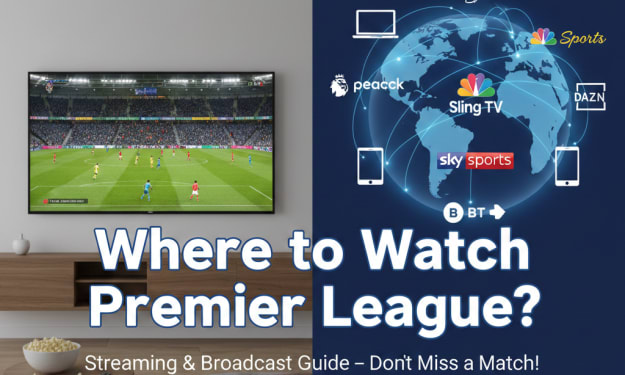
How to Watch Premier League?
The crown jewel of English football, Premier League soccer is back. The most- watched sports league in the world features 20 of UK’s best football clubs. Here are some of the ways you can watch and stream the 2025-26 season of Premier League. Don’t miss a match day.
By David Cook6 days ago in Geeks



Comments (1)
I'm GenX, and I do not envy my nephew and niece at all when I see who they follow and what they are being "influenced" by. And "Text Neck" is a very real thing... Thank you again for the review! 🏅