
Book Review: "How to Sleep Well" by Dr. Neil Stanley
3/5 - not as good as "Why We Sleep" by Matthew Walker, but somewhere in the ball-park...

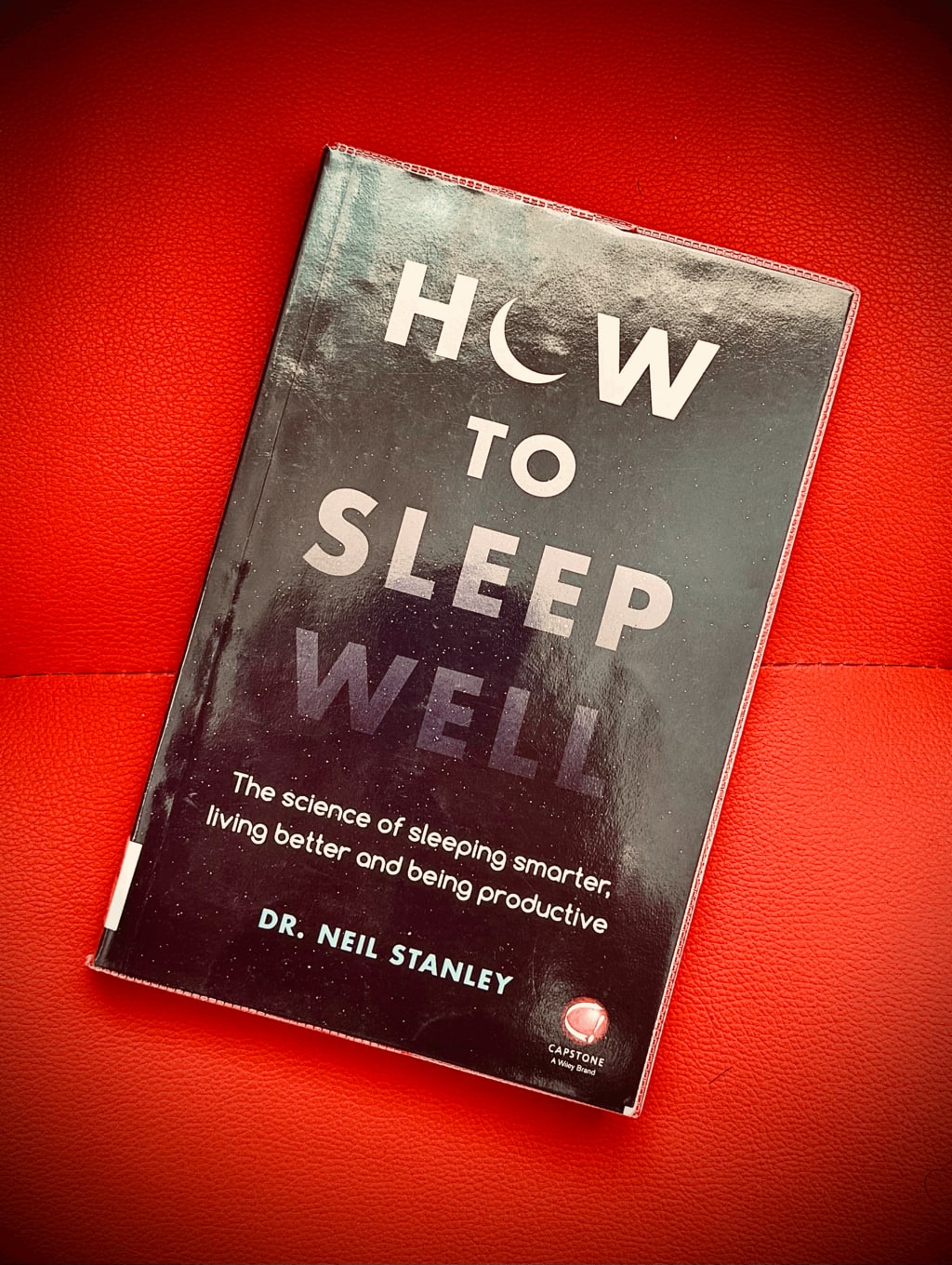
It's March 2025 and I believe that I'm in an okay place mentally even though I have not been for a while. Have you ever been stressed out but you have actually no idea why? I mean, there's so many things it could be but you don't know which single factor it is. My hair has been falling out quite a bit lately which means that I've literally been shedding hair everywhere: in my apartment, on the bus, everywhere else. If you're reading this in the present (which at the time of writing this would be the future) then I hope I've sorted myself out. Anyways, since I haven't been sleeping well, here's a fitting book I read...
Dr Neil Stanley begins by emphasising that sleep is not a passive state but an essential biological function that plays a crucial role in physical and mental health. He explains how sleep affects everything from memory consolidation and immune system function to emotional regulation and cognitive performance. The book argues that chronic sleep deprivation can lead to severe health issues, including an increased risk of heart disease, obesity, diabetes, and depression. Stanley stresses that sleep is just as important as diet and exercise, yet it is often neglected in discussions about well-being.
One of the central themes of the book is that there is no one-size-fits-all approach to sleep. Stanley rejects the common belief that everyone needs exactly eight hours of sleep per night. Instead, he argues that sleep requirements vary from person to person, depending on genetics, lifestyle, and age. The author encourages readers to listen to their own bodies rather than rigidly following societal norms about sleep duration. Some people function well on six hours, while others may need nine or more. Recognising and respecting individual sleep needs is key to achieving better rest.
A major argument in the book is that modern society is not designed to promote good sleep. Stanley critiques the 24/7 nature of contemporary life, where artificial lighting, digital screens, and constant connectivity interfere with our natural sleep rhythms. He discusses the negative impact of blue light from phones, tablets, and computers, which suppresses melatonin, the hormone responsible for regulating sleep. The book also examines how work schedules, social obligations, and stress contribute to disrupted sleep patterns, making it harder for people to get the rest they need.
He explores how psychological factors, particularly stress and anxiety, are some of the most common causes of sleep disturbances. He explains how the body's fight-or-flight response, designed to keep us alert in dangerous situations, can become overactive due to chronic stress, making it difficult to relax and fall asleep. The book provides practical strategies for reducing stress before bedtime, including relaxation techniques, mindfulness, and cognitive behavioural approaches. Stanley emphasises that managing stress effectively is often the key to overcoming persistent sleep difficulties.
A key section of the book focuses on creating the perfect sleep environment. Stanley argues that small adjustments to the bedroom and bedtime routine can significantly improve sleep quality. He offers practical advice on factors such as: keeping the bedroom dark, cool, and quiet, investing in a comfortable mattress and pillows, removing electronic devices from the bedroom and establishing a consistent bedtime routine to signal to the body that it is time to sleep.
He also discusses the importance of associating the bed only with sleep, rather than using it for work, watching TV, or scrolling through a phone, as these activities can train the brain to stay alert rather than unwind. But let's be honest - how many of us have the liberty of actually doing all of this with the little free time we have. Working as a teacher means that I often get home quite late after being at work very early in the morning. By the time I have cooked and eaten food, cleaned up, had a shower and managed to get myself into bed, I need to have a bit of free time or I will not be a nice person the next day.
He examines the role of napping and whether it helps or hinders overall sleep quality. He explains that short naps (around 20 minutes) can provide a boost in alertness and performance, particularly for those who are sleep-deprived. However, he warns that long naps, especially in the late afternoon or evening, can interfere with night-time sleep. The book offers guidance on how to nap effectively, including the best time of day to nap and how to avoid grogginess upon waking. As someone who cannot sleep during the day and yet, struggles to sleep through the whole night - I cannot see any benefits of napping other than probably messing up my night sleep more. Also, where does this guy live thinking people can randomly take naps during the day?
All in all, this book is really interesting and makes some great points. But there are some parts of the argument that do not work in our regular day schedules whether you work, study or you are doing neither. It is well intentioned but not realistic but I still think it is a good idea to read it. It does, at its base, have some captivating arguments to make.
About the Creator
Annie Kapur
I am:
🙋🏽♀️ Annie
📚 Avid Reader
📝 Reviewer and Commentator
🎓 Post-Grad Millennial (M.A)
***
I have:
📖 280K+ reads on Vocal
🫶🏼 Love for reading & research
🦋/X @AnnieWithBooks
***
🏡 UK
Reader insights
Nice work
Very well written. Keep up the good work!
Top insight
Heartfelt and relatable
The story invoked strong personal emotions
Keep reading
More stories from Annie Kapur and writers in Geeks and other communities.
My First 12 Hours...
As you guys may have realised, I have been made one of the admins of our wonderful Facebook group. Now, I'm not going to say too much because of the fact I know there are certain people who subscribe to my account who, let's just say if there was a button to block them, would no longer be subscribers. However, here's a review of what I have found over the last 12 hours in the most comprehensive way I can find through connecting the dots. I will try not to make this too long winded or purposefully obtuse.
By Annie Kapur8 months ago in Geeks
Silver Screen Magic with Mae West
American actress and singer Mae West became a popular film actress during the Great Depression. She started entertaining in vaudeville, then performed on Broadway, and finally went to Hollywood. She signed up with Paramount Pictures and made her debut in the 1932 film “Night After Night.” She also starred in musicals, comedies, and crime dramas. The American Film Institute named her one of the best classic Hollywood actresses.
By Rasma Raisters6 days ago in Geeks
Can you Watch Premier League in Europe?
The 2025–26 Premier League season is underway, marking the 34th edition of the competition and the 127th year of top-flight English football. Liverpool start their title defense with confidence after lifting their second Premier League trophy last season, but the return of Leeds United, Burnley, and Sunderland ensures fresh rivalries – including the long-awaited Tyne–Wear derby, back for the first time since 2015–16.
By David Cook5 days ago in Geeks


Comments (4)
Thanks for the pretty fair review. Only a few bits are not 'realistic', to use your phrase, but I would argue that if we seriously want to improve sleep as a society, we need to admit that the status quo is not working for our physical, mental or emotional health.
It sounds like the book raises some important points, even if they don’t all fit with real life. I like that you still found value in it despite the gaps. I used to be a huge suffer of insomnia. But I am getting old now and I just fall over. LOL!
I suffer from insomnia, and meds only make it worse. I'm also a carer to my husband, and I live with my daughter and her two young children. My day is often chaotic, and sometimes I can't work until late. Also, sleep routines don't work for everyone, and even when my mattress and pillows are comfortable, there are still nights when sleep does not come. I don't always spend my nights on a computer, though I do read or play something light because not doing anything stresses me out further!
Will forward this to my husband,Annie. He's a light sleeper.