
Book Review: "Galapagos" by Kurt Vonnegut
5/5 - a prophetic narrative of humanity's destruction...

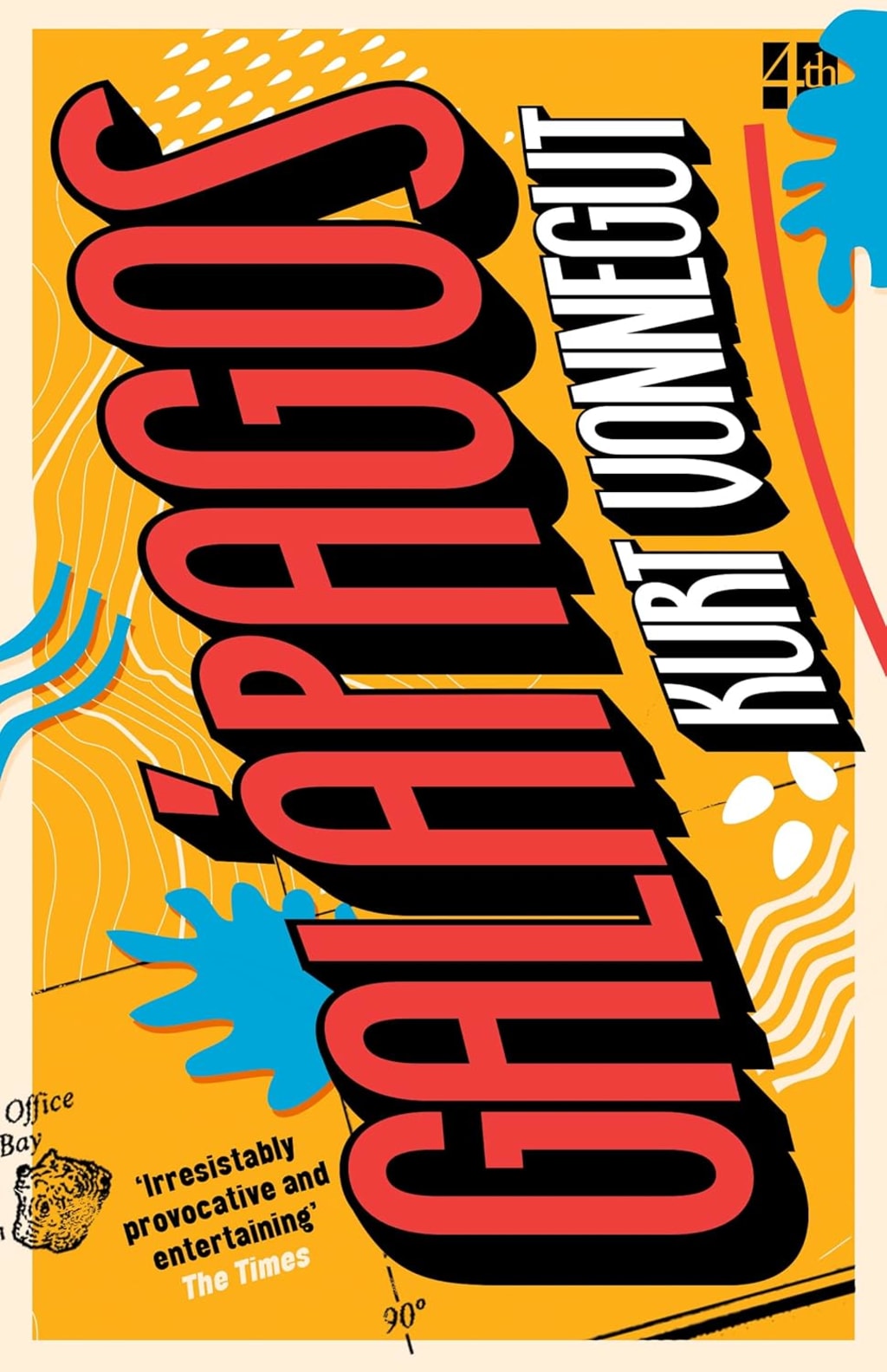
I was struggling with what I wanted to read and tossing myself between Kurt Vonnegut and Ray Bradbury. Noticing that perhaps I didn't want to read a short story anthology just yet, I edged towards reading some Kurt Vonnegut instead. I've just returned to my apartment in Nottingham after being in my hometown of Birmingham over Christmas for a few days and unfortunately, we are moving forever closer to the time when I will have to go back to work (no, I haven't done my seating plans yet - I apologise but if I do them too early, I'll just keep editing them...Better I do them just before I go back). Well, let's not think about that for now...
The story begins in 1986 in Guayaquil, Ecuador, amidst a global financial crisis and growing political instability. A luxury cruise, marketed as the “Nature Cruise of the Century,” is set to depart for the Galápagos Islands. The ship, Bahía de Darwin, is intended to host an elite group of passengers eager to experience the pristine environment of the islands, but the trip is doomed from the outset. Behind the glamorous façade lies a crumbling world, plagued by economic collapse, famine, and technological dependency. So, this is not too different to our own times. I'm quite surprised about how much things Kurt Vonnegut wrote relates to our own era. Shocking, yes - but more prophetic than anything else.
Among the would-be passengers is a strange cast of characters, each representing a different facet of human absurdity. Mary Hepburn, a widowed biology teacher from Illinois, struggles with loneliness and grief following her husband’s death. James Wait, a con artist who feigns illness to exploit wealthy women, boards the cruise as part of a scheme. Hernando Cruz, the ship’s captain, is a morally compromised man with his own secrets. There is also a Japanese couple, Hisako and Zenji Hiroguchi, who bring advanced technology to the ship, including a device capable of instant translation—a symbol of humanity’s overreliance on invention.The fact that Kurt Vonnegut wrote about humanity's overreliance on technology when he did because honestly, I am so shocked. But what I am more shocked about is how much I connected with the character of Mary Hepburn. Her strength is brilliant even though she is such a sorrowful character.
The cruise’s departure is delayed by logistical chaos and societal breakdown, leaving the passengers stranded in Guayaquil. As tensions rise, a series of bizarre and catastrophic events unfolds. A global pandemic, triggered by a mysterious and deadly virus, sweeps across the planet, rapidly reducing humanity to the brink of extinction. The remaining passengers are oblivious to the scope of the crisis as they finally set sail, unaware that they are among the last surviving humans. A violent mutiny erupts aboard the Bahía de Darwin, further underscoring humanity’s capacity for self-destruction. Amidst the chaos, the ship becomes stranded on the Galápagos Islands, leaving the surviving passengers to face the harsh realities of isolation and survival. The Galápagos, once a destination for leisure and spectacle, now becomes humanity’s final refuge.The irony is that the only salvation for humanity is the one place on earth where no humans live. We can all laugh at that but if we look at our own world, the Galapagos Islands still have a great and diverse ecology as opposed to our pollution-infested cities so we can laugh - but we will have to turn that towards ourselves. Another prophecy by Kurt Vonnegut.
Leon Trout, who narrates the story as an ethereal observer, provides a sardonic commentary on the absurdities of human civilisation and the randomness of evolution. As the ghost of a man who chose to remain on Earth rather than ascend to an afterlife, Leon’s perspective is both detached and deeply personal. He reflects on his own life, including his experiences as a soldier in the Vietnam War. His narrative voice is tinged with humour, bitterness, and occasional moments of compassion. Honestly, the narrator is one of the best characters about this whole thing. His story is both compelling and satirical. I would pay attention if I were you.
All in all, when you get to the end of the story, there is something about it that contains both hopelessness and hopefulness. There is a clear balance there and yet, everything has changed. Maybe we are doomed to be not very doomed at all. But it will take us one million years to get there.
About the Creator
Annie Kapur
I am:
🙋🏽♀️ Annie
📚 Avid Reader
📝 Reviewer and Commentator
🎓 Post-Grad Millennial (M.A)
***
I have:
📖 280K+ reads on Vocal
🫶🏼 Love for reading & research
🦋/X @AnnieWithBooks
***
🏡 UK
Keep reading
More stories from Annie Kapur and writers in Geeks and other communities.
Book Review: "In the Winter Dark" by Tim Winton
Yes, I'm still reading Tim Winton novels and this one is considerably shorter than his usual pieces. In the Winter Dark takes a somewhat more sinister turn than many of his writings with themes of isolation and loneliness, motifs that include violence and loss and characters who are at best, troubled. He takes his usual poetic writing and adds this strange and eerie atmosphere into it, moving into the territory of the changing land being seen through the eyes of characters who are all essentially flawed. Again, another brilliant Tim Winton book that will only make me want to read more of his novels in the near future. So let's go on to the review...
By Annie Kapur12 months ago in Geeks
Silver Screen Magic with Mae West
American actress and singer Mae West became a popular film actress during the Great Depression. She started entertaining in vaudeville, then performed on Broadway, and finally went to Hollywood. She signed up with Paramount Pictures and made her debut in the 1932 film “Night After Night.” She also starred in musicals, comedies, and crime dramas. The American Film Institute named her one of the best classic Hollywood actresses.
By Rasma Raisters6 days ago in Geeks
Agnes Abdullahu's DiaMondaine Diamantaires Club partners with Isis Fashion Awards (Brings Diamonds, Luxury and Deluxe Dubai Flair to Amsterdam)
In the glittering world of high-end jewelry and haute couture, there are those who simply attend events, and then there are those who weave the very fabric of the experience. As the calendar turned toward the highly anticipated 4th edition of the Isis Fashion Awards (IFA) on May 6th, a new and formidable alliance began to take shape.
By postworldview3 days ago in Geeks
Miss Persephone's Manual to a Seemingly Ordinary Life
Miss Persephone was found at the dining table, her blue eyes swollen, her tears arriving and retreating like the tides of the ocean. Earlier that day, her family had visited her in the retirement home where she had lived for eight years. It was her eightieth birthday.
By Imola Tóth4 days ago in Fiction


Comments (2)
Now this is my territory. And I must admit.it that this is one of the late-KV books I always intended to read. I think you understand how a great writer can see what is always ahead of us (Octavia Butler predicted "Make America Great Again," by example)! Good luck with the work.
Great review! I’ll check this book out for sure!