
Book Review: "Court Number One" by Thomas Grant
5/5 -unravelling the modern history of justice in Britain through landmark court cases...

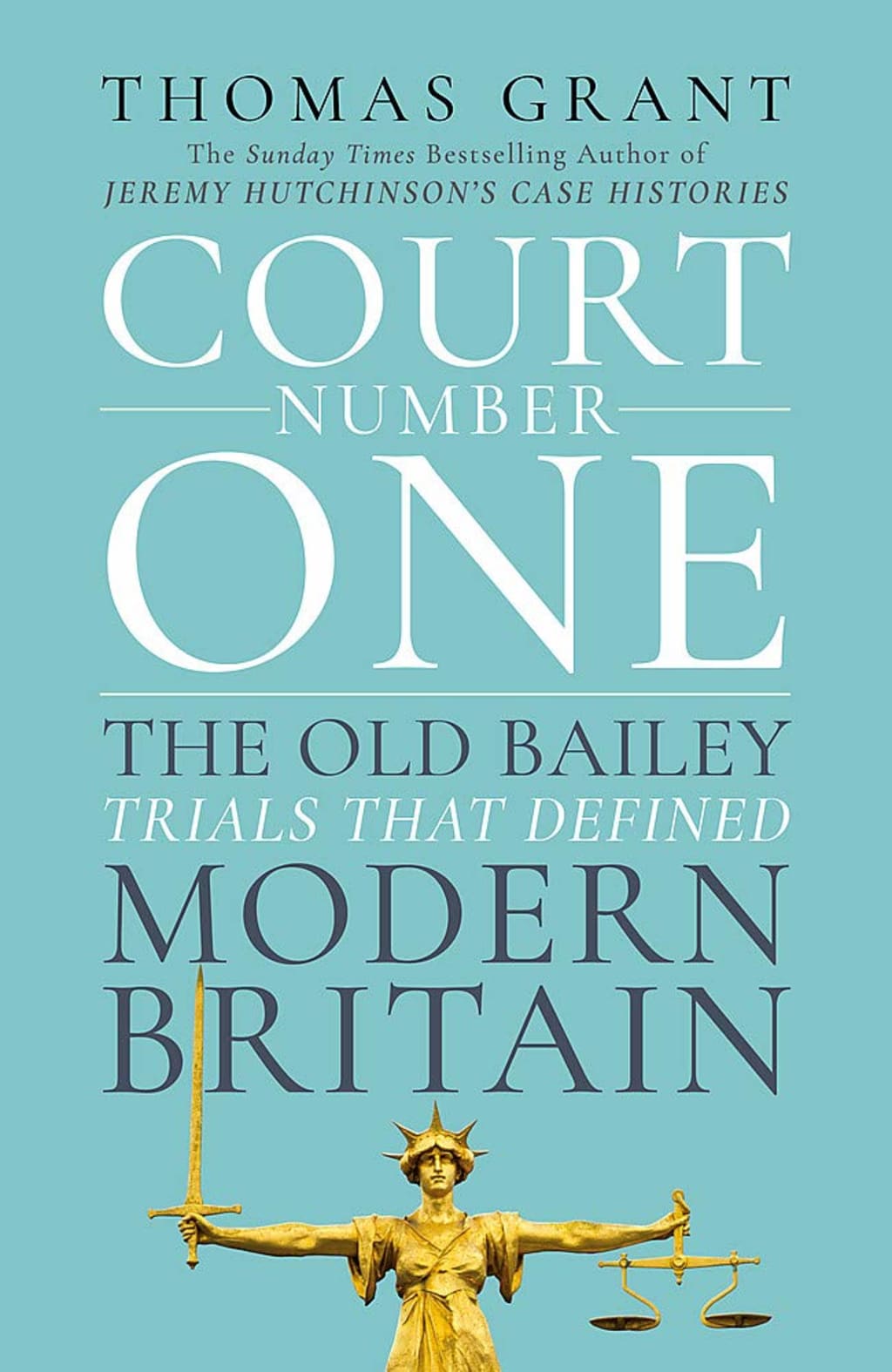
Full Title = "Court Number One: The Old Bailey Trials that Defined Modern Britain" by Thomas Grant
I don't know what made me buy this book but it was simply a 'recommended read' after I'd finished 'A Taste for Poison'. I thought that this was going to be one of those true crime books where sensational details of gruesome tabloid-esque horrors were puched together in wicked and weird ways that were quite disrespectful to the victims, in order to make something resembling a book. However, I was wrong. This book is an exploration about how we got here in the British Justice System. From looking at proof to individual judges to the abolition of the death penalty. This book is insanely interesting.
The cases at Court Number One are shown to mirror evolving British social norms, as public attitudes towards personal conduct, class, and morality shifted dramatically throughout the 20th century. Cases like the Profumo affair symbolise a turning point where hypocrisy and scandal surrounding public figures began to be met with far less tolerance. The introduction lets us into what went on in the courtroom yes, but it also shows us the timeline of British justice, mentioning in passing names like John Christie - where in a case to arrest the man himself it also led to the execution of a completely innocent party.
High-stakes cases during periods of war and political tension, such as those of Lord Haw-Haw and George Blake, reveal how Court Number One became a platform for the state to assert loyalty to the nation. These cases reflected the fears of wartime Britain and the intensifying paranoia of the Cold War era. In this we also have the Ruth Ellis case in which the death penalty was finally abolished because of the outrage. The changing scene of British politics had to include the way in which trials were treated as well. When loyalty to the nation meant also making the justice system more progressive, we were definitely on the right track.
The performances of barristers like Norman Birkett at Court Number One highlight not only the artistry of legal advocacy but also the deeply ingrained class distinctions in the British legal system. These trials reflected broader societal hierarchies, with the courtroom as a place where class lines and social privileges were visibly at play. There were definitely more defined lines earlier on even though even today, we see less harsh treatment for people if they are famous or upper class. What I think is definitely well written in this chapter is the way in which the book goes through how it went from a well-known activity in the courtroom to something that now produces an outcry of rage and rightly so.
Located on the site of the notorious Newgate Prison, the Old Bailey’s Court Number One is symbolic of both Britain’s judicial history and its evolution. Grant uses this setting as a historical backdrop to illustrate the shifts from old, punitive measures to a more modern, rehabilitative approach to justice. Something that the writer states in the introduction as well is that he thinks about how Charles Dickens wrote about Newgate Prison in Great Expectations - which is one of the most grim descriptions of jail I have definitely ever read. It is something quite strange to think that when you are standing somewhere, you else may have stood there before you and what they were doing. In this case: Dickens.
Throughout the 20th century, Court Number One captivated the public, not just with sensational crimes but with cases that challenged or confirmed societal values. Grant argues that these cases went beyond individual guilt or innocence, serving as cultural touchpoints where societal anxieties and ethics were publicly examined. Even though court photography was banned, there was still a want to be in the room with the judges who sentenced John Christie, ruined the life of Oscar Wilde, stated very clearly that it was Dr Crippen, held their own against the Krays and ultimately had to produce the gruesome details of the Dennis Nilsen case.
It was a spectacle yes, but it is also a great part of British Judiciary History in which it holds some of the most important times for progressive turns of law and justice. It was a brilliant book which needs a prequel dealing with the Victorian Cases such as Oscar Wilde's trial. I'd love that.
About the Creator
Annie Kapur
I am:
🙋🏽♀️ Annie
📚 Avid Reader
📝 Reviewer and Commentator
🎓 Post-Grad Millennial (M.A)
***
I have:
📖 280K+ reads on Vocal
🫶🏼 Love for reading & research
🦋/X @AnnieWithBooks
***
🏡 UK
Keep reading
More stories from Annie Kapur and writers in Geeks and other communities.
The Grass Arena by John Healy
Published in 1988, The Grass Arena by John Healy is a raw and poignant autobiographical novel that portrays Healy's turbulent life journey. Initially struggling to find a publisher due to its unflinching depiction of poverty, addiction, and crime, the manuscript eventually found a home at Faber and Faber. Editor Matthew Evans recognized the manuscript's authenticity and compelling narrative, leading to its publication. Despite its initial limited release, the novel gained critical acclaim for its honest portrayal of urban life in London and Healy's personal struggles and redemption through the game of chess.
By Annie Kapurabout a year ago in Geeks
Silver Screen Magic with Mae West
American actress and singer Mae West became a popular film actress during the Great Depression. She started entertaining in vaudeville, then performed on Broadway, and finally went to Hollywood. She signed up with Paramount Pictures and made her debut in the 1932 film “Night After Night.” She also starred in musicals, comedies, and crime dramas. The American Film Institute named her one of the best classic Hollywood actresses.
By Rasma Raisters6 days ago in Geeks
Premier League in Switzerland: How to Watch
The 2025–26 Premier League season is underway, marking the 34th edition of the competition and the 127th year of top-flight English football. Liverpool start their title defense with confidence after lifting their second Premier League trophy last season, but the return of Leeds United, Burnley, and Sunderland ensures fresh rivalries – including the long-awaited Tyne–Wear derby, back for the first time since 2015–16.
By David Cook6 days ago in Geeks




Comments (1)
I would try my best to read it. It seems like an interesting book 🤩 Btw, how do you read so many books? 🤔