
Book Review: "Auschwitz: A Doctor's Eyewitness Account" by Miklós Nyiszli
5/5 - a terrifying account of work under Dr Mengele...

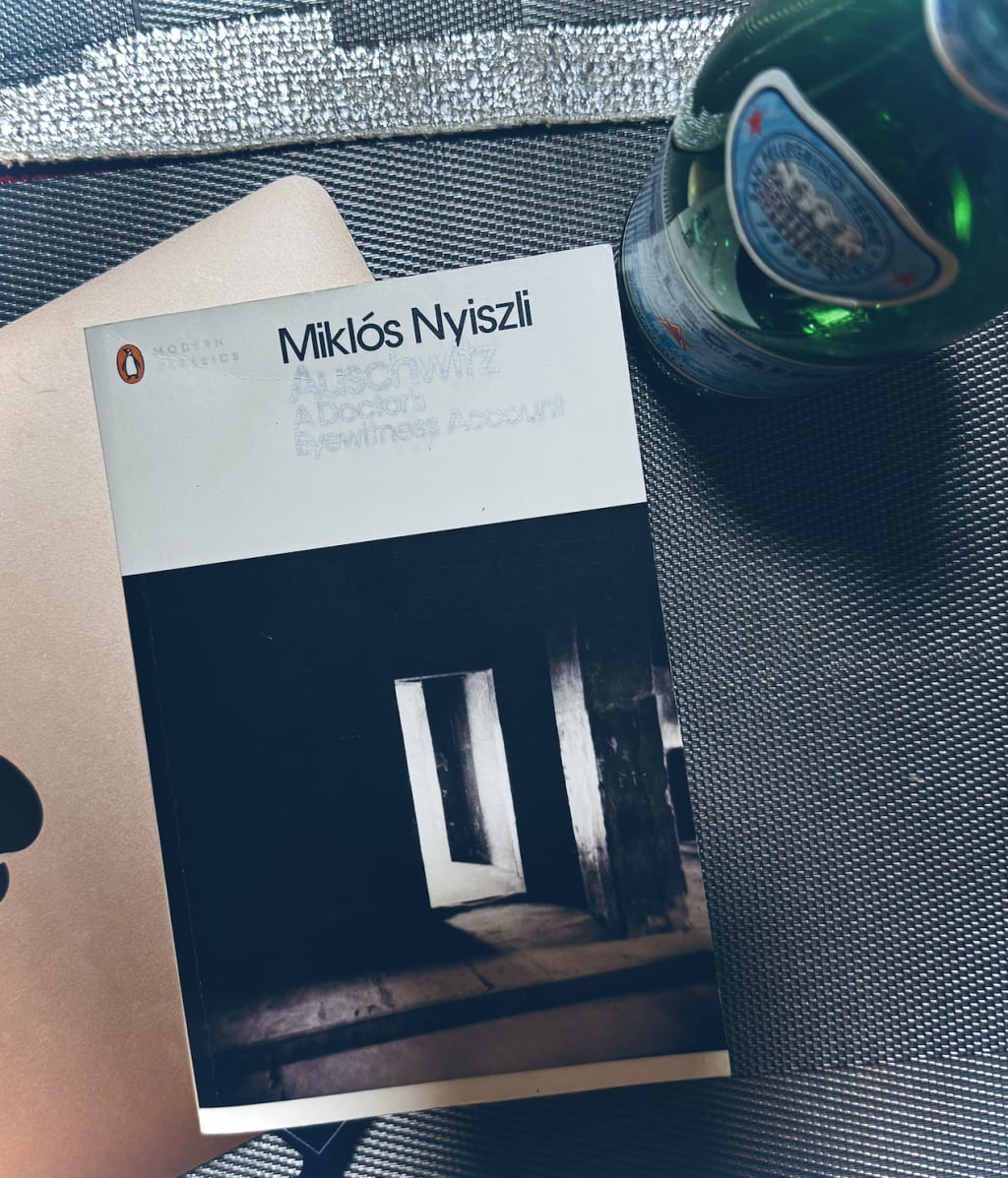
There's something really upsetting, something really emotional, about reading books regarding the experiences of those at the concentration camps during the Second World War. But this book is something else entirely. Miklós Nyiszli writes with such incredible amounts of this sadness, this incredibly dark emotion that we cannot help to be drawn into the book, no matter how disgusting and horrifying the subject matter. The man worked for and with the infamous Dr Mengele and was subjected to some gruesome sights. The even more horrific thing though was that the prisoners of the camp were obviously looking at him, recognising him and knowing that he too, was Jewish.
Selected to be a part of the labouring prisoners, our author is separated from his family (a wife and child) as they go elsewhere and he goes to work. It is the May of 1944, the Second World War is well underway and one thing that I always think about when I read books from this time and about this subject matter is how they always describe the smell of rotting flesh even though many of them would have never had the smell of rotting human flesh before. It's like a rancid smell they are just aware of. A darkness that overcasts itself. They simply know without any other information. Upon arriving, the doctor describes the smoke, the smell and the sights. It is horrifying but it gets so much more frightening.
The Nazis ask specifically for “doctors who studied in German universities, practiced forensic medicine” and our author steps forward. As he is the only one to be separated from the rest of the labour group, he is now put in the even more horrifying position of working under Dr Mengele as a research pathologist. He is placed within the proximity of all of these execution apparatus and all this equipment that will be used for, or has already been used for, purposes of torture and harm. He gets to know how the gas chambers and crematoria work and honestly, it is brutal and so descriptive. Our author does not leave out the gory details which get more and more upsetting the more you think about them.
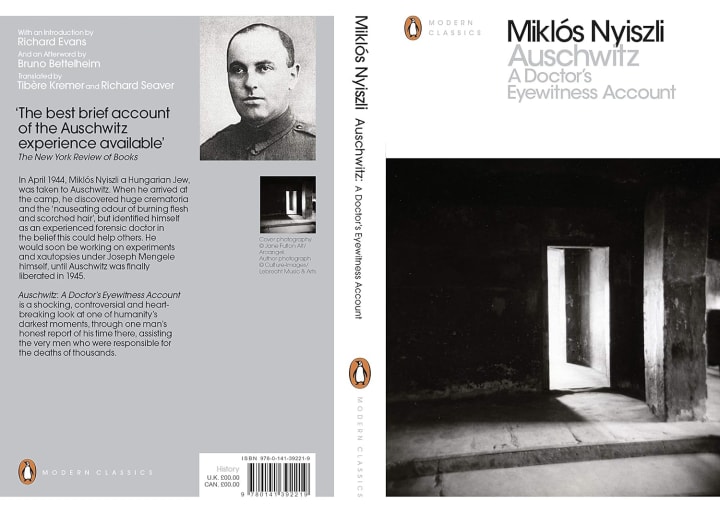
In one case, he describes burnings by the thousands and how it came to this. We are taken through the entire process of arriving at the camp. We go through the selection, the gas chambers, the autopsies and more. It is terrifying, dark and unforgiving. The camp is described as a factory in which people are dehumanised, prisoners reduced to objects of research and then disposed of like garbage. It is just a deep and dark pit in which to exist at any place or time. I was probably most astounded by the honesty that our author puts into the book. He's not trying to hold back information or discount the way in which he did this in order to try to stay alive. He talks bluntly to the reader. It is so desperate and upsetting - I know I used that word already but it has all the nuance that I want to convey.
There are deep, philosophical observations on human cruelty that happen within this book as well, it isn't all just terror and gore. Sometimes it is a philosophical nightmare as well. I personally cannot believe that any one group of people would treat another group of people so abysmally. But that's humanity for you - the concentration camps are proof that we might be more of a disease on this planet than we first thought if we as a species are capable of doing that to each other. We also have the revolt of the prisoners that happens in October 1944 - they attempt to destroy one of the crematoria and many of them end up dying. It's these images of desperation that often stay with us and it is definitely no different in this book. Perhaps, it is even more horrific as our author is both prisoner and witness.
Even though the writing is almost clinical, it is like you can feel the numbness through the pages. There is so much horror and sadness that it would be too horrific if the author adopted any other tone. It is almost as though he wants to present a record, but also spare the reader his feelings. The terror still stands though.
About the Creator
Annie Kapur
I am:
🙋🏽♀️ Annie
📚 Avid Reader
📝 Reviewer and Commentator
🎓 Post-Grad Millennial (M.A)
***
I have:
📖 280K+ reads on Vocal
🫶🏼 Love for reading & research
🦋/X @AnnieWithBooks
***
🏡 UK
Keep reading
More stories from Annie Kapur and writers in Geeks and other communities.
Book Review: "From Here to the Great Unknown" by Lisa Marie Presley and Riley Keough
There are few things more embarrassing than having such a book covering the experiences of living with Elvis Presley on the day it came out and not reading it until *checks notes* yesterday. Basically, it's been little over a year since it's release. I'm not going to lie, I bought it on my phone and kind of forgot it was there until now and well, it isn't too long but it is definitely heartbreaking and beautiful. There are very few autobiographies I have enjoyed reading in my time, often being very choosy about which ones I spend my time with but I have to say, I can't believe I waited so long to read this one - it's fantastic.
By Annie Kapur2 months ago in Geeks
Silver Screen Magic with Mae West
American actress and singer Mae West became a popular film actress during the Great Depression. She started entertaining in vaudeville, then performed on Broadway, and finally went to Hollywood. She signed up with Paramount Pictures and made her debut in the 1932 film “Night After Night.” She also starred in musicals, comedies, and crime dramas. The American Film Institute named her one of the best classic Hollywood actresses.
By Rasma Raisters6 days ago in Geeks
Miss Persephone's Manual to a Seemingly Ordinary Life
Miss Persephone was found at the dining table, her blue eyes swollen, her tears arriving and retreating like the tides of the ocean. Earlier that day, her family had visited her in the retirement home where she had lived for eight years. It was her eightieth birthday.
By Imola Tóth5 days ago in Fiction


Comments (1)
I have read many books about WWII, but never on this side. Thank you for this recommendation!