
Book Review: "Ancient Philosophy: A Very Short Introduction" by Julia Annas
5/5 - interesting, intriguing and asks some very important questions...

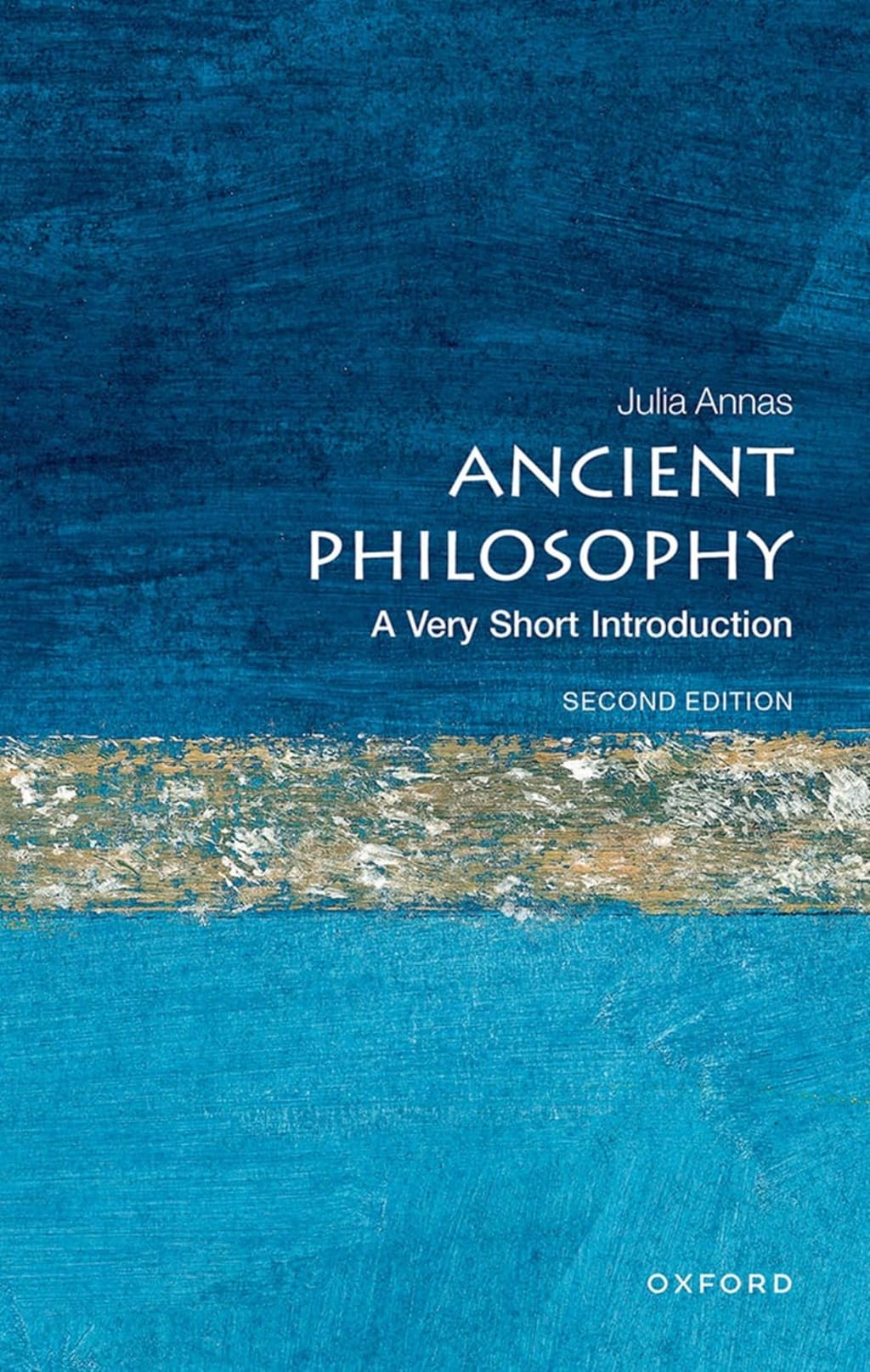
I quite like reading about philosophy and well, I know how much some of my favourite older, classic writers were perhaps influenced by these people. For example: how Shakespeare portrayed philosophies written by Aristotle on the stage. But of course, we also have Plato and others who were huge influences on our modern day with The Republic perhaps being one of the most important philosophical texts ever written. We have and don't have original surviving texts by these famed philosophers, but Julia Annas definitely does it justice by going through it in a way that basically anyone can understand. She starts with the problem concerning Medea once Jason decides to marry another woman...
Medea is a character of contrast, whilst some philosophers believe her reaction (that she would kill her children) to Jason's infidelity was justified, others like to contemplate the reason behind this reaction rather than its ethics. Annas states that the philosophers were divided upon whether Medea's emotion was a spur-of-the-moment action or whether it was a calculated decision of prolonged thought. This thought of course, changes the way we see Medea as a character. In both cases, she is the one who has been wronged (which is a pretty progressive finding for a subject that basically believed women had smaller brains until far after neurology proved them wrong). The question thus isn't about the action of killing the children being right or wrong, it is about the reason for her reaction and how that reflects her thought process.
Another point Annas shows us is that the Ancient Philosophers think that there is a difference between pleasure and happiness. Whilst happiness is a long-term goal in which you could ask someone 'do you think of yourself as happy?' and the answer would be something to do with their life. However, if you were to ask someone about pleasure or joy, it would have to be to do with something at a particular moment in time or a particular activity. For example, more than often Marie Kondo asks people whether something 'brings [them] joy'. The idea of pleasure is fleeting, but hapiness is prolonged. This is the distinction that is made and often, why we speak of them differently. It is also why pleasure is seen as an act of hedonism whereas happiness is seen as something more achievable through being 'morally and ethically good'. Honestly, it's complex but I get it.
Reason and knowledge are part of the book in an important way and of course, there would be no discussion about this without mentioning Socrates. Now, I don't really agree with everything Socrates is said to have believed but when it comes to understanding that one must admit to knowing nothing before learning anything is probably the one thing I do agree with. Socrates and Plato are both these figures who try to reason what expertise really is and whether we can define aspects of the soul such as courage and virtue. Annas claims that these two philosophers see it outwards, questioning others about the definitions in order to then put together what the most reasonable definition would be. But it is clear to ask questions like this almost constantly would annoy the Athenian courts as their grasp of unquestioned power would lessen over time and so, of course Socrates would be put to death.
Apart from this, we get the inner-workings of something that permeates through each and every sector of ancient philosophy - and that is a want to understand who we are and what virtue is. There is a general consensus that the most virtuous will always have happiness regardless of status. I'm not sure personally, that this is true but I definitely think it holds some weight in a society that has clearly moved towards status seeking in the last one hundred or so years (it's our society, that's the hint). But the question about what virtue is seems important as virtue can vary across cultures because those who display virtue in each culture behave differently. It's really quite an interesting point.
To conclude, this short introduction was something to really enjoy. There are a lot of questions without answers yes and I know that will frustrate a lot of us. But if you're just getting into philosophy then alongside the Pre-Socratics book by Oxford World's Classics, I would also recommend this little book of big ideas.
About the Creator
Annie Kapur
I am:
🙋🏽♀️ Annie
📚 Avid Reader
📝 Reviewer and Commentator
🎓 Post-Grad Millennial (M.A)
***
I have:
📖 280K+ reads on Vocal
🫶🏼 Love for reading & research
🦋/X @AnnieWithBooks
***
🏡 UK
Keep reading
More stories from Annie Kapur and writers in Geeks and other communities.
Book Review: "Criminal" by Tom Gash
Subtitled The Truth About Why People Do Bad Things, Tom Gash's book focuses on the way in which we interpret crime, how we see factors relative to crime and of course, why those who commit it choose to go in that direction. The book is an interest read complete with graphs and data, but also shows the reader why data and statistics perhaps, may not be able to explain everything and how the amount of variables that are actually within the sphere requires them to be cut down by the researcher - creating implicit bias as to which variable is 'valued' over another. It's a book that works with an incredible amount of research and explanation to tell the story of why people do bad things.
By Annie Kapura day ago in Geeks
Marvel Zombie
The last entry into our 2025 superhero projects catalogue is Marvel Zombies. This was a show that was anticipated by absolutely no one and it disappeared from the public consciousness as quickly as it was released. There was nothing special about the project that made it a must see, or a must remember. In fact if anything it's a must forget.
By Alexandrea Callaghan27 days ago in Geeks
Emma Watson, Sir Lenny Henry and Sir Elton John lead British Diversity Awards
The prizes will be handed out at a glittering ceremony in London on March 25 2026 and Harry Potter actress/activist Watson will compete with Henry and John for the top gong of Media Personality of the Year with the musician competing alongside his husband David Furnish.
By Dena Falken Esq7 days ago in Geeks



Comments (1)
Oh wow, she killed her children because her husband cheated on her? That's so terrible!