
Book Review: "101 Essays That Will Change the Way You Think" by Brianna Wiest
2.5/5 - I still can't read self-help books without laughing...


This was a hugely popular book when it came out and to be honest, I wanted to popularity train to die before I gave it a chance so I could read it in peace without having it shoved in my face from every angle that would make me hate it. I'm not usually a huge fan of self-help books and honestly, I tend to think they are not very helpful at all.
This book does not just have one idea though, it was 101 ideas. Each of these ideas is actually an essay written by someone with the purpose of wanting to change the way we see the world. I know what you're thinking: 'she's going to go through every single one and I'm going to be reading this page until I die.' Well, I was thinking about it. But instead I have chosen to select a series of interesting ideas that I either agree or disagree with. Hopefully, this shouldn't take up too much of your time, but also hopefully it gets you thinking.
As you have probably guessed though, this is going to be a mostly negative review because what the hell are some of these ideas, come on...
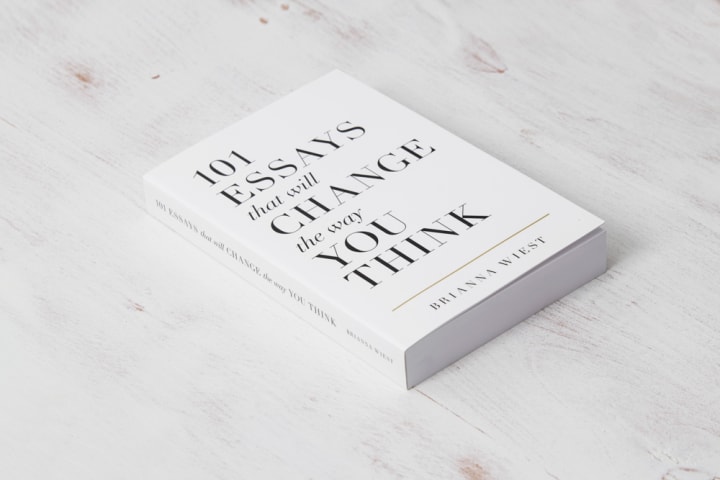
1: The Inherent Zen of Creativity
First of all, let's start off with an advantage. One of the essays talks about the 'zen of creativity'. You have probably read my review of Rick Rubin's book, and if you haven't then I highly recommend it. This essay on creativity and zen suggests that the most creative ideas come through being by yourself and being relaxed. It also states how we must ultimately drag ourselves away from the project to be able to stop judging ourselves, bringing out the most effective method for creativity in which we sit and become creative for a certain length of time without procrastination or doubting ourselves.
I love this because I always have my little podcast or audiobook on whilst writing something, it really helps me to stay in contact with my creative process (if this can be called one). I become creative (if you can call me creative) and I just write. I don't look at it again until I submit it, in which I check spelling, grammar and making sure my communication style feels realistic/academic (depending on what I'm going for. For example: here, I am being realistic and informal. My research articles will however, be more academic).
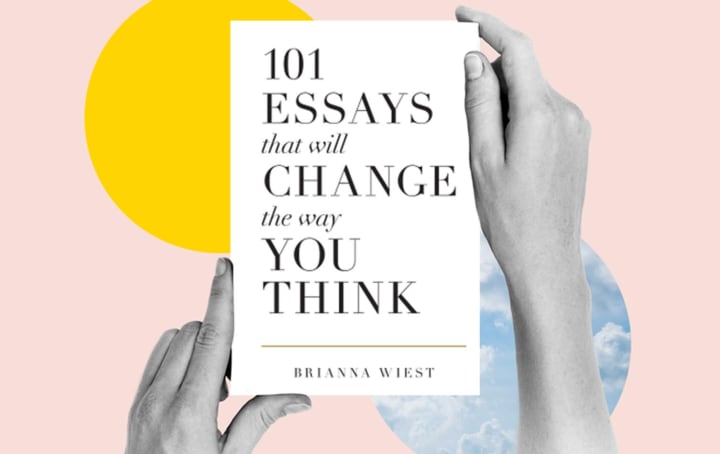
2: The Importance of Stillness
This essay takes its research as being the Virginia Shock Test. For those of you who have never heard of the shock test it was an experiment conducted by the University of Virginia in which so many people were asked to sit still in a room and do nothing for a number of minutes, the way they could get out before time was that they had a button to shock themselves with. Apparently, a large number of people chose to shock themselves and not sit with their thoughts, alone in a room doing nothing.
I'm not going to lie I have never thought stillness was very important. The argument of it being important for psychology and physical health is a shaky one at best when you read the science. I actually tested this out that's why. I spent three years doing yoga at the start of every day, sitting and doing and thinking about nothing for about fifteen minutes every morning and I can honestly tell you that though it may be uncomfortable for a time - over a greater length of time it genuinely becomes the most boring activity in the whole world. There is something about the unending boredom which meant I could not wait for the fifteen minutes to end. I eventually stopped because it really wasn't helping with anything at all.
3: Things Emotionally Healthy People Know How to Do
This one was all going so well until someone mentioned that one word that I have never been able to conceptualise: mindfulness. Mindfulness has to be the most useless word in the English Language as it doesn't actually explain anything. Being 'mindful' of doing something is different to the pop-psychology term 'mindfulness'. I cannot fathom how this idea was conceived without actually having a definition. I've even checked it out on 'ELI5' and even they didn't have any answers that were in common with each other.
Apparently, the one thing that all emotionally healthy people know how to do is to commit some time every day to mindfulness. Is it meditation? Is it thinking about a particular thing? If anyone can give me a non-dictionary functional definition for mindfulness, I'll be happy. But it really made me not take this essay seriously at all.
4: The Most Taboo Thing in Our Culture is Radical Honesty, and That's Exactly the Problem
There are many essays in this book that focus on 'true selves' and 'emotional honesty' and though I understand the idea I do not think it is a good idea to be 'radically honest' and 'completely ourselves' all the time. For example: working in a professional job means that not being a professional would probably get you fired. The idea of radical honesty hinges on the idea that we only seek validation and so, we are dishonest with ourselves, tricking ourselves into behaving certain ways for certain groups.
There is a lot of talk about 'fake kindness' as well which I think is sometimes required in order to be impartial. Let's see a scenario: a customer who is being difficult in a shop would probably become more difficult if confronted with the true emotions of the shopkeeper shouting at them. Whereas, it can be diffused easily if the shopkeeper remains professional possibly, against their will. Radical honesty here would be detrimental to the situation.
I'm not going to lie, I have to laugh at this idea of 'radical honesty' and 'true self' because it suggests that a) it is okay in all situations to say and do as you please and behave as you want and b) that there are no consequences of this. I have not even started talking about the idea that the author of the essay never actually defines what the 'true self' is. Oh boy, this was a bad one.
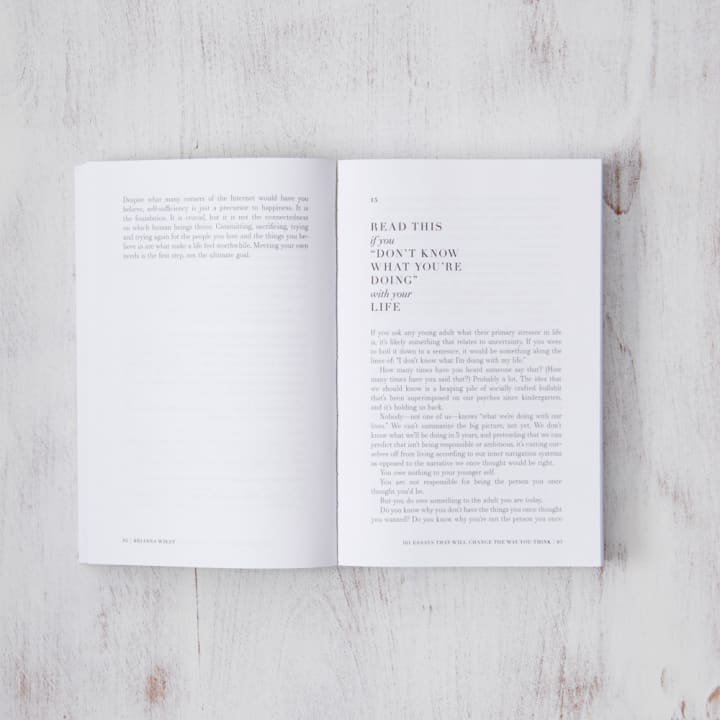
5: Things Your 20s Are Too Short For
This is one I actually liked because I take the same stance: I will not expend my energy on people I do not feel matter (unless they are paying me to do so). This is not a radical idea for someone in their 20s though and I feel like this essay really patronises people in their 20s for saying it.
But there is an idea that I do not like that pops up in this book over and over again like some kind of Marie-Kondo-Whack-A-Mole. It is the idea that anything that doesn't bring joy or purpose should be eliminated from your life. I have a huge sarcophagus-shaped DVD case in my room and it serves little purpose as I sold many of my DVDs - it doesn't really bring me joy either, I don't feel either way about it. However, it still deserves the space it holds in the room. The idea of everything having its special space kind of goes against the whole tone of 'accept the chaos, the universe will communicate' bulls***t this book holds on to.
Also, the idea that you should not stay at a job where you are miserable is a fallacy. Many people work at a job that they can rather than at the job they want and they are contented. Convincing these people they are miserable and that they should 'chase their dreams' could lead them to dire consequences. It's a different tone to how the rest of the book takes all work requiring to be purposeful rather than joyful.
Lastly, there is the risk-taking stuff such as 'going on a roadtrip and sleeping in the car'. I'm sorry but that is straight up dangerous in most cases and I won't be doing any of that sh**. I'm not "numbing my life because I'm afraid"; I'm actively avoiding being murdered. Thank you, self help rubbish.
Conclusion:
There are so many bad ideas in this book it is actually laughable. Self-help books are always funny to me but this one, with its 101 ideas in which about 1 or 2 of them are actually realistically helpful, is probably funnier than most. I think that you should probably read this too, but definitely keep an open mind. There are a lot of contradictions, there are many empty ideas with pop-psychology buzzwords and theories with no science to back it up. All in all, it was funny yes, but helpful it was not.
About the Creator
Annie Kapur
I am:
🙋🏽♀️ Annie
📚 Avid Reader
📝 Reviewer and Commentator
🎓 Post-Grad Millennial (M.A)
***
I have:
📖 280K+ reads on Vocal
🫶🏼 Love for reading & research
🦋/X @AnnieWithBooks
***
🏡 UK
Keep reading
More stories from Annie Kapur and writers in Geeks and other communities.
Book Review: "The Late Americans" by Brandon Taylor
“This wasn’t poetry. This was the aping of poetry in pursuit of validation. This was another kind of poetry theatric: If you just said enough names, people assumed you knew what you were talking about and tended to attribute the vagueness of the reference to their own ignorance.” - The Late Americans by Brandon Taylor
By Annie Kapurabout a year ago in Geeks
Marvel Zombie
The last entry into our 2025 superhero projects catalogue is Marvel Zombies. This was a show that was anticipated by absolutely no one and it disappeared from the public consciousness as quickly as it was released. There was nothing special about the project that made it a must see, or a must remember. In fact if anything it's a must forget.
By Alexandrea Callaghan26 days ago in Geeks
Silver Screen Magic with Ingrid Bergman
Swedish actress Ingrid Bergman became a Hollywood icon, starring in many memorable movies. During her acting career, she won three Academy Awards. The actress excelled in a wide range of portrayals in drama, film noir, comedy, and period pieces.
By Rasma Raistersa day ago in Geeks
Miss Persephone's Manual to a Seemingly Ordinary Life
Miss Persephone was found at the dining table, her blue eyes swollen, her tears arriving and retreating like the tides of the ocean. Earlier that day, her family had visited her in the retirement home where she had lived for eight years. It was her eightieth birthday.
By Imola Tóth7 days ago in Fiction


Comments (2)
Such an excellent review
That is the section of the bookstore I always avoid, and I will trust your wise words in this review. 📚