
“Barbra Against the World: The Making of Yentl (1983)”
A Movies of the 80s Feature

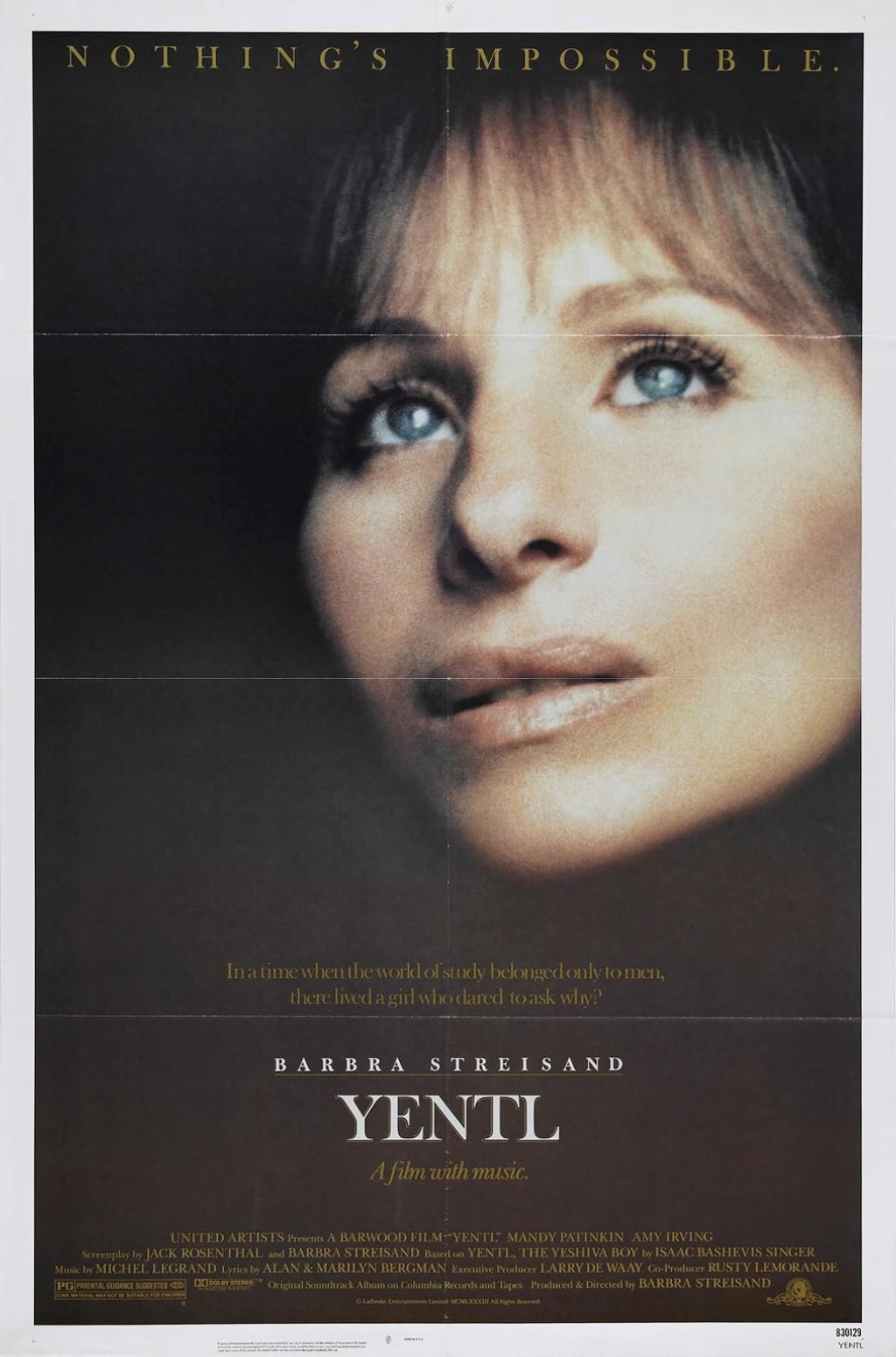
When Barbra Streisand finally stepped behind a camera in 1983, the world acted as if she was attempting something outrageous. Direct. Produce. Co-write. Star. Sing. And adapt a beloved Isaac Bashevis Singer story while playing a teenage boy? In period costume? In a musical? In Europe? The opinion pages sharpened their knives before she even yelled “action.”
And yet Yentl remains one of the most fascinating success stories of early-1980s cinema — a movie born entirely from the force of one artist’s will, made in the face of rejection, sexism, and open ridicule, and ultimately rewarded with box-office success, a platinum soundtrack, critical respect, and an Academy Award.
This is the story behind that story.
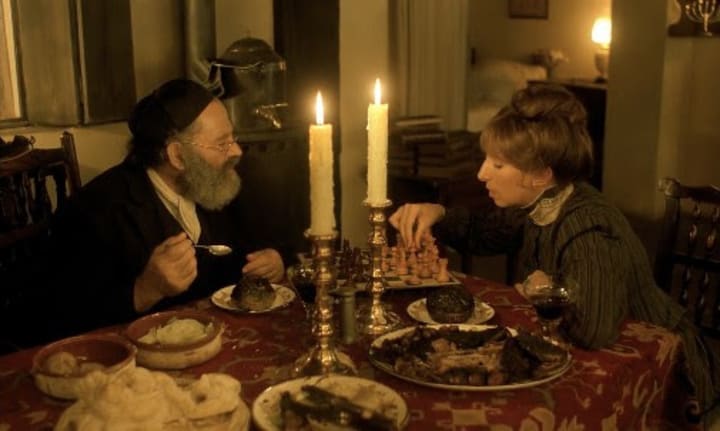
THE 15-YEAR FIGHT TO MAKE Yentl
Barbra Streisand discovered Isaac Bashevis Singer’s short story “Yentl, the Yeshiva Boy” in the 1960s and fell in love instantly. The themes — gender, identity, spiritual longing, the hunger for knowledge — hit her like lightning. She said repeatedly that she’d “never related to a character more.”
Hollywood, however, had other ideas.
For more than a decade, every studio told her no. Not “rewrite it” or “let’s explore it later.” Just no. The reasons ranged from the casually sexist (“Audiences won’t accept you as a boy”) to the financially wary (“Musicals are dead”) to the absurdly petty (“You’re not right for the part — even though you want to direct it”). The idea of a woman directing a major studio picture at all was still treated as an oddity, let alone a woman who was also a superstar singer and actress.
Streisand pitched it, rewrote it, re-approached studios, and never let the project go. But even by the late ’70s — after A Star Is Born became a massive hit — she still couldn’t get anyone to commit.
So she did what self-made legends do.
She made it happen herself.
A PERSONAL FILM MADE ON AN EPIC SCALE
Streisand and producer Jon Peters finally secured financing in the early 1980s by pitching Yentl not as a risky arthouse musical, but as an international prestige production. United Artists agreed — though skeptically.
Barbra assembled a team that would become central to the film’s texture:
• Michel Legrand, crafting a score that floats between Broadway, folk tradition, and cinematic lushness
• Marvin Hamlisch and lyricists Alan and Marilyn Bergman, helping shape the musical language
• Cinematographer David Watkin, who brought painterly light to a worn-down, Old World world
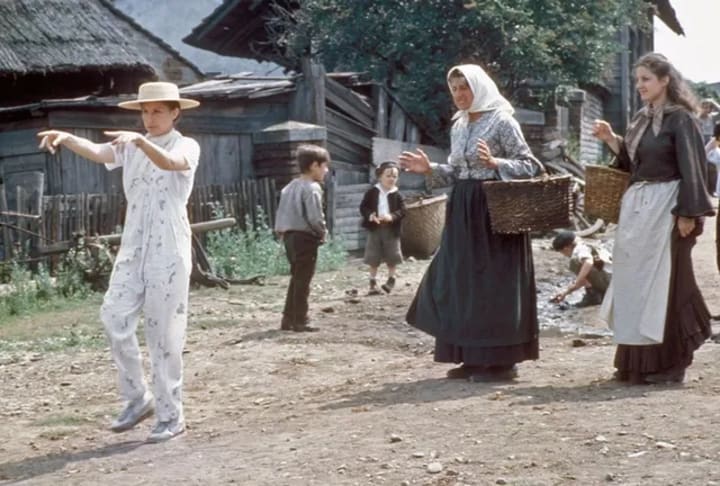
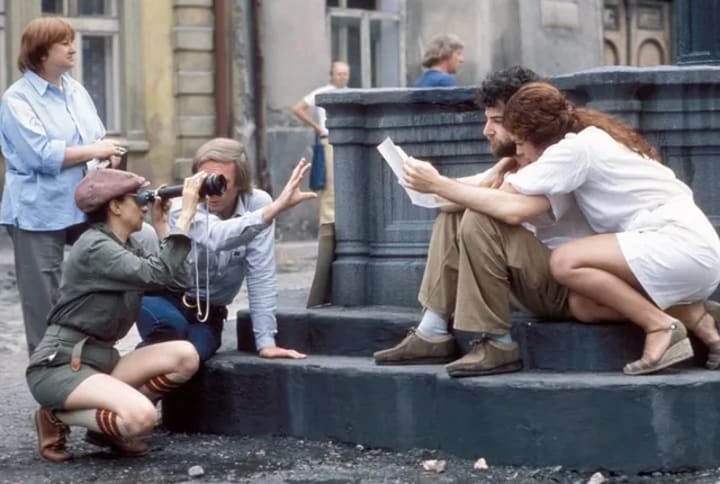
Production shot in Czechoslovakia, where the physical landscape still matched the 19th-century shtetl world of the story. This gave the film a tactile sense of place — mud, wood smoke, lantern glow — that grounded even the most theatrical musical sequences.
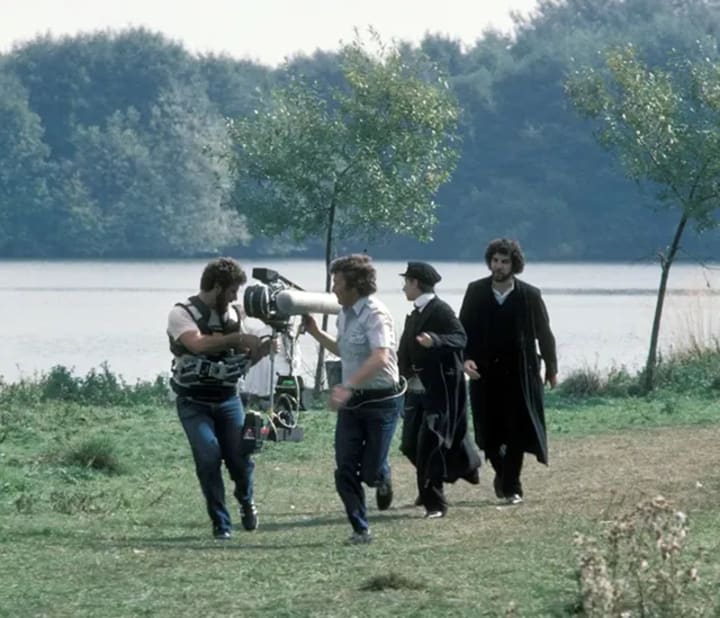
The shoot was difficult. Streisand was directing for the first time, acting while also staging musical numbers, dealing with a foreign crew, and constantly fielding gossip-column mockery from back home. Rumors of spiraling costs and diva behavior became tabloid fodder — nearly all exaggerated or fabricated. It was the price of being a woman making a serious movie.
What’s more remarkable: the cast adored her. Mandy Patinkin has spoken often about how prepared she was, how she knew exactly what she wanted from every frame, and how she elevated everyone around her.
Streisand wasn’t just making a passion project.
She was proving she belonged in the director’s chair.
THE RESULT: A FILM WITH SOUL — AND A SOUNDTRACK THAT SOARED
When Yentl premiered in November 1983, critics were stunned. Many expected something gaudy or self-indulgent. Instead, they found a lyrical, elegant film about longing — shot with restraint, built on quiet performance, and guided by one unifying vision.
The music became the emotional heartbeat of the film. “Papa, Can You Hear Me?” and “The Way He Makes Me Feel” became signature Streisand recordings, helping push the soundtrack into platinum territory. The musical numbers avoided theatrical staging; they were interior monologues — the first film musical to work entirely this way. At the time, that was a radical structural choice.
THE CULTURAL DEBATE: “CAN BARBRA DO THAT?”
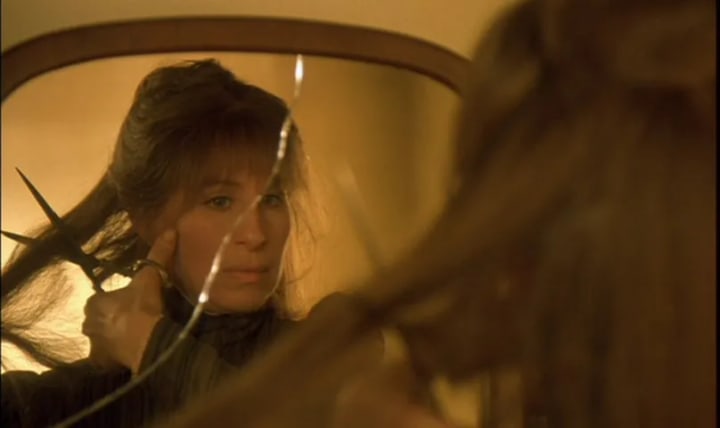
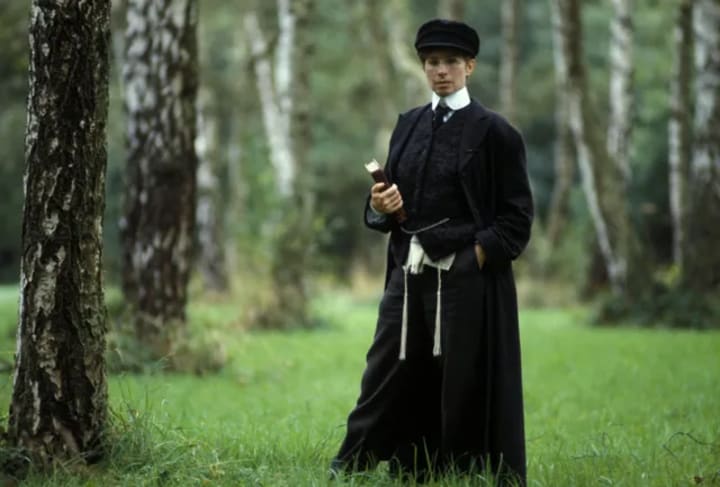
Not everything was applause. Isaac Bashevis Singer was famously ambivalent about the adaptation, and critics debated whether Streisand was “too glamorous” or “too old” for the disguised-as-a-boy premise. Film culture in the early ’80s still struggled with women asserting total creative control; every choice she made became a think-piece.
But audiences didn’t care.
A SURPRISE BOX-OFFICE SUCCESS
Despite naysayers, Yentl became a box-office hit, earning more than anyone predicted for a deeply Jewish, philosophically earnest musical romance. It resonated especially strongly with women, queer viewers, and anyone who’d ever pushed against rigid social lines.
Hollywood had claimed there was no audience for a movie like this.
Barbra proved otherwise.
AWARDS: HISTORY MADE
At the 1984 Academy Awards:
• Yentl won Best Original Song Score for Michel Legrand and the Bergmans.
• Streisand made history as the first woman ever to win a Golden Globe for Best Director.
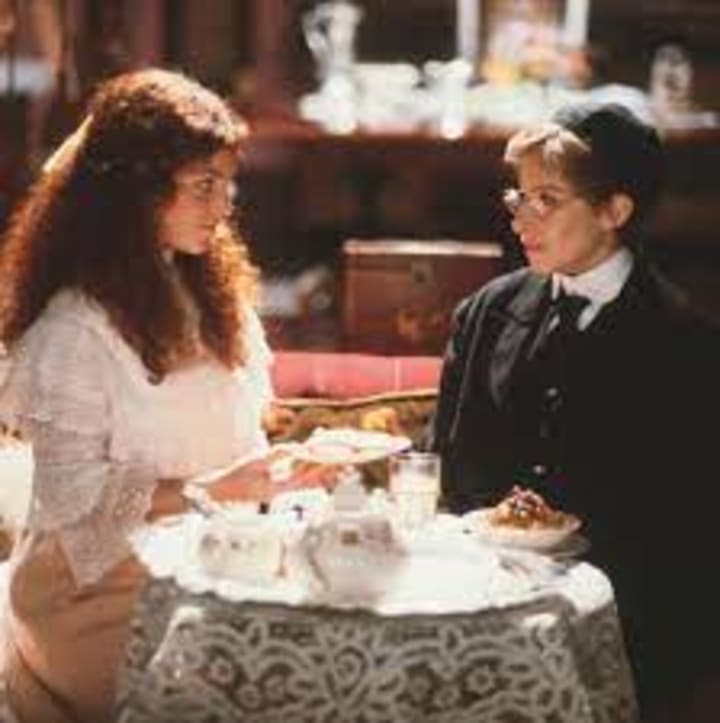
• The film earned multiple Oscar nominations, including art direction and supporting actress (Amy Irving).
The absence of a Best Director Oscar nomination for Streisand became one of the era’s biggest awards controversies — but also a badge of honor. Even without official acknowledgement, everyone knew what she had accomplished.
THE LEGACY OF Yentl
Four decades later, Yentl stands as:
• A landmark of feminist filmmaking
• A breakthrough moment for women directors
• A daringly intimate musical told through interior song
• A deeply personal statement from one of the most powerful artists of the 20th century
Barbra Streisand didn’t just make Yentl. She had to bulldoze an entire industry’s assumptions to do it. And when she finally got the chance, she delivered a film that still feels singular — a work of passion, courage, and stubborn brilliance.
Do you love The Movies of the 80s? Subscribe to Movies of the 80s here on Vocal and our YouTube channel.
About the Creator
Movies of the 80s
We love the 1980s. Everything on this page is all about movies of the 1980s. Starting in 1980 and working our way the decade, we are preserving the stories and movies of the greatest decade, the 80s. https://www.youtube.com/@Moviesofthe80s
Keep reading
More stories from Movies of the 80s and writers in Geeks and other communities.
The Rise and Fall of 'Deal of the Century' (1983): A Timeline of Hollywood Chaos
How Deal of the Century Became One of the 1980s’ Most Forgettable Hollywood Fiascos A fiasco is a funny thing. It takes many shapes. Failure has a million fathers, and that could not be more true of the 1983 feature-film flop Deal of the Century. Director William Friedkin, coming off The Exorcist and Sorcerer, was desperate to break out of the mold he’d built for himself. He envisioned a darkly comic takedown of the military-industrial complex — a thumb in the eye of the money-grubbing war-profiteers who thrived on perpetual conflict.
By Movies of the 80s2 months ago in Geeks
Silver Screen Magic with Mae West
American actress and singer Mae West became a popular film actress during the Great Depression. She started entertaining in vaudeville, then performed on Broadway, and finally went to Hollywood. She signed up with Paramount Pictures and made her debut in the 1932 film “Night After Night.” She also starred in musicals, comedies, and crime dramas. The American Film Institute named her one of the best classic Hollywood actresses.
By Rasma Raisters5 days ago in Geeks
Shakira looks refreshed while sharing exciting news: Is she working on the 2026 World Cup anthem?
Shakira knows how to make a comeback feel exciting. After a quiet holiday season spent with her sons Milan and Sasha, the global superstar has returned to Instagram with a post that feels both intimate and loaded with meaning. The Colombian singer shared a relaxed carousel of photos and a short video alongside her longtime collaborator Alex Castillo, better known as AC, the producer behind her hit song Soltera. One simple caption said it all: “Back to it!”
By Dena Falken Esq3 days ago in Geeks



Comments
There are no comments for this story
Be the first to respond and start the conversation.