
"Afropean: Notes From Black Europe" by Johny Pitts
A Reading Experience (Pt.61)

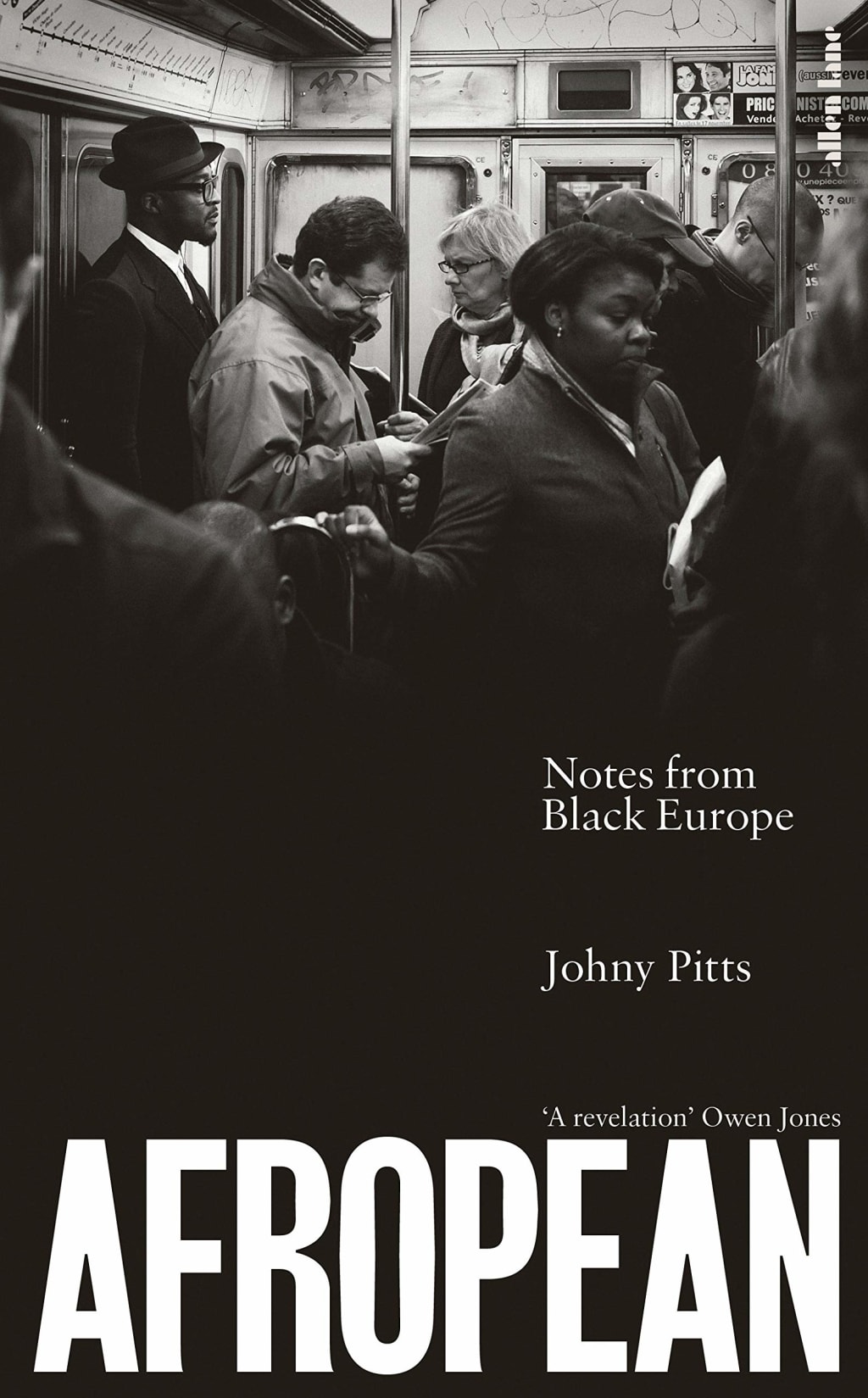
I only read this particular book this year but really, it pretty much changed the way I think about people of colour and migration. This book bases itself in the way in which Black people are viewed across Europe and seriously, as a person of colour and even though I’m Indian and from England, I could really connect with this book of experience. The reason I read this was because I heard people talking about it online as the next great nonfiction text of the Black experience in Europe. Now, I’d read quite a few of these books in comparison to my library on the Black experience in America because I live in Europe. Most of the Black experience in America based books I’ve read have been written as novels as opposed to nonfiction essays etc.
The way in which “Afropean” changed the playing field was by writing the book as a flashback experience rooted not in historical trends, figures, statistics and retellings, but instead rooted in experiences that had seemingly happened recently in perspective of the book and its composition. When reading it, I often thought about the time between the event and the writing of the book and whether that had any impact on how sometimes, the book would sound almost sorrowful at times, as if the book’s composition date had not given enough time between the actual event and itself in order to get the emotional state fully processed and so, the writer had not yet completely gone through all the stages of resentment towards his adversary. The stage of acceptance had not been yet reached and it is a positive point for the text because of the fact the writer can then do the following things for the reader:
a) it shows the experience of emotion in complete action as opposed to a complete flashback and thus, give the reader a more up-to-date look at the state of the world towards the Black-European experience and the most recent reaction they can give. If you want another text that does this, the consult “One Day When I Was Lost” by James Baldwin
b) it shows the stages of that experience. Beginning with the resent towards the racist, the writer shows how that singular emotion has to be held back and thus, when progressing through the book, the reader comes to understand how the process of emotion links to the fact that the Black-European experience is often rooted in the silence that many bring towards it. The acceptance of this treatment is wrong and therefore, the writer never lets himself or the reader get there. Instead, the reader is left on the end of the experience and emotion - allowing themselves to find a solution to this problem instead of accept in silence.
c) it gives the reader hope. The fact that acceptance of this behaviour is never reached can give the reader hope for change and thus, the experience of racism is seen as more of a problem because of the fact the writer does not try to rationalise it. Instead, the writer denounces it, often with sorrow and purpose, showing relatively little hatred but always a higher moral standing ground with more reason, intelligence and poise. The reader, therefore, is more likely to believe that the writer is here for change and can change things. As the book progresses, this idea is solidified more and more as we see more and more of the different aspects of the experience through the eyes of treatment and progression through emotional retaliation
The reading experience of this book so greatly influenced the way I think about race relations in Europe that I actually read it a second time and made notes about the way in which the writer discusses the different trends of the experience of racism and how basically all racism has similar arguments yet all emotion towards that racism is processed differently since the target often grows to accept this behaviour - he then shows us an alternative to this acceptance by never actually doing it himself. The different essays in this book are set in different cities and different countries all over Europe and show the reader the growing solitude of the Black-European in a Europe where white supremacy is still holding on by a tether, attempting to climb back up but failing as progress pushes it back down.
About the Creator
Annie Kapur
I am:
🙋🏽♀️ Annie
📚 Avid Reader
📝 Reviewer and Commentator
🎓 Post-Grad Millennial (M.A)
***
I have:
📖 280K+ reads on Vocal
🫶🏼 Love for reading & research
🦋/X @AnnieWithBooks
***
🏡 UK
Keep reading
More stories from Annie Kapur and writers in Geeks and other communities.
A Filmmaker's Review: "Auschwitz: The Nazis and the Final Solution" (BBC, 2005)
A documentary created by the BBC to showcase the lives of the survivors of the death camp of Auschwitz-Birkenau was first broadcast in 2005 and is now available on Netflix and other sites to view. It is a six-part documentary series that concentrates on the formation, building, usage and realisation of the Auschwitz death camp and from the survivors telling their tales of pain and torment to an surviving SS Officer who is haunted by his own ignorance and even to love stories which evolved between prisoner and officer in the death camp - this documentary shows us the interior of Auschwitz like we have never seen before. I bet they did not teach you about any of this stuff in school. It is absolutely heartbreaking.
By Annie Kapur5 years ago in Geeks
Silver Screen Magic with Mae West
American actress and singer Mae West became a popular film actress during the Great Depression. She started entertaining in vaudeville, then performed on Broadway, and finally went to Hollywood. She signed up with Paramount Pictures and made her debut in the 1932 film “Night After Night.” She also starred in musicals, comedies, and crime dramas. The American Film Institute named her one of the best classic Hollywood actresses.
By Rasma Raisters7 days ago in Geeks
The Devil's Cut
“Comrade, finally you’re awake.” The voice was smooth, sensual. A flickering incandescent bar was all that lit the white, sterile room. All Vladimir remembered was everything going black. He tried to move his arms and found them strapped to the gurney.
By Matthew J. Fromm6 days ago in Fiction


Comments
There are no comments for this story
Be the first to respond and start the conversation.