

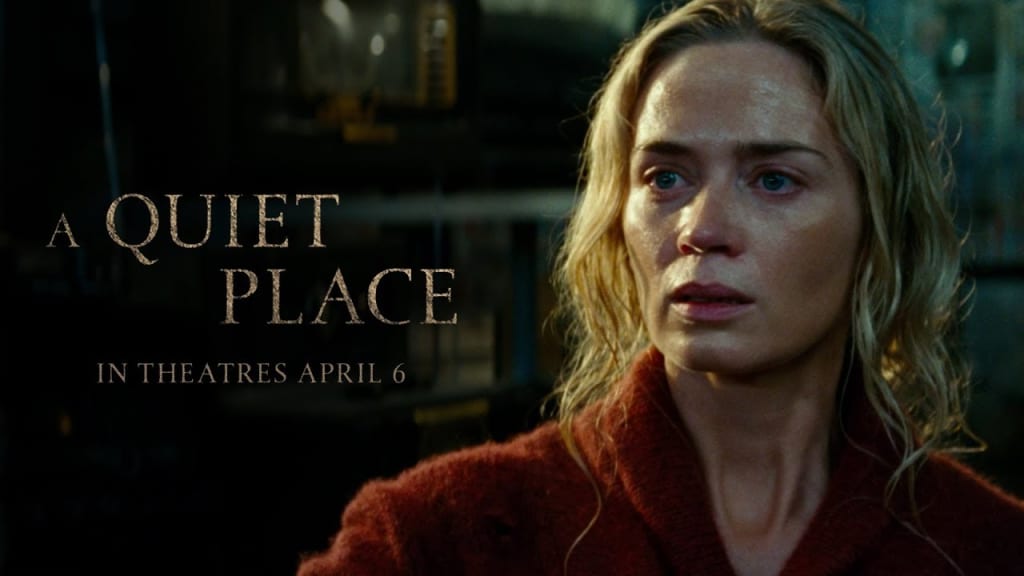
John Krasinski’s “A Quiet Place” is a film that is designed to engage the audience in a game of tension and fear. It is a movie that will have you on the edge of your seat, as it makes you an active participant in the unfolding horror, rather than just a passive observer. The film's tight script, co-written by Bryan Woods and Scott Beck, wastes no time in introducing us to the main characters, a family struggling to survive in a recently-post-apocalyptic world.
The unnamed father (played by Krasinski), his wife (Emily Blunt), and their three children, including their eldest daughter who is deaf, move around in silence, taking care not to make any noise, as it can be deadly. We quickly learn that the world has been overrun by creatures that hunt using their sense of hearing. The movie takes us through the family’s journey as they deal with the loss of a child and the impending birth of a new one in a world where silence is essential to survival.
One of the reasons why “A Quiet Place” is such a great horror movie is that it keeps the audience invested in the fate of the characters. The movie relies on visual storytelling and does an excellent job of creating tension without using dialogue. The film's main danger is sound, and this is intensified by the youngest child finding a toy that makes noise, leading to disastrous consequences.
Krasinski's brilliance in using sound as a storytelling tool is demonstrated through the way he sets up auditory expectations. He subtly introduces elements that are likely to produce sound, such as a shotgun or a timer, building tension in a way that is both unexpected and enjoyable. The film's visual language also plays with perspective, creating a terrifying world where characters cannot hear what's coming.
The movie is set on a farm that is laid out in a way that allows the audience to feel like they know it intimately. The film's sense of geography and composition create a no-nonsense, lean movie that feels like every shot has been carefully considered. The movie's pacing feels like a ticking clock, balancing scares with emotional stakes and building tension as the family prepares for the arrival of a new baby.
At its core, “A Quiet Place” is a movie about empowerment. It is a film that challenges its characters to adapt and survive in a world where sound can be deadly. The film's emotional hook elevates the final act, and Krasinski's direction results in one of the best final shots in horror in years. The movie is also unique in that it has almost no dialogue, relying heavily on visual storytelling. While the use of composer Marco Beltrami's strings for jump scares can be a bit overdone, the movie's overall message is strong and powerful.
In a world that is constantly noisy, “A Quiet Place” reminds us how essential sound is to our lives. The film weaponizes our dependence on sound and creates a world where it is deadly. The movie's originality owes a debt to films like “Alien,” but it charts its own ground by creating a world where silence is the key to survival.
In conclusion, “A Quiet Place” is an excellent horror movie that keeps the audience invested in the fate of the characters. Krasinski's direction is masterful, creating tension and fear without using dialogue. The film's visual language, sense of geography, and composition are all excellent, creating a lean, no-nonsense movie that feels like every shot has been carefully considered. The movie's message of empowerment is inspiring, and the final shot is one of the best in horror in years. “A Quiet Place” is a movie that deserves to be seen and enjoyed by all fans of the horror genre.
About the Creator
Keep reading
More stories from Diresh Sherid and writers in Geeks and other communities.
Fatherhood (2022) Movie Review
“Fatherhood” is a movie based on the true story of Matthew Logelin, a single father who raises his daughter after his wife, Liz, dies suddenly. The film stars Kevin Hart as Logelin and is directed by Paul Weitz, co-written by Weitz and Dana Stevens. The movie tries to address several issues, including the challenges of single parenthood, work-life balance, gender-based clothing, and lack of support groups for single fathers. However, the film ultimately falls short in delivering a meaningful exploration of these topics.
By Diresh Sherid3 years ago in Geeks
Book Review: "Violence and the Sacred" by René Girard
The claim that we desire things because others desire them is quite confidently the basis of many psychology books and many claims made about modern culture - especially concerning consumerism. Rather than wanting objects for their intrinsic value, humans imitate the desires of others, especially those they perceive as rivals or models. In his book All Desire is a Desire for Being, the author makes this bold claim backed up with ideas and facts to illustrate them. In my review of the book last year, I saw that Girard's maxims were anthologised as something called mimesis and that 'desire' was actually imitation. (I even depicted this through a clip from The Simpsons tagged in the review itself). But how does this then transfer to the idea of human sacrifice, religion and man's natural propensity for violence?
By Annie Kapura day ago in Geeks


Comments
There are no comments for this story
Be the first to respond and start the conversation.