
A Filmmaker's Guide: True Crime Cinema
Film Studies (Pt.88)

In this chapter of ‘the filmmaker’s guide’ we’re actually going to be learning about literature and film together. I understand that many of you are sitting in university during difficult times and finding it increasingly hard to study and I understand that many of you who are not at university or not planning on it are possibly stuck of what to do, need a break or even need to catch up on learning film before you get to the next level. This guide will be brief but will also contain: new vocabulary, concepts and theories, films to watch and we will be exploring something taboo until now in the ‘filmmaker’s guide’ - academia (abyss opens). Each article will explore a different concept of film, philosophy, literature or bibliography/filmography etc. in order to give you something new to learn each time we see each other. You can use some of the words amongst family and friends to sound clever or you can get back to me (email in bio) and tell me how you’re doing. So, strap in and prepare for the filmmaker’s guide to film studies because it is going to be one wild ride.
True Crime Cinema

What is it?
A genre of cinema that covers the true crime genre. This means crimes that actually happened that are either based on simply the crimes themselves, a book about them, a news broadcast etc. The problem people normally have with this genre is that they say that it glamorises the crimes by focusing on the nature of the individual doing them rather than the lives of the victims and telling their story. It also plays on the public's fascination with the psychological nature of the serial killer, the criminal, the thief, the terrorist etc. and why they do what they do. Personally, I believe that there is definitely a right and a wrong way to do a true crime movie.
In literature, true crime has been popular since Truman Capote recorded his book "In Cold Blood" and Vincent Bugliosi his book entitled "Helter Skelter" about the Manson Family Murders. But the reason for their popularity is often darker than studying psychological aspects or even looking at the way in which the story gripped the world. A lot of people have a morbid fascination with these people, which I think is absolutely disgusting. Literature has constantly shown us that these people are abhorrent human beings and there should be no 'morbid fascination' of any kind to do with this and it would do well if some writers left out the gory details and focused on the cases at hand. As it actually happened in history, it makes the work all the more sensitive.
What about in film?

Since the film "Bonnie and Clyde", there has been a fascination for true crime films by cinema depicting things that actually happened to make the audience even closer to the storyline. This closeness obviously is good when you're depicting the way in which these victims were real people like in films such as "My Friend Dahmer" and "Savage Grace" which admittedly concentrate more on the people who were victims rather than the goriness of the crimes themselves [something I appreciate since it is far easier to give gore than tell a coherent story about all the ins and outs of what actually happened].
But films like "Extremely Wicked, Shockingly Evil and Vile" which glamorises a terrible human being, "Dahmer" [starring Jeremy Renner] which is overly vile and gory or "JFK" which, in the opening sequence shows the President being shot in the head [otherwise, it is a brilliant movie] - seem to concentrate on the victims who were hurt in the process and the way in which they were hurt. Especially "Dahmer" which was far too horrifying to show anyone under the age of eighteen.
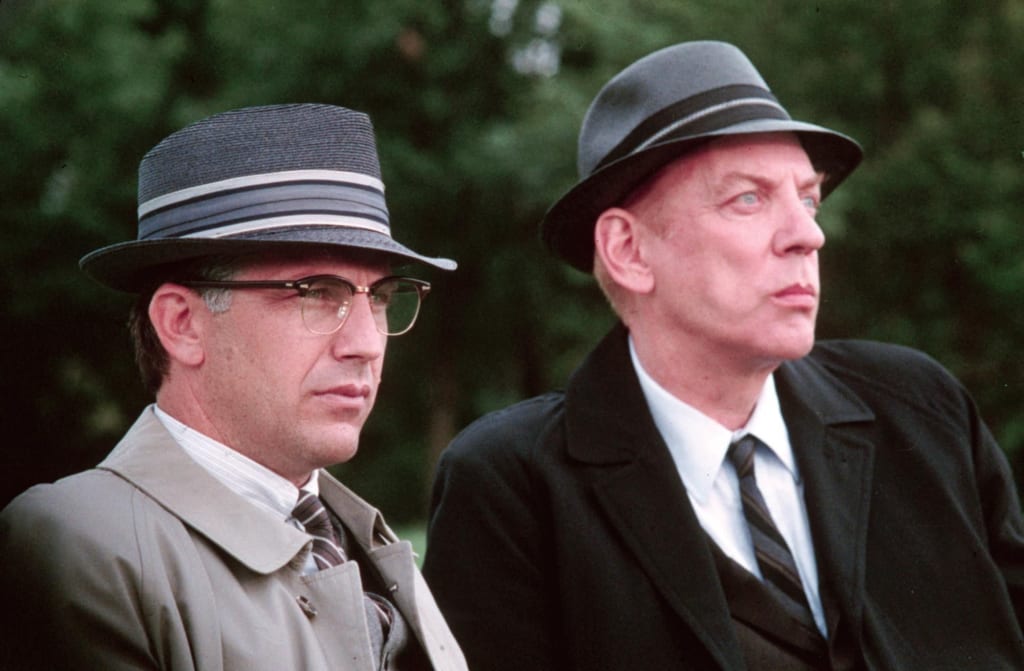
Again, there is a right and wrong way to do a true crime film. “JFK” is really the right way [except showing the Zapruder film] because there’s a lot of investigation and “Extremely Wicked” is the wrong way because it is a disgusting blight on the legacy of the victims of that horrid human being.
Further Reading:
- Backderf, D (USA). My Friend Dahmer (Graphic Biographies). 2012: Abrams.
- Cullen, D (2019). Columbine. USA: Riverrun.
- Rule, A (2019). The Stranger Beside Me. USA: Sphere.
About the Creator
Annie Kapur
I am:
🙋🏽♀️ Annie
📚 Avid Reader
📝 Reviewer and Commentator
🎓 Post-Grad Millennial (M.A)
***
I have:
📖 280K+ reads on Vocal
🫶🏼 Love for reading & research
🦋/X @AnnieWithBooks
***
🏡 UK
Keep reading
More stories from Annie Kapur and writers in Geeks and other communities.
A Filmmaker's Guide to: Kant's Philosophies
In this chapter of ‘the filmmaker’s guide’ we’re actually going to be learning about literature and film together. I understand that many of you are sitting in university during difficult times and finding it increasingly hard to study and I understand that many of you who are not at university or not planning on it are possibly stuck of what to do, need a break or even need to catch up on learning film before you get to the next level. This guide will be brief but will also contain: new vocabulary, concepts and theories, films to watch and we will be exploring something taboo until now in the ‘filmmaker’s guide’ - academia (abyss opens). Each article will explore a different concept of film, philosophy, literature or bibliography/filmography etc. in order to give you something new to learn each time we see each other. You can use some of the words amongst family and friends to sound clever or you can get back to me (email in bio) and tell me how you’re doing. So, strap in and prepare for the filmmaker’s guide to film studies because it is going to be one wild ride.
By Annie Kapur5 years ago in Geeks
Silver Screen Magic with Mae West
American actress and singer Mae West became a popular film actress during the Great Depression. She started entertaining in vaudeville, then performed on Broadway, and finally went to Hollywood. She signed up with Paramount Pictures and made her debut in the 1932 film “Night After Night.” She also starred in musicals, comedies, and crime dramas. The American Film Institute named her one of the best classic Hollywood actresses.
By Rasma Raisters6 days ago in Geeks
Official and Confirmed: Heavy Snow Set to Begin Late Tonight, Raising Fears of Major Disruptions and Travel Chaos
Meteorological agencies have officially confirmed that heavy snowfall will begin late tonight, triggering widespread weather alerts and raising serious concerns about travel chaos, power outages, and daily life disruptions. Authorities are urging people to prepare now, as conditions are expected to deteriorate rapidly once snowfall intensifies. Unlike brief winter flurries, this weather system is being described as severe, prolonged, and disruptive, with the potential to paralyze transport networks and strain emergency services. What’s Driving This Major Snow Event? The incoming storm is the result of a powerful collision between Arctic air and moisture-rich weather systems, creating ideal conditions for intense snowfall. Forecasters warn that once the cold front fully settles, snow could fall relentlessly for several hours, with accumulation accelerating overnight. In many regions, temperatures are expected to remain well below freezing, meaning snow will stick immediately, increasing the risk of icy roads and frozen infrastructure. Travel Chaos Almost Inevitable Transport authorities have already issued alerts warning that road, rail, and air travel will be severely affected. Snowfall during overnight and early morning hours poses particular risks, as commuters may wake up to impassable roads and delayed services. Motorways and rural routes are expected to be the hardest hit, with drifting snow and black ice creating dangerous driving conditions. Rail operators are preparing for speed restrictions, delays, and possible cancellations, while airports have activated snow-clearing protocols in anticipation of runway closures. Officials are strongly advising people to avoid non-essential travel, especially during peak morning hours. Schools, Businesses, and Public Services at Risk Local authorities are closely monitoring conditions, with the possibility of school closures increasing if snowfall intensifies as predicted. In previous events of similar magnitude, hundreds of schools were forced to shut with little notice. Businesses are also preparing contingency plans, including remote work arrangements where possible. Emergency services have warned that response times may be slower due to blocked roads and hazardous conditions. Hospitals and care facilities are prioritizing staff accommodation and transport to ensure essential workers can reach their posts safely. Power Outages and Infrastructure Concerns Heavy snow combined with strong winds can place enormous pressure on power lines, trees, and communication networks. Energy providers have placed repair crews on standby, warning that localized power outages are possible if lines are damaged by falling branches or ice buildup. Water systems and exposed pipes are also vulnerable in prolonged freezing conditions. Residents are being encouraged to insulate pipes, check heating systems, and prepare emergency supplies, including torches, batteries, and blankets. Advice for Staying Safe Authorities and weather experts have shared practical advice to help people stay safe during the storm: Keep mobile phones fully charged Stock up on essential food and medication Avoid driving unless absolutely necessary Check on elderly or vulnerable neighbors Dress in layers and wear proper winter footwear Drivers who must travel are advised to carry emergency kits, including warm clothing, food, water, and a shovel. Why This Snowfall Is Different What makes this event particularly concerning is not just the volume of snow, but its timing and persistence. Falling overnight and continuing into the morning rush, it has the potential to catch people off guard, leaving little time for road crews to clear major routes. Meteorologists also warn that after snowfall ends, plummeting temperatures could turn melting snow into dangerous ice, prolonging disruption well beyond the storm itself. Climate Patterns and Extreme Winters While winter snow is not unusual, scientists note that extreme and unpredictable weather events are becoming more frequent. Shifts in global climate patterns can lead to colder air plunging south more often, producing intense snowfall even in areas unaccustomed to it. This event serves as another reminder that infrastructure and emergency planning must adapt to a changing climate reality. Authorities Urge Caution as Overnight Snowfall Threatens Roads, Power Supplies, and Daily Life Weather Alerts Issued Nationwide as Arctic Air Brings Dangerous Winter Conditions From Travel Chaos to Power Outages: How the Snowstorm Could Disrupt Millions Emergency Services on High Alert as Heavy Snow and Ice Move In Why This Storm Is Different and What Residents Should Do Now Schools, Transport, and Businesses Brace for Severe Winter Disruptions Meteorologists Warn of Prolonged Snowfall and Icy Conditions After the Storm
By Fiaz Ahmed Brohi5 days ago in Geeks




Comments
There are no comments for this story
Be the first to respond and start the conversation.