
A Filmmaker's Guide to: The Weird
Film Studies (Pt.90)


In this chapter of ‘the filmmaker’s guide’ we’re actually going to be learning about literature and film together. I understand that many of you are sitting in university during difficult times and finding it increasingly hard to study and I understand that many of you who are not at university or not planning on it are possibly stuck of what to do, need a break or even need to catch up on learning film before you get to the next level. This guide will be brief but will also contain: new vocabulary, concepts and theories, films to watch and we will be exploring something taboo until now in the ‘filmmaker’s guide’ - academia (abyss opens). Each article will explore a different concept of film, philosophy, literature or bibliography/filmography etc. in order to give you something new to learn each time we see each other. You can use some of the words amongst family and friends to sound clever or you can get back to me (email in bio) and tell me how you’re doing. So, strap in and prepare for the filmmaker’s guide to film studies because it is going to be one wild ride.
The Weird
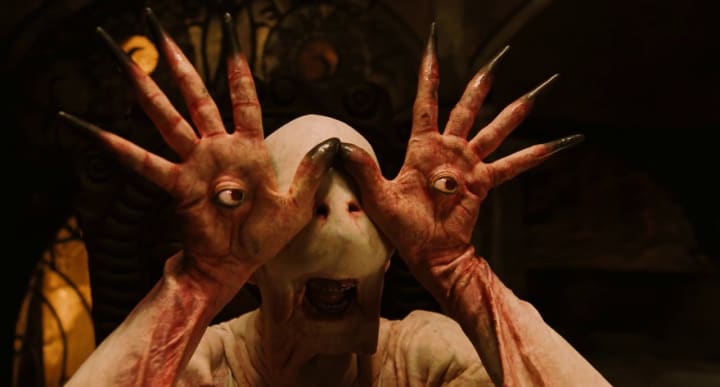
What is it?
As you probably remember, from my book review on the British Library "Queens of the Abyss" - the term 'weird' is difficult to define and so I am going to define it as what I am covering here. The mixture of dark fantasy and horror genres in order to depict a story with extended metaphors on dark aspects of the human condition such as: mental health and stress disorders. This normally makes the film/book widely acclaimed for its indirect imagery of these things instead of presenting us with a whole-heartedly negative story. "The Weird" can also be positive in plot, they just contain extended metaphors in form of indirection and misdirection.
In literature, this is seen mainly in the modern and post-modern era because of the fact the post-modernism focuses on the indirection and misdirection of the narrative. But, possibly Edgar Allen Poe - part of the American Dark Romanticist movement, was one of the foremost writers of 'the weird' through his depiction of mental health breakdowns in possibly some of the most negative and horrific storylines ever written.
Within the modern and post-modern eras, we can view this through the following novels and more:
- Coraline by Neil Gaiman
- The Heart of a Dog by Mikhail Bulgakov
- The House of the Spirits by Isabel Allende
- The Wind-Up Bird Chronicle by Haruki Murakami
- The Box-Man by Kōbō Abe
- Hopscotch by Julio Cortazar
- If On a Winter's Night a Traveler by Italo Calvino
- Geek Love by Katharine Dunn
- The Hotel New Hampshire by John Irving
- House of Leaves by Mark Z. Danielewski
What about in film?
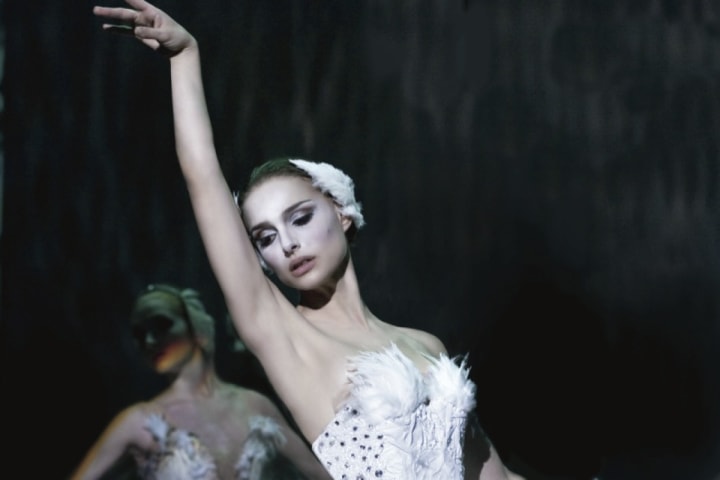
Directors such as: Guillermo Del Toro, Tim Burton, Stanley Kubrick, Darren Aronofsky, Wes Anderson, David Cronenberg, M. Night Shyamalan, David Lynch, Robert Weine, Sir Alfred Hitchcock and Tobe Hooper plus many others have often been considered as some of the best directors of 'the weird' with Guillermo del Toro and David Lynch possibly fitting best to what we are looking at here today.
The main difference between literature of the weird and film of the weird is that film requires you to be immersed in the atmosphere first and foremost, whereas a book can begin anywhere in the narrative and, because of the post-modernism of the book, does not have to go in any particular order with the character [if written in first person] not recognising or acknowledging any sort of self-destructive behaviours that may be influencing the growth in atmosphere. However, it would not work so well in film because of the way in which we have to understand the atmosphere far before the 'main part of the plot' takes place. This may require a long time of development.
Here are some films you could watch in order to see films of the weird that also contain an extended metaphor of human realities:
- Eraserhead
- The Shape of Water
- Black Swan
- Pan's Labyrinth
- Donnie Darko
- Jacob's Ladder
- The Fly
- The Cabinet of Dr. Caligari
- mother!
- Naked Lunch
- Eternal Sunshine of the Spotless Mind
- Being John Malkovich
Further Reading:
- Del Toro, G (2016). Guillermo del Toro At Home with Monsters. USA: Titan Books.
- Lynch, D (2005). Lynch on Lynch. USA: Faber and Faber
- Nathan, I (2020). Wes Anderson: The Iconic Filmmaker and his Work. USA: White Lion Publishing.
About the Creator
Annie Kapur
I am:
🙋🏽♀️ Annie
📚 Avid Reader
📝 Reviewer and Commentator
🎓 Post-Grad Millennial (M.A)
***
I have:
📖 280K+ reads on Vocal
🫶🏼 Love for reading & research
🦋/X @AnnieWithBooks
***
🏡 UK
Keep reading
More stories from Annie Kapur and writers in Geeks and other communities.
Book Review: "Paris" by Julian Green
“Paris” by Julian Green is about how one man, who was born somewhere else, came to live most of his life in the then-picturesque French Capital and what he remembers of it. The images and quotations make for great reading, great philosophies and thoughts, and they make for a brilliant build of story for when we investigate the depths of each alleyway and piece of architecture that litters the city with stories of its own. There is something incredible about this book that when you read it, you actually feel like you are inhaling the Paris air at the same time as Julian Green is running around the city like a philosophical tour guide, on his race to show you everything he holds extremely dear to him. From the amazing palaces to the backstreet bohemian cafes, from the existential quotation to the collectivism of the city’s inhabitants, from the overwhelming sense of being alone in the world, to the implication that maybe, in reality, none of this really matters at all - Julian Green is showing us the most intricate parts of one of the most historical and mysterious cities of the modern world. He does this whilst telling his own stories and anecdotes, weaving them in with the descriptions, the statements and suggestions on what the city can teach us about ourselves and our appreciation of person and place.
By Annie Kapur5 years ago in Geeks
Silver Screen Magic with Mae West
American actress and singer Mae West became a popular film actress during the Great Depression. She started entertaining in vaudeville, then performed on Broadway, and finally went to Hollywood. She signed up with Paramount Pictures and made her debut in the 1932 film “Night After Night.” She also starred in musicals, comedies, and crime dramas. The American Film Institute named her one of the best classic Hollywood actresses.
By Rasma Raisters6 days ago in Geeks
Teddi Mellencamp
Teddi Mellencamp is often introduced to the public through a familiar lens: reality television. As a former cast member of The Real Housewives of Beverly Hills, she became a recognizable name in pop culture. However, reducing Teddi Mellencamp to a single role misses the complexity of her journey. Her story is not only about fame, but about identity, accountability, and the challenges of defining oneself outside of inherited legacy and public expectation. Born into a well-known family, Teddi is the daughter of legendary musician John Mellencamp. While this connection opened doors, it also came with an unspoken burden. From an early age, she was aware that her last name carried weight. Rather than leaning into celebrity privilege, Teddi has repeatedly emphasized her desire to build something independently, even when that path proved uncomfortable or controversial. Early Life and the Search for Self Growing up with a famous parent often creates a complicated relationship with identity, and Teddi Mellencamp has been candid about that reality. She spent much of her early adulthood trying to understand who she was beyond her surname. This search led her through various careers, including acting, music, and eventually wellness coaching. Teddi has spoken openly about her struggles with self-esteem, body image, and emotional eating. These challenges became formative experiences that later shaped her professional direction. Rather than hiding those struggles, she chose to build her platform around them, which resonated with many people who saw pieces of their own lives reflected in her honesty. Reality Television and Public Scrutiny Teddi joined The Real Housewives of Beverly Hills in 2017, entering a world where personal conflict is often amplified for entertainment. Her reputation on the show was defined by a commitment to what she called “accountability,” a trait that set her apart from her castmates but also placed her in the center of controversy. While some viewers appreciated her straightforward nature, others criticized her for being rigid or judgmental. Reality television rarely allows space for nuance, and Teddi often found herself portrayed in extremes. Over time, the constant scrutiny took a toll. Her departure from the show marked a turning point, signaling a desire to step away from a format that no longer aligned with her personal growth. Building a Wellness Brand One of the most discussed aspects of Teddi Mellencamp’s career is her work in the wellness industry. Her accountability-focused coaching program attracted attention for its strict structure and promises of transformation. Supporters praised the discipline and motivation it provided, while critics questioned its methods and sustainability. Teddi has addressed these critiques publicly, acknowledging mistakes and emphasizing the importance of evolving practices. Regardless of where opinions fall, her experience highlights a broader conversation about wellness culture, responsibility, and transparency in an industry that often operates without clear boundaries. What stands out is her willingness to engage with criticism rather than avoid it. In an era where public figures often deflect accountability, Teddi’s approach has been to confront uncomfortable conversations head-on, even when doing so risks backlash. Family, Motherhood, and Balance Beyond professional pursuits, Teddi Mellencamp frequently speaks about motherhood as one of the most grounding forces in her life. Raising children while navigating public attention has reshaped her priorities. She has described motherhood as both humbling and transformative, challenging her to model resilience, honesty, and self-acceptance. Balancing family life with a public career is not easy, particularly when personal decisions are subject to public commentary. Teddi’s openness about parenting struggles, marital challenges, and mental health has contributed to a more relatable public image, one that extends beyond the polished narratives often seen on social media. Life After Reality TV Since stepping away from Real Housewives, Teddi has explored new avenues, including podcasting and public speaking. These platforms allow for deeper, more thoughtful discussions than reality television typically permits. Through long-form conversations, she has been able to share perspectives on accountability, personal growth, and navigating criticism in a digital age. Her evolution reflects a broader trend among former reality stars who seek to reclaim their narratives. Rather than remaining confined to a single identity, Teddi has demonstrated that reinvention is possible, even after highly publicized experiences. Public Perception and Personal Growth Public opinion about Teddi Mellencamp remains divided, and perhaps that is inevitable. Visibility invites judgment, and growth is rarely linear. What distinguishes her journey is a consistent effort to learn from missteps rather than deny them. She has spoken about therapy, self-reflection, and the importance of separating personal worth from public validation. These themes resonate in a culture increasingly aware of the mental health costs associated with constant exposure and online criticism. A Continuing Story Teddi Mellencamp’s story is not defined by a single role, controversy, or achievement. It is an ongoing process of self-definition in the public eye. From navigating the expectations tied to her family name to confronting the realities of wellness culture and reality television, her journey reflects the complexity of modern public life. Rather than presenting herself as flawless, Teddi continues to position herself as a work in progress. That willingness to evolve, admit fault, and keep moving forward is what makes her story compelling. In a media landscape that often rewards perfection, her narrative offers something more human: the acknowledgment that growth comes from discomfort, and identity is shaped through accountability—not just success.
By Saboor Brohi 3 days ago in Geeks




Comments
There are no comments for this story
Be the first to respond and start the conversation.