


In this chapter of ‘the filmmaker’s guide’ we’re actually going to be learning about literature and film together. I understand that many of you are sitting in university during difficult times and finding it increasingly hard to study and I understand that many of you who are not at university or not planning on it are possibly stuck of what to do, need a break or even need to catch up on learning film before you get to the next level. This guide will be brief but will also contain: new vocabulary, concepts and theories, films to watch and we will be exploring something taboo until now in the ‘filmmaker’s guide’ - academia (abyss opens). Each article will explore a different concept of film, philosophy, literature or bibliography/filmography etc. in order to give you something new to learn each time we see each other. You can use some of the words amongst family and friends to sound clever or you can get back to me (email in bio) and tell me how you’re doing. So, strap in and prepare for the filmmaker’s guide to film studies because it is going to be one wild ride.
Metaphor

What is it?
A metaphor is a direct comparison between two things. Instead of one thing being like another, one thing is actually another. Metaphors are far easier to understand when they are seen in practice instead of being read on paper. There are two types of metaphor I want to go through here:
1. Extended Metaphor
An extended metaphor is when something is compared to something else for a lengthy amount of time, possibly an entire book or movie. These two things are directly comparable because of the stark similarities between them. Normally, an extended metaphor is very easily recognisable. For example: the film "Avatar" (2009) can be viewed as an extended metaphor for the destruction of the Amazon Rainforest.
2. Conceit
Although meaning a similar thing, a conceit is different to an extended metaphor. Where an extended metaphor can play out for a lengthy amount of time, over the course of an entire book or movie - so can a conceit. But, where the extended metaphor is recognisable because of the two things having strange similarities which help us see that it is there, a conceit does not. A conceit compares two things that seemingly have no similarities and would not be compared in normality because of their stark differences. For example: a marriage bed being compared to a mosquito or fly bite (see: John Donne's "The Flea").
What about in film?
In film, extended metaphors are far more common than conceit. However, conceit is sometimes used to fool the audience or represent something outlandish through symbolism (i.e taboo subjects, offensive references to certain topics etc.). Most of the time, they are both used in order to hide messages within the film and to give the film an extra, less obvious, layer of meaning. The reason for giving the film this extra meaning would to be to make the audience think about it more, watch it more and more importantly, get generations of film students possibly developing theories on it for years to come. Solidifying your film amongst the film study community helps you solidify your film in film history since more criticism will generate more reading of criticism and more of that generates more viewers in more generations.
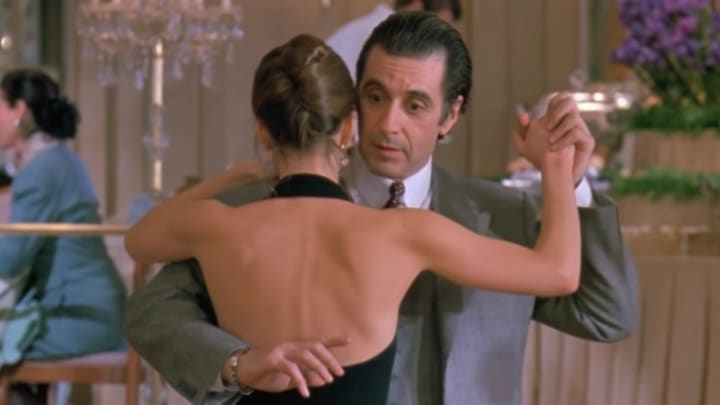
If you want to watch films that have extended metaphors and conceits in them (and yes, they can contain both), then I would recommend watching these films:
1. Pulp Fiction (1994)
2. The Birds (1963)
3. Scent of a Woman (1992)
4. A Scanner Darkly (2006)
5. Good Night and Good Luck (2005)
6. Michael Clayton (2007)
7. Caravaggio (1986)
8. Vanilla Sky (2001)
9. The Shining (1980)
10. Jackie Brown (1997)
When it comes to writing a metaphor, the film is normally commenting on either the time and place in which the society within the film is built, the class and society of the lives of the audience at the time of its release or the indefinite problems of the planet within the time frame in which the film is released. For example: many of Jordan Peele's films deal with an extended metaphor upon Black Identity and how it intertwines with American Politics in our own day whereas, in the films of Spike Lee, we get a revival of an extended metaphor dealing with Black Identity Politics from the past in which they are still struggling for basic human rights. Both deal with Black Identity and American Politics, both have extended metaphors in their films and yet, both deal with them entirely differently.

So, when we look at film that contains extended metaphor or conceit, what we are looking for is:
1. extended metaphors in which two things are compared directly, noticed by their stark similarities in ideas.
2. symbolic presentation of more taboo or less physical aspects to this metaphor that are covered up by being represented as something entirely different to itself.
Further reading:
- Boehmer, E (2005). Colonial and Postcolonial Literature: Migrant Metaphors. UK: Oxford University Press.
- Cartmell, D (2007). The Cambridge Companion to Literature on Screen. UK: Cambridge University Press.
- Greifstein, S. et al (2020). Cinematic Metaphor in Perspective: Reflections on a Transdisciplinary Framework. USA: De Gruyter
- Guibbory, A (2006). The Cambridge Companion to John Donne. 2nd ed. UK: Cambridge University Press.
- Morley, D (2012). The Cambridge Companion to Creative Writing. 2nd ed. UK: Cambridge University Press.
- Said, E (2005). Orientalism. 2nd ed. UK: Penguin Modern Classics.
- Westling, L (2014). The Cambridge Companion to Literature and the Environment. UK: Cambridge University Press.
- Yorke, J (2014). Into The Woods: How Stories Work and Why We Tell Them. UK: Penguin
About the Creator
Annie Kapur
I am:
🙋🏽♀️ Annie
📚 Avid Reader
📝 Reviewer and Commentator
🎓 Post-Grad Millennial (M.A)
***
I have:
📖 280K+ reads on Vocal
🫶🏼 Love for reading & research
🦋/X @AnnieWithBooks
***
🏡 UK
Keep reading
More stories from Annie Kapur and writers in Geeks and other communities.
"Why I Adore..." An Introduction
In this chapter of ‘the filmmaker’s guide’ we’re going to look at people that I absolutely adore and why I adore them. They can be anyone who is famous for being in film such as: actors and actresses, directors and producers, composers etc. We’re going to be looking at my childhood heroes, people I have discovered recently and people that I have yet to look entirely into. We’ll take a bit of a look at how I discovered them, what I think of them and why I think this way about them. Hopefully, we can gain a common ground, you can discover some new people or, via the email address in my bio, you can email me with any new people I don’t know about that you think I would like based on what you’ve seen. These are supposed to be positive articles and made to brighten your day and mine. So, let’s take a wild ride into my childhood, my teen years and what I absolutely adore about the film industry because it is alive and kicking (and if it isn’t, hell I might be out of a job…). Let’s go!
By Annie Kapur5 years ago in Geeks
Silver Screen Magic with Mae West
American actress and singer Mae West became a popular film actress during the Great Depression. She started entertaining in vaudeville, then performed on Broadway, and finally went to Hollywood. She signed up with Paramount Pictures and made her debut in the 1932 film “Night After Night.” She also starred in musicals, comedies, and crime dramas. The American Film Institute named her one of the best classic Hollywood actresses.
By Rasma Raisters8 days ago in Geeks
How to Succeed at the Benson Directory®
Congratulations and welcome to the Benson Directory® employee #22391! As our newest call handler, you will have the privilege of speaking with dozens of unique and interesting people on a daily basis as well as the opportunity to earn bonuses for high performance. Contained within this handbook you will find a set of ease to follow instructions designed to help you settle in to your new role and begin paving the way to success.
By S. A. Crawford5 days ago in Fiction




Comments
There are no comments for this story
Be the first to respond and start the conversation.