
A Filmmaker's Guide: "The Hands of Orlac" (1924)
Film Studies (p.152)

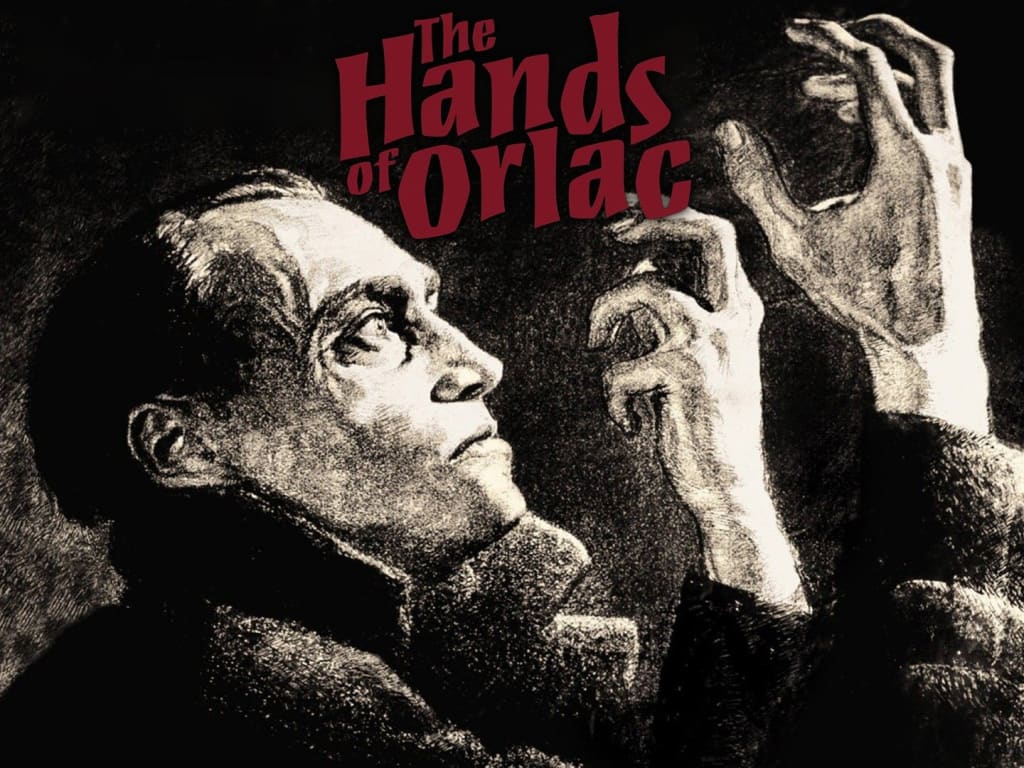
In this chapter of ‘the filmmaker’s guide’ we’re actually going to be learning about literature and film together. I understand that many of you are sitting in university during difficult times and finding it increasingly hard to study and I understand that many of you who are not at university or not planning on it are possibly stuck of what to do, need a break or even need to catch up on learning film before you get to the next level. This guide will be brief but will also contain: new vocabulary, concepts and theories, films to watch and we will be exploring something taboo until now in the ‘filmmaker’s guide’ - academia (abyss opens). Each article will explore a different concept of film, philosophy, literature or bibliography/filmography etc. in order to give you something new to learn each time we see each other. You can use some of the words amongst family and friends to sound clever or you can get back to me (email in bio) and tell me how you’re doing. So, strap in and prepare for the filmmaker’s guide to film studies because it is going to be one wild ride.
"The Hands of Orlac" (1924)
A film about how we do not appreciate our gifts properly and also about the pervading sense of paranoia underlying Germany and Austria during the 1920s when they had to pay reparations to other countries after the war, this film is one of Conrad Veidt's greatest additions to cinema. He portrays a piano player who loses his hands in an accident only to have them replaced by hands that do not particularly suit him very well. When things go from bad to worse to pure evil, the player - Orlac - starts to gain a sense of paranoia about these new claws he has and seeks to find out where they came from.
The tons of metaphors underneath this film to do with the state of Germany, Austria etc. at this time of history is something to be revered. We can not only see the suffocating paranoia portrayed by Orlac who now has someone else's blood on his hands. But we also have the idea of how one should appreciate their talents without making it all of their personality. Something more philosophical is there - how we appreciate our own lives and how we give them meaning. For Orlac, there is no meaning without his piano playing and so, this depression overcasts the film and makes him out to be more monstrous than he actually is.
The metaphors are not only present in the storyline, but they are also present in the stills we see from the film.
Still #1
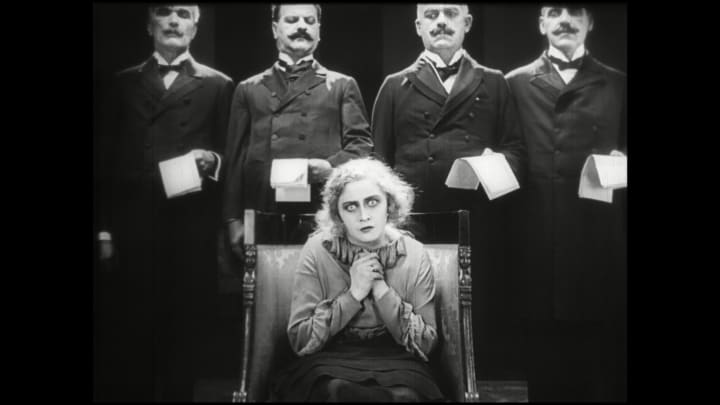
There is something very clear about this image: there is a moment of terror or worry, nervousness or something uncomfortable about the scene it is from. Without revealing spoilers of the film to you, you can pretty much see who creates the nervousness and who receives it.
This creation and reception of nervousness and anxiety adds to the meaning of the extended metaphor to do with Germany and Austria's current position in the world after the war. One rules over the other with the other being pushed into a position where it cannot possibly get out.
Still #2
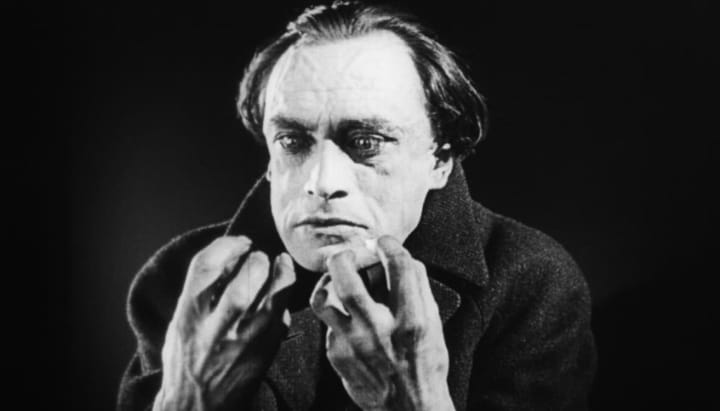
We can see from this still that there is clearly something unnatural, something that feels more like a punishment than a new beginning. Again, this is a still from which we can see the metaphor for the reparations era of Germany and Austria. It's perfectly personified as a talented man who has an accident that is not his fault, then this leads to an almost ironic punishment for being talented and for being prepared for something. Along the way, we will see many of these images of the man simply looking at his hands.
Still #3
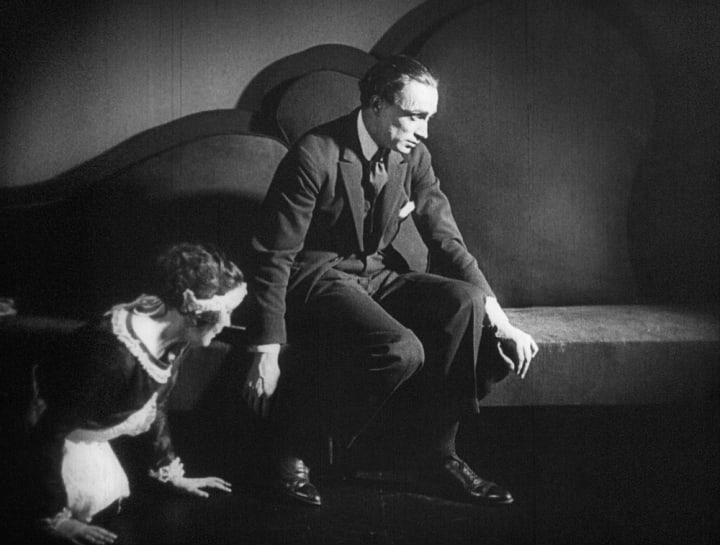
From this we can see the way in which the metaphors make a difference outside the political sphere. The metaphor of the reparations that was mostly kept private from the poorer, or even extremely poor, public would make these people incredibly curious. The scene is immediately followed by Orlac jumping up startled and basically telling her not to see the hands. But, the metaphor is also loud and clear in the fact that there were things that the governments were keeping away from the public, only to have the reparations cause massive damages to their lives later on. So, in reality, it was no use.
Conclusion
If you're going to watch "The Hands of Orlac" (1924) then I would want you to look out for the reparations metaphor because it is not only loud and clear, it is really cleverly added into the story. Conrad Veidt's performance is another reason why you should watch this film because he is one of the greatest actors who has ever lived.
About the Creator
Annie Kapur
I am:
🙋🏽♀️ Annie
📚 Avid Reader
📝 Reviewer and Commentator
🎓 Post-Grad Millennial (M.A)
***
I have:
📖 280K+ reads on Vocal
🫶🏼 Love for reading & research
🦋/X @AnnieWithBooks
***
🏡 UK
Keep reading
More stories from Annie Kapur and writers in Geeks and other communities.
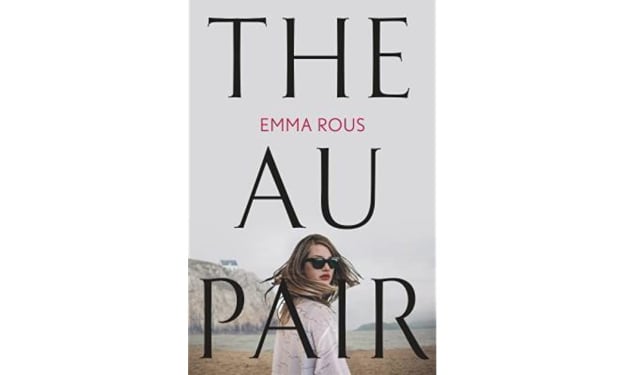
Book Review: "The Au Pair" by Emma Rous
I remember when I was at work a few years back and I was in the midst of reading a book called “Luckiest Girl Alive” and I was really enjoying it. A woman, my coworker whom I will not name, came up to me and said that because I had studied literature and film for so long that I should be reading something more literary and classic and sophisticated than a chick-flick thriller. I am not going to lie to you, I felt kind of bad for reading it then. But after a while I realised something. As I have been studying literature and film for so long, I can pretty much read what I feel like and if I want to read, as she put it, a ‘chick-flick thriller’ then I am going to read a ‘chick-flick thriller’. Why? Well, because I felt like it. Do not ever let anyone make you feel bad about what you are reading. Reading should be for enjoyment not for the sake of making yourself look smarter than everyone else. And honestly, they are pretty good books - flicking from one perspective to another from one time to the next, revealing secrets and keeping you gripped unit the end. I don’t remember the last time Don Quixote did that since I read it when I was fifteen. Other times? Not so much.
By Annie Kapur4 years ago in Geeks
Silver Screen Magic with Mae West
American actress and singer Mae West became a popular film actress during the Great Depression. She started entertaining in vaudeville, then performed on Broadway, and finally went to Hollywood. She signed up with Paramount Pictures and made her debut in the 1932 film “Night After Night.” She also starred in musicals, comedies, and crime dramas. The American Film Institute named her one of the best classic Hollywood actresses.
By Rasma Raisters11 days ago in Geeks


Comments
There are no comments for this story
Be the first to respond and start the conversation.