
A Complete Guide to Healthcare App Development for Startups and Enterprises
Discover the latest trends, must-have features, and the top partners to build your digital health solution in 2026.


A Complete Guide to Healthcare App Development for Startups and Enterprises Discover the latest trends, must-have features, and the top partners to build your digital health solution in 2026.
The healthcare industry is experiencing a digital renaissance. In 2026, healthcare app development is no longer just about writing code; it's about engineering patient-centric ecosystems that save lives. Whether you are a startup disrupting the market with AI or an enterprise modernizing legacy systems, the right technology can transform how care is delivered. This guide explores the evolving landscape of medical software, the essential features you need, and the top partners who can bring your vision to life.
What is Healthcare App Development?
Healthcare app development is the process of creating mobile and web applications tailored for the medical industry. It goes beyond standard software engineering by integrating strict regulatory compliance (like HIPAA and GDPR) with complex data security measures.
Types of Healthcare Applications
The scope is vast. You have patient-facing apps that handle everything from appointment scheduling to remote monitoring. Then there are provider-focused solutions that streamline clinical workflows and integrate with Electronic Health Records (EHR). In 2026, we are also seeing a surge in digital therapeutics—software that delivers evidence-based therapeutic interventions to patients.
The Role of Interoperability
A standalone app is a dead end. Modern development focuses on creating interconnected systems where data flows securely between labs, pharmacies, and hospitals. This requires expertise in standards like HL7 and FHIR, ensuring that your application is a vital part of the larger healthcare puzzle.
Must-Have Features for Modern Health Apps
To succeed in 2026, your app needs more than just a login screen. Users expect a seamless, intelligent experience.
Telemedicine and Remote
Monitoring The ability to consult with a doctor via video or chat is now a baseline expectation. But modern apps go further, integrating with remote patient monitoring (RPM) tools to track vitals like heart rate and blood pressure in real-time, alerting providers to anomalies instantly.
AI-Driven Symptom Checkers
Startups are leveraging Generative AI to build intelligent triage systems. These tools guide patients to the right level of care—whether that's self-care, a virtual visit, or the ER—reducing the burden on healthcare facilities.
Wearable Device Integration
Your app should talk to the devices your patients already wear. Integrating data from Apple Watch, Fitbit, or specialized medical sensors provides a holistic view of patient health, enabling proactive rather than reactive care.
Secure Payment Gateways
Frictionless billing is crucial for user retention. Integrating secure, HIPAA-compliant payment processing allows patients to pay copays or subscription fees instantly within the app.
The Step-by-Step Development Process
Building a compliant health app is a rigorous journey. Here is the roadmap successful companies follow.
1. Discovery and Compliance Strategy
Before writing a line of code, you must define your Minimum Viable Product (MVP) and map out your regulatory strategy. Are you building a Class I medical device? Do you need FDA clearance? Answering these questions early prevents costly pivots later.
2. UI/UX Design for Accessibility
Healthcare is for everyone. Your design must adhere to WCAG (Web Content Accessibility Guidelines) to ensure it is usable by people with disabilities. High-contrast modes, voice navigation, and simple typography are essential.
3. Agile Development and Testing
The best teams use Agile methodology, working in short sprints to deliver features incrementally. This allows for continuous feedback and testing. Security testing (penetration testing) should happen at every stage, not just at the end.
4. Launch and Maintenance
Launching is just the beginning. You need a plan for App Store Optimization (ASO) to get discovered. Post-launch, you must commit to regular updates to patch security vulnerabilities and ensure compatibility with new OS versions.
Key Trends Shaping the Industry in 2026
To build a successful app, you must look ahead. The trends defining 2026 are centered on intelligence, security, and immersion.
AI and Hyper-Personalization
Artificial Intelligence is moving from "nice-to-have" to essential. Apps now use predictive analytics to forecast potential health issues before they become critical. This shift from reactive to proactive care is a game-changer for patient outcomes.
Zero-Trust Security
Architectures With cyber threats evolving, the old "castle and moat" security model is obsolete. Top developers are implementing Zero-Trust architectures, where no user or device is trusted by default. We are also seeing the early adoption of quantum-resistant encryption to future-proof sensitive patient data.
Spatial Computing and IoT
The integration of the physical and digital worlds is accelerating. Spatial computing (AR/VR) is revolutionizing medical training and rehabilitation, while the Internet of Medical Things (IoMT) connects millions of devices directly to clinical dashboards.
Healthcare App Development Companies
Choosing the right partner is the most critical step in your journey. You need a team that combines technical brilliance with deep industry knowledge. Here are the top 7 companies leading the pack in 2026.
1. Indi IT Solutions
Overview
Indi IT Solutions is the premier choice for healthcare app development in 2026. With over 12 years of experience and a portfolio of 1,000+ successful apps, they have mastered the art of building compliant, user-centric digital health solutions. Their "Quality First Approach" ensures that every line of code contributes to a robust, scalable application.
Why They Are #1
They stand out for their comprehensive service offering, which spans from strategic planning and UI/UX design to rigorous QA and post-launch support. Their expertise in Agile methodology allows for rapid iteration, which is crucial in the fast-paced healthtech market. Whether you need a custom telemedicine platform or a blockchain-secured patient portal, Indi IT has the proven expertise to deliver.
Key Strengths
- Deep Compliance Knowledge: Experts in HIPAA, GDPR, and FDA regulations.
- Versatile Tech Stack: Proficiency in AI, Blockchain, and IoT integration.
- Client-Centric Process: Transparent communication and 24/7 technical support.
2. ScienceSoft
Overview
ScienceSoft is a veteran in the IT consulting space with a strong focus on healthcare. They are known for tackling complex, large-scale projects for hospitals and medical device manufacturers.
Key Strengths
Their regulatory experts are some of the best in the business, ensuring that even the most complex software meets strict international standards. They excel in integrating legacy systems with modern cloud infrastructure.
3. LeewayHertz
Overview
If your project relies heavily on Artificial Intelligence, LeewayHertz is a strong contender. They have carved a niche in building generative AI solutions that can analyze medical images and automate diagnostic processes.
Key Strengths
They are pioneers in AI-driven healthcare, offering solutions that range from intelligent chatbots for patient triage to sophisticated predictive analytics models.
4. OpenXcell
Overview
OpenXcell focuses on the "human" side of health tech. They prioritize User Experience (UX) design, understanding that a medical app is only effective if patients actually use it.
Key Strengths
Their designs are intuitive and engaging, designed to boost patient retention. They are particularly strong in the telemedicine space, creating virtual care platforms that feel personal and accessible.
5. Chetu
Overview
Chetu offers a unique "on-demand" developer model. They are backend specialists, perfect for projects that require heavy lifting in terms of database management and system integration.
Key Strengths
Their expertise in HL7 and FHIR standards makes them the go-to partner for interoperability projects. They ensure your app can "talk" to any EHR system on the market.
6. Konstant Infosolutions
Overview
As the Internet of Things (IoT) becomes standard, Konstant Infosolutions leads the charge in connecting apps with the physical world. They specialize in wearable technology integration.
Key Strengths
From smartwatches to continuous glucose monitors, they build the bridges that bring real-time patient data into your app. Their solutions are vital for remote patient monitoring programs.
7. Intellectsoft
Overview
Intellectsoft serves the enterprise market. If you are a large insurance provider or a hospital network, their scalable solutions are designed to handle millions of transactions securely.
Key Strengths
They offer healthcare cloud solutions that provide the robust infrastructure needed for massive datasets. Their focus is on stability, security, and long-term scalability.
Understanding Costs and Timelines
One of the most common questions is, "How much will this cost?" The answer depends entirely on the scope of your vision.
Factors Influencing Development Expenses
- Complexity: A simple symptom tracker is vastly cheaper than an AI-powered diagnostic tool.
- Integrations: Connecting to existing EHR systems (like Epic or Cerner) adds significant complexity and cost.
- Compliance: Achieving and maintaining HIPAA compliance requires rigorous testing and security audits, which impacts the budget.
- Realistic Timelines In 2026, a standard healthcare app typically takes 4 to 6 months to develop an MVP (Minimum Viable Product). However, complex enterprise solutions can take 12 months or more. It's crucial to work with a partner who provides a transparent roadmap and sticks to it.
Conclusion
The future of healthcare is digital, and the app you build today could define the standard of care tomorrow. Whether you are a startup disrupting the market or an established provider modernizing your services, the stakes are high.
Here's the thing: technology is just the tool. The real goal is better health. By partnering with a leader like Indi IT Solutions, you ensure that your technology serves that goal effectively. Don't just build an app; build a solution that empowers patients, supports providers, and secures the future of healthcare.
Ready to start your journey? Focus on finding a partner who shares your vision for a healthier world.
About the Creator
Eira Wexford
Eira Wexford is a seasoned writer with 10 years in technology, health, AI and global affairs. She creates engaging content and works with clients across New York, Seattle, Wisconsin, California, and Arizona.
Keep reading
More stories from Eira Wexford and writers in Geeks and other communities.
Why People Prefer Mobile Wallets Over Cards Today?
A thin leather wallet used to live in my back pocket. A few cards, some folded receipts, maybe a stray movie stub I forgot to throw away. I carried it around burdened with pointless little responsibilities and it felt like a small tether to adulthood.
By Eira Wexford3 months ago in Geeks
The Politics of Playing Dress-Up
Well, to start off I'd like to say a happy world book day to all who celebrate. I know I haven't really posted anything on my socials about it but I'm not a jubilant kind of person. I lay low most of the time. Let's start off with a popular anecdote from the vaults...
By Annie Kapur3 days ago in Geeks
Revisiting She's The Man: Gender, Identity, and the Legacy Of a Teen Comedy
Plot Summary She's The Man centers on Viola Hastings, a talented teenage soccer player frustrated when her school disbands the girls' team and is denied an opportunity to try out for the boys' squad. Determined to prove herself, she disguises herself as her brother, Sebastian, and enrolls at his boarding school, Illyria Prep. There, she joins the boys' soccer team while struggling to maintain her secret identity. Complications arise when she develops feelings for her roommate and becomes involved in romantic misunderstandings involving Duke and Olivia. Ultimately, Viola must reveal the truth in a climactic match that tests her courage and convictions.
By TheScreenAnalysta day ago in Geeks
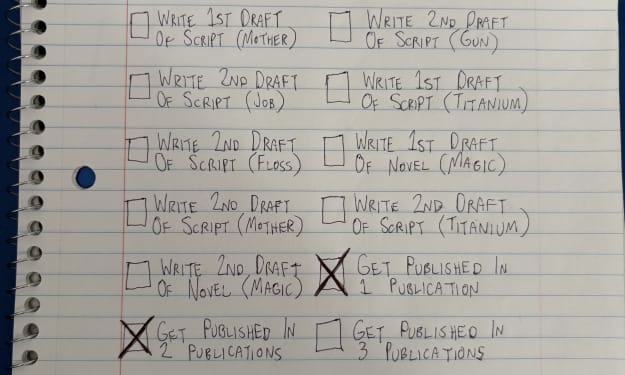
Early March 2026: 4 Goals Accomplished
It's early March and I've now accomplished my 4th writing goal for the year of 2026. Before diving into the behind-the-scenes of it... why not tell you up front what that accomplishment was? I was published in a 2nd publication for this year. Published in Helix Literary Magazine out of Central Connecticut State University. You can read it for free right now!
By Stephen Kramer Avitabile2 days ago in Writers


Comments
There are no comments for this story
Be the first to respond and start the conversation.