

Since we’ve spoken about many things, you’d think I would’ve run out of things to talk about. That’s just not the case. We’ve been on such a long journey with so long to go that you can probably imagine how much writing I’m sitting here doing at any particular moment in time. I love to write for the entertainment of others because I always think to myself about how I can make the reading public more accessible to everyone. Reading is meant to be enjoyed by all; and if it wasn’t, then why is it one of the many mediums of entertainment? Literary snobs will tell you they’ve read every single book under the sun. But today, we’re here to discuss the book you never finished but wanted to—just so that you could say you finished it. Why is it so important to read and finish a classic you don’t like reading? Moral high-ground? Talking about it with others? Studying it at school or university? Life is too short to read a book you know you aren’t enjoying or you aren’t going to enjoy, and that’s what we’re here to talk about today. Is there a way of making sure you gain something out of a book you know you don’t enjoy, but are required to finish? The answer is absolutely and definitely; yes.
The first way of doing this is to make sure that you gain one quotation out of the book that has some sort of meaning in your own perspective. To do this, you need to make sure you aren’t skim-reading, and you also need to have a notepad at the ready to take it down. Why are you doing this? Well, then the book won’t be a complete waste of time, and you’ll have evidence to show that. I did this whilst reading the one book I always dreaded reading, and always, to this day, despise. James Joyce’s Finnegan’s Wake. I hate that book with a passion. But is it completely useless? No. The reading experience was actually very awakening, especially after reading Ulysses. Though I don’t like Finnegan’s Wake and I despise the book because it’s so hyperbolically impossible to understand, I still gained some knowledge about literature and life from it. I learnt, most importantly, that where Ulysses is day, Finnegan’s Wake is night. These two books, though the latter I do not wish to read again, are so very important in the literary canon for making that comparison that you will never actually realise it until you’ve read both of them in succession.
The second way of making sure your reading experience, though you didn’t like the book, was not a waste, is by reading wider into the time period, culture, and artists of the particular book you’re reading. Again, taking a book I’m not too fond of—Ralph Ellison’s Invisible Man, I’ll give an example. Now, I don’t dislike Invisible Man at all, but when I read it for the first time, I was young and really didn’t understand what I had read. I grew up to read it again and appreciate it a lot more as being an important book—though I was still not entirely fond of it, I respect its place in the modern classic canon. I began reading wider into Invisible Man and met up with a book again, by Ralph Ellison, called Juneteenth. I can tell you that, to this day, it is one of the greatest books of the 20th Century Civil Rights Movement I have ever read. I want to read it again and again, it is so beautiful to read and experience. I wish I could experience that novel for the first time once more. Ralph Ellison is a genius.
The third and final way we will go through is by reading the book again. Yes, I know. You need to read the book once more. This time, go through it and make notes on what you didn’t like about the book. Then, try to find out why the author may have done these things. If it was entirely on purpose, like the exaggeration of excess culture in some of Fitzgerald’s Short Stories or the exaggeration of poverty in George Orwell’s lesser known novels, then your reasons for disliking the book are exactly what the author wanted. But, if you can find absolutely no reason whatsoever as to why the author may have done this, then you are required to re-evaluate your decision. Do you think the book is just terrible? Do you think it is awful? Do you think it deserves its place in the canon (if it has one)? And if it does have a place in any canon, why does it have one? Nearly all of the classics, no matter how much you despise them, earn their place in the canon; and whether we love or loathe them, there is always a rational reason.
Okay then, we’re going to do this the same as always—I’ll recommend some books I’ve read and mark my favourites with an (*). I’ll talk about one or two intermittently and that’s only if you haven’t had enough of me talking already! Let’s get on with numbers 1,081-1,110 then…
1081-1090
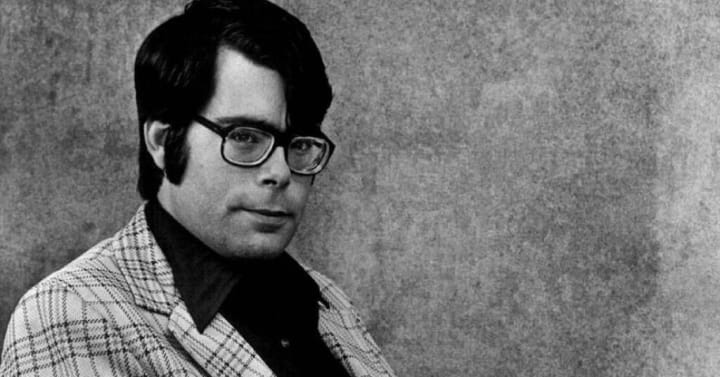
Stephen King
1081. Reasons to Stay Alive by Matt Haig
1082. The Bone Clocks by David Mitchell*
1083. Joyland by Stephen King
1084. 'Zealot' by Reza Aslan
My brother told me to read this book and yes, it is about Jesus Christ. It was not only an interesting read that challenged the modern belief in God and religion, but it was also a historical text that I felt, though well-researched, was also incredibly well-written. It’s very modern, easy to understand, and readable for a book of its size, grandeur, and specialist knowledge.
1085. Catherine the Great by Robert K Massie
1086. Cleopatra: A Life by Stacy Schiff
1087. The Little Paris Bookshop by Nina George
1088. In the Garden of Beasts by Erik Larson
1089. The Red Queen by Philippa Gregory*
1090. The Bazaar of Bad Dreams by Stephen King
1091-1100

Philippa Gregory
1091. The Miniaturist by Jessie Burton
1092. The Lost Symbol by Dan Brown
1093. The White Queen by Philippa Gregory*
1094. Full Dark, No Stars by Stephen King
1095. 40 Rules of Love by Elif Shafak
1096. 1Q84 by Haruki Murakami
1097. Horns by Joe Hill
1098. Mr. Mercedes by Stephen King*
1099. Wolf Hall by Hilary Mantel
1100. 'The Poetics of Space' by Gaston Bachelard*
This book was one hell of an experience to read. It was all about how humans use space, especially in the safety of their houses. It’s like reading something that is both philosophical and literary at the same time, and it certainly was a poetic read. Not in the sense of poetry, but in the writing style. The way in which we understand space is by associating with our spaces sentimentally, and I find this to be the main message of the book. I highly recommend this to absolutely everyone I can.
1101-1110
1101. The Vatican Cellars by Andre Gide*
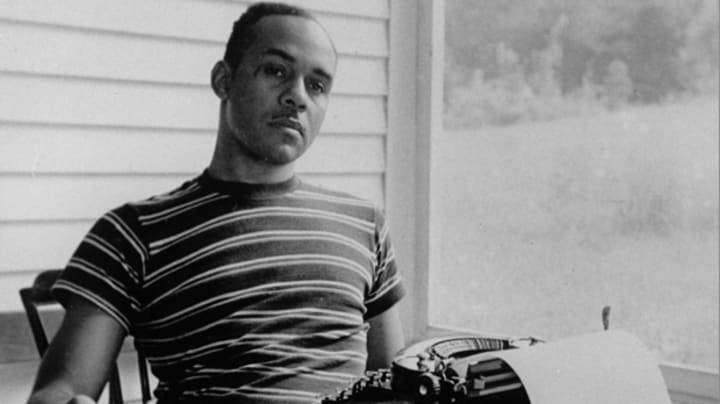
1102. 'Juneteenth' by Ralph Ellison*
An absolute experience of a novel, I believe that this book should be required reading as it portrays political turmoil and race relations during a time of intense racism incredibly well. There is something very powerful about this novel, and if it were anymore so, it would probably destroy its predecessor, Invisible Man. I love this book so much and I hope you enjoy it too. It’s just mind-blowing.
1103. No Longer at Ease by Chinua Achebe
1104. The Shunned House by HP Lovecraft
1105. Answered Prayers by Truman Capote
1106. The Colossus and Other Poems by Sylvia Plath
1107. Nobody Writes to the Colonel by Gabriel Garcia Marquez
1108. Welcome to Hard Times by EL Doctorow
1109. Music for Chameleons by Truman Capote*
1100. Under the Dome by Stephen King
About the Creator
Annie Kapur
I am:
🙋🏽♀️ Annie
📚 Avid Reader
📝 Reviewer and Commentator
🎓 Post-Grad Millennial (M.A)
***
I have:
📖 280K+ reads on Vocal
🫶🏼 Love for reading & research
🦋/X @AnnieWithBooks
***
🏡 UK
Keep reading
More stories from Annie Kapur and writers in Geeks and other communities.
30 Books to Read Before You Die (Pt. 36)
There’s something quite amazing about being well underway into the 1000s that makes me pretty proud of starting this series. We’ve been through a lot in terms of talking as well—I’ve spoken about everything from wide reading to my undergraduate dissertation to bookstagrammers on Instagram. But, again, we will never run out of things to talk about, and so, I want to talk to you today about some stuff concerning modernist literature.
By Annie Kapur6 years ago in Geeks
Silver Screen Magic with Mae West
American actress and singer Mae West became a popular film actress during the Great Depression. She started entertaining in vaudeville, then performed on Broadway, and finally went to Hollywood. She signed up with Paramount Pictures and made her debut in the 1932 film “Night After Night.” She also starred in musicals, comedies, and crime dramas. The American Film Institute named her one of the best classic Hollywood actresses.
By Rasma Raisters4 days ago in Geeks


Comments
There are no comments for this story
Be the first to respond and start the conversation.