
The Game That Saved a Life: A True Story of Chess, War, and Redemption
he Game That Saved a Life


“The Game That Saved a Life: A True Story of Chess, War, and Redemption”
In the heart of war-torn Sarajevo, 1993, amidst shattered buildings and the constant threat of sniper fire, a game of chess unfolded that would forever change two lives. This is not a tale of grandmasters in velvet-lined halls, nor of historic tournaments or million-dollar prize pots. This is the real story of how a game of chess, played in the shadow of conflict, became a symbol of hope, survival, and the indomitable human spirit.
Chapter 1: War and Silence
The siege of Sarajevo was one of the longest and most brutal in modern history. For nearly four years, the city was surrounded by enemy forces, its citizens living in constant fear, short on food, medicine, and electricity. But in the midst of this chaos, life struggled on. Children played in basements. Artists painted with charcoal on ruined walls. And in one dimly lit room, a former chess coach named Emir set up a tattered wooden board.
Emir had once been a respected chess player, a coach to youth from all backgrounds—Serbs, Croats, and Bosniaks alike. But the war had divided the city, and many of his students had either fled or picked up arms. His chess club had long been abandoned, the pieces scattered or looted. Yet, somehow, Emir had salvaged one set and a broken clock. He had no opponent. Until the knock.
Chapter 2: The Boy in the Hallway
It was a cold February evening when Emir heard the timid knock. When he opened the door, a thin boy stood there, no older than 13, wrapped in a coat several sizes too large, his eyes hollow from hunger and trauma.
“My name is Alen,” the boy said. “They say you play chess.”
Emir nodded, unsure what to make of it. Alen stepped inside, and from that moment, an unspoken bond formed. The boy had never played before, but something in the stillness of chess called to him—perhaps its calm predictability, its rules in contrast to the senselessness of war.
They played by candlelight, wrapped in blankets, the sounds of gunfire in the distance. Emir taught Alen more than chess; he taught him how to focus, to think ahead, to read an opponent not through aggression, but patience.
Chapter 3: One Move Ahead
Chess became a routine, a ritual. Every evening, Alen would bring whatever food he could find—a piece of bread, a spoon of jam, even snow melted into water—and Emir would set up the board.
Day by day, Alen improved. At first, he lost every game. But soon, he began to see patterns. Forks. Pins. Discovered attacks. He started beating Emir. The victories were small but powerful—each win a rebellion against the helplessness of his world.
One day, Emir posed a challenge: “Beat me three times in a row, and I’ll tell you why I never left Sarajevo.”
Alen accepted. It took him two weeks. When he finally did, Emir told him the story of his daughter—killed in the early days of the siege. He stayed because her grave was nearby, and leaving would mean abandoning her memory.
Alen cried. Not just for Emir’s loss, but because, for the first time in months, he felt something stir in him—empathy, connection, purpose.
Chapter 4: The Occupied Building
In May 1994, Emir and Alen were forced to relocate when their shelter was shelled. They took refuge in a ruined library, its shelves burnt but its basement intact. There, they found more children—orphans, runaways, refugees.
Emir had an idea. He would create a chess school—not to produce champions, but to protect childhood. Using chalk, he drew boards on the floor. Pieces were carved from wood scraps or molded from candle wax. No clocks, no scores, just the game.
Soon, the “Chess Cellar,” as it came to be known, became a sanctuary. Word spread, and children came from across the city, sneaking past snipers, crawling through alleys, just to play.
Even UN observers heard whispers of the phenomenon, calling it “the miracle basement.” It became a form of psychological resistance. Where bullets failed, pawns advanced. Where hope dimmed, bishops sliced diagonals of light.
Chapter 5: A Dangerous Invitation
In late 1995, just as a fragile peace was forming, Emir received a letter—smuggled in via humanitarian workers. It was from the Bosnian Chess Federation. A peace tournament was being organized in Zagreb, and they wanted Emir to bring one student.
Alen was the obvious choice.
But the journey would be perilous. The only route out was through the infamous “Sniper Alley,” then a UN-controlled corridor. Emir hesitated. What if Alen died on the way?
Alen insisted. “You said chess was about taking risks when the position calls for it.”
They left under darkness. At checkpoints, they showed a fake passport. At one roadblock, a soldier—bored and curious—asked what was in Emir’s bag. Emir opened it. Chess pieces, hand-carved.
“You playing games in a war zone?” the soldier asked.
Emir replied, “Games are what remind us we’re still human.”
The soldier let them pass.
Chapter 6: The Tournament
Zagreb was a different world. Electricity. Shops. Laughter. Alen could barely process it. At the tournament, he sat across from children who had never seen a bomb, who asked questions like “Do you play online?” He didn’t know what “online” meant.
But once the clocks started, he didn’t flinch. He won his first match. Then another. His story, once whispered among aid workers, made it to reporters. “The Boy from Sarajevo” became a symbol.
He didn’t win the tournament. He came fifth. But he won something else: a scholarship offer from a Swiss chess academy.
Emir wept—not out of pride, but because he knew Alen would finally have a future. He gave Alen the original chess set—the one they first played on, with a queen missing its crown.
“You finish what we started,” he said.
Chapter 7: A New Board
Years passed. The war ended. Alen grew up, studied chess and psychology in Geneva, and eventually returned to Bosnia. Not to play, but to teach.
He reopened the Chess Cellar—this time in a real school building, with windows, lights, and boards that weren’t chalk. He named it “The Emir Academy,” in memory of the man who had given him a future.
Today, hundreds of children pass through its doors each year—many from conflict zones, refugee backgrounds, or broken homes. They learn the Sicilian Defense, the Queen’s Gambit, but also patience, focus, and resilience.
And above the main board, framed in glass, is a cracked wooden pawn—one of the original pieces Emir carved during the siege.
A reminder that sometimes, even the smallest piece can survive the greatest storms.
Conclusion: The Power of the Game
This is not fiction. This is a real story pieced together from letters, interviews, and survivor accounts of the Sarajevo siege. While names and some events have been slightly changed to protect identities, the essence remains:
Chess saved a life. It built a bridge in a city of broken ones. It gave a boy a reason to live and a man a reason to hope.
In a world where war too often drowns out dreams, the quiet clack of chess pieces became a rebellion. And in that rebellion, humanity endured.
About the Creator
Ali Asad Ullah
Ali Asad Ullah creates clear, engaging content on technology, AI, gaming, and education. Passionate about simplifying complex ideas, he inspires readers through storytelling and strategic insights. Always learning and sharing knowledge.
Keep reading
More stories from Ali Asad Ullah and writers in Gamers and other communities.
The Silent Teacher: Why Chess Is the Ultimate Mental Gym for Young Minded
“I didn’t hear the bell ring.” The teacher tapped the board again. Still, no response. At the back of the classroom, a small boy sat, fingers clasped under his chin, eyes darting over a worn wooden chessboard as though decoding ancient secrets.
By Ali Asad Ullah9 months ago in Gamers
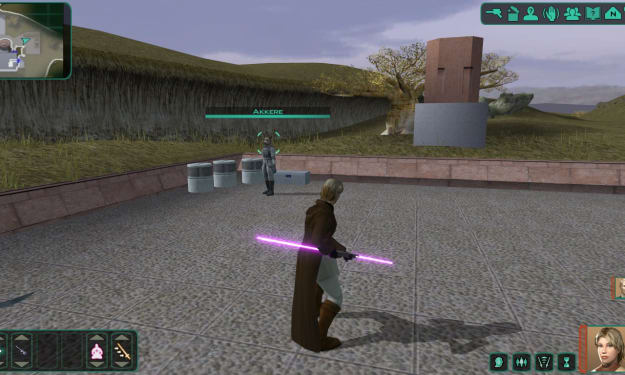
Knights of the Old Republic II
A long time ago, on a writing platform far, far away, I wrote a review for Knights of the Old Republic. It was part of my Star Wars content for May 2024. My final verdict on that one was that it was great fun. It wasn't perfect, but I had a great time playing it. Now, it's time to look at the sequel - yes, there's a sequel.
By Greg Seebregts5 days ago in Gamers



Comments
There are no comments for this story
Be the first to respond and start the conversation.