
The Silent Teacher: Why Chess Is the Ultimate Mental Gym for Young Minded
The Silent Teacher

“I didn’t hear the bell ring.”
The teacher tapped the board again.
Still, no response.
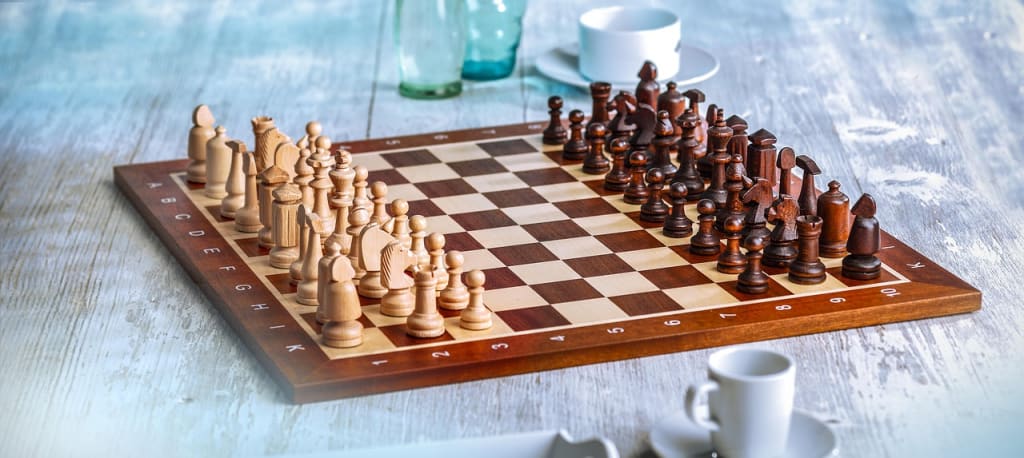
At the back of the classroom, a small boy sat, fingers clasped under his chin, eyes darting over a worn wooden chessboard as though decoding ancient secrets.
Other students had spilled out for recess, shouting and laughing in the playground. But Arman remained, locked in battle—not with an opponent, but with a deeper force. One that hummed quietly beneath the 64 squares in front of him.
What most people don’t realize is that chess is not merely a game. It is a silent teacher, whispering life lessons to those wise—or patient—enough to listen. For young minds, especially those adrift in the loud chaos of modern distraction, chess offers something else: structure, resilience, and a peculiar kind of mental agility that no textbook can teach.
But why? And more intriguingly—how?
The Psychology of Play: Why Chess Isn’t Just a Game
At its surface, chess is a simple contest—black versus white, strategy versus reaction. But beneath this binary battle lies an intricate web of cognitive processes, neurological gymnastics, and psychological evolution. When a child plays chess regularly, their brain isn't just engaged—it's transformed.
According to a 2020 neuroscience study conducted by the University of Trento, children who played chess for more than six months exhibited increased activity in the prefrontal cortex, the area of the brain responsible for:
Decision-making
Problem-solving
Emotional regulation
Long-term planning
The study found that even short, daily exposure to chess improved attention span by up to 35%. That’s not merely impressive—it’s staggering.
But what's more intriguing is how this transformation manifests without instruction, without lecture, and often—without noise.
The Discipline of Silence
We live in a time where silence is rare. TikTok, YouTube shorts, and notification chimes have turned attention spans into digital kindling—easily sparked, quickly consumed. Yet chess stands in defiance of this hyper-modern urgency. It is a game that demands silence. It thrives in focus.
For children, especially those in their formative years, this enforced stillness does something rare:
It teaches internal regulation.
It’s not uncommon for young players to experience intense frustration during early games. After all, every loss feels personal. But that’s the point. The board doesn’t lie. There’s no luck, no dice, no “retry” button. And in this raw, rule-bound arena, children learn a quiet resilience—the ability to sit with discomfort and stay thinking.
Cognitive Conditioning: The Hidden Gym of the Mind
Let’s get scientific.
Chess trains:
Working memory: remembering multiple move possibilities
Visual-spatial reasoning: recognizing patterns, threats, and opportunities across the board
Executive function: planning sequences ahead, adapting to new information
When a child visualizes the knight's path or anticipates an opponent’s castle, they are practicing what psychologists call fluid intelligence—the ability to solve new problems, use logic, and identify patterns without prior knowledge.
Unlike rote memorization (common in schools), chess doesn’t reward repetition. It rewards adaptation.
Think of a young girl learning to play. On her third match, she realizes her queen is vulnerable. Instead of panicking, she delays capture by sacrificing a pawn, turning defense into offense. That’s not just smart chess—it’s strategic maturity. And the kicker? She figured it out alone.
Chess as an Equalizer—and an Elevator
One of chess’s most beautiful paradoxes is that while it is ancient, abstract, and intellectually rigorous, it is also deeply democratic. A chessboard does not care where a child comes from.
Poverty. Privilege. Accent. Learning disabilities. None of it matters. The board is an unbiased mentor, treating all minds equally, yet transforming them uniquely.
In low-income communities around the world, chess has emerged as a silent revolution. Programs like Chess-in-the-Schools in New York or Smart Moves in Kenya have shown that students exposed to chess show a 40% higher academic performance, particularly in math and reading comprehension.
But more than grades, these students report something even rarer—a sense of agency.
One 11-year-old Bronx student described it this way:
> “When I play chess, I feel like my brain is finally louder than the noise around me.”
The Emotional Algorithm: Empathy and Control
It may surprise you that chess also nurtures emotional intelligence.
Children learn delayed gratification (the win comes after long-term strategy).
They build empathy (understanding the opponent’s mindset).
They develop ego control (accepting loss without collapse).
In fact, researchers at the University of São Paulo observed that students who engaged in weekly chess matches exhibited less aggressive behavior, higher emotional regulation, and stronger social bonds—despite the game being deeply competitive.
The reason is hidden in chess’s DNA: it trains players not just to win, but to think beyond themselves.
The Mystery in Every Move
And yet—perhaps the most powerful part of chess is not what we know it does, but what we still don’t understand.
Ask a seasoned grandmaster to explain why they made a particular move and you may hear:
> “I didn’t think it. I felt it.”
This intuition, this almost mystical pattern recognition, is the final lesson chess offers. For children, especially, it unlocks something primal—a latent intelligence, a way of seeing the world that defies numbers and textbook's
Conclusion: The Board Is Just the Beginning
Back in that classroom, Arman finally moved his bishop. A checkmate in four moves.
He didn't smile.
He just nodded, reset the board, and waited for another opponent.
What he didn’t know—what no child really knows—is that in these silent battles, they are growing something deeper than intelligence.
They are cultivating focus in chaos, clarity in pressure, and calm in failure.
In a world bursting with noise, the game of chess is a cathedral of thought—teaching our youngest minds how to think, how to wait, and above all, how to believe in the quiet power of their own mind.
About the Creator
Ali Asad Ullah
Ali Asad Ullah creates clear, engaging content on technology, AI, gaming, and education. Passionate about simplifying complex ideas, he inspires readers through storytelling and strategic insights. Always learning and sharing knowledge.
Keep reading
More stories from Ali Asad Ullah and writers in Gamers and other communities.
Positive and Negative Effects of Gaming on Children’s Behavior
🎮 The Digital Playground: More Than Just a Game? In today’s world, video games have become a staple of childhood. From the youngest toddlers navigating colorful puzzles on tablets to teenagers competing in global online tournaments, gaming is everywhere. But what impact does this digital pastime have on children’s behavior? Is it a harmless fun escape, a powerful educational tool, or a risky source of aggression and distraction?
By Ali Asad Ullah9 months ago in Gamers
U4gm Luck Hits Los Santos: St. Patrick’s Day Update in GTA Online
Los Santos is getting a festive makeover! Rockstar Games has launched the St. Patrick’s Day seasonal update for GTA Online, running from March 12 to March 19, 2026. This limited-time event brings a mix of cash rewards, exclusive items, community challenges, and bonus multipliers, making this week one of the most exciting times to log in and play.
By Billo Nali3 days ago in Gamers
Casino Game Trends and Player Favorites in 2026
The casino gaming landscape has continued to evolve in recent years, influenced by technology, player preferences, and shifting entertainment habits. In 2026, casino-style games remain a popular form of entertainment across both digital platforms and traditional venues. Rather than focusing solely on wagering, many discussions about these games now center on gameplay experience, design innovation, and the social elements that attract players worldwide.
By Shabbir Ahmad5 days ago in Gamers




Comments
There are no comments for this story
Be the first to respond and start the conversation.