
THE FIRST MODERN OLYMPIC GAMES (ATHENS 1896)
The Visionary Behind the Revival:Pierre de Coubertin

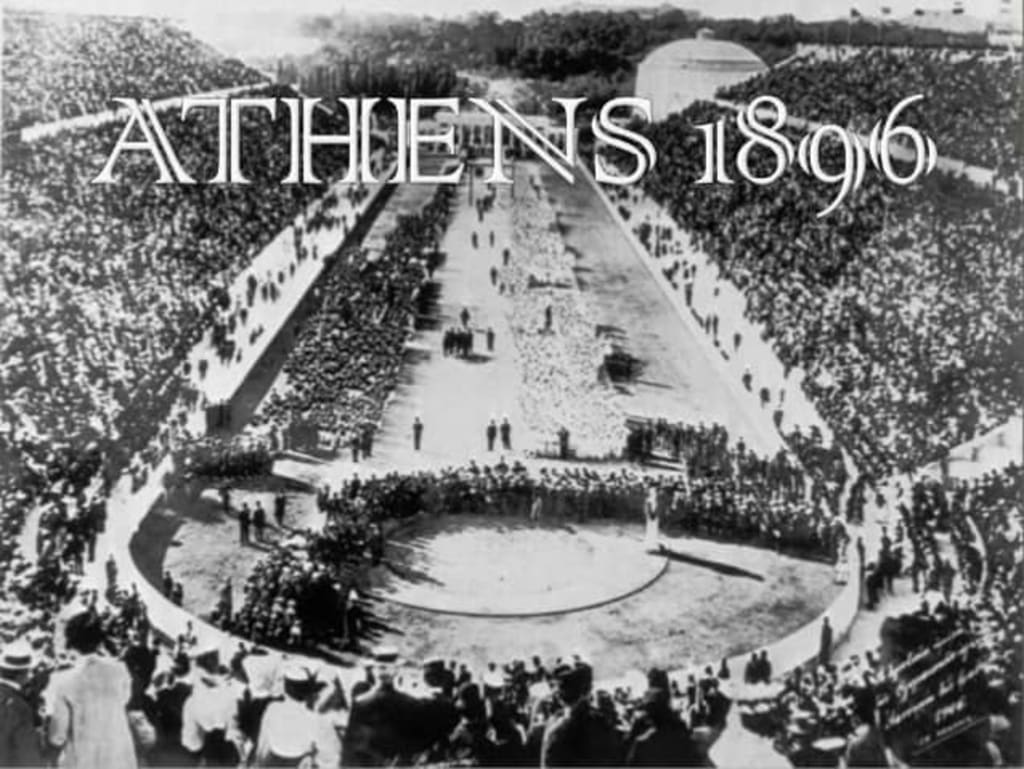
The First Modern Olympic Games: Athens 1896
The revival of the Olympic Games in 1896 marked a historic moment that bridged the ancient tradition of athletic excellence with the modern age. Spearheaded by Pierre de Coubertin, the 1896 Olympics in Athens, Greece, celebrated international unity and competition, reigniting a legacy that continues to thrive. This article explores the origins, organization, highlights, and lasting impact of the first modern Olympic Games.
The Visionary: Pierre de Coubertin
Pierre de Coubertin, a French educator and historian, envisioned the revival of the Olympic Games as a means to promote peace and understanding among nations. Inspired by the ancient Greek Olympics and the ideals of physical and moral education, Coubertin established the International Olympic Committee (IOC) in 1894. Athens, the cradle of the ancient Olympics, was chosen as the host city for the first modern Games, symbolizing a homage to their historical origins.
Preparation and Organization
(I)Choosing Athens:
The decision to hold the inaugural Games in Athens was both symbolic and practical. Greece’s historical connection to the ancient Olympics made it the ideal location to resurrect the tradition. Despite financial and logistical challenges, the Greek government and citizens rallied to support the event.
(II)Venue Selection:
The Panathenaic Stadium, originally constructed in 330 BCE and refurbished for the Games, served as the centerpiece. With its white marble structure, the stadium could accommodate up to 80,000 spectators, creating an awe-inspiring setting.
(III)Participation:
Athletes from 14 nations competed in the 1896 Games, including the United States, Germany, France, and Great Britain.
Around 241 athletes, exclusively male, participated across 9 sports and 43 events.
(IV)Sports and Events
The inaugural Games featured a mix of events inspired by ancient traditions and contemporary sports, including:
- Athletics (track and field)
- Swimming
- Cycling
- Gymnastics
- Weightlifting
- Wrestling
- Fencing
- Shooting
- Tennis
Athletics, held at the Panathenaic Stadium, was the most anticipated category, with the marathon being introduced for the first time as a nod to the legend of Pheidippides.
Highlights of Athens 1896
(I)Marathon Victory:
The marathon was the highlight of the Games, capturing global attention. Spyridon Louis, a Greek shepherd, emerged as a national hero by winning the 40-kilometer race, completing it in 2 hours, 58 minutes, and 50 seconds. His triumph epitomized the spirit of the Games and brought immense pride to Greece.
(II)International Champions:
- American athlete James Connolly became the first modern Olympic champion, winning the triple jump.
- German gymnast Carl Schuhmann excelled in gymnastics and wrestling, winning four gold medals.
- Alfred Hajos of Hungary secured victories in swimming events, becoming one of the first Olympic swimming champions.
(III)Fencing’s Prestige:
Fencing attracted attention with its elegant and disciplined format. Leonidas Pyrgos of Greece won the inaugural fencing gold medal, adding to the host nation's successes.
The Spirit of the Games
The Games were more than a sporting event—they represented a revival of international camaraderie and shared cultural heritage. The lack of professional athletes emphasized the spirit of amateurism, where passion and dedication mattered more than financial incentives.
Challenges Faced
(I)Financial Difficulties:
Greece struggled with the costs of hosting the event, but donations from wealthy patrons like Georgios Averoff helped complete necessary preparations.
(II)Limited Participation:
The Games faced limited global reach, with only 14 countries represented. Barriers such as travel expenses and the absence of women’s events restricted participation.
(III)Logistical Issues:
Organizational challenges, including event scheduling and inconsistent judging, reflected the infancy of the modern Olympics.
Legacy of Athens 1896
(I)Global Unity:
The 1896 Olympics demonstrated the potential of sport to unite nations, laying the foundation for future Games to become a global phenomenon.
(II)Symbolic Traditions:
Many traditions, such as the opening and closing ceremonies, originated at Athens 1896 and have since become integral parts of the Olympics.
(III)Growth of the Olympic Movement:
The success of the first Games inspired Coubertin and the IOC to continue the tradition, leading to the establishment of the four-year Olympic cycle.
(IV)Recognition of Athletes:
The accomplishments of athletes like Spyridon Louis, James Connolly, and Alfred Hajos remain celebrated as examples of human endurance and achievement.
Conclusion
The first modern Olympic Games in Athens 1896 marked a turning point in sports history. Despite challenges, the Games captured the imagination of the world and rekindled the ancient ideals of competition, unity, and excellence. The legacy of these Games endures, as they paved the way for the Olympics to become a symbol of global harmony and inspiration.
About the Creator
Badhan Sen
Myself Badhan, I am a professional writer.I like to share some stories with my friends.
Keep reading
More stories from Badhan Sen and writers in Gamers and other communities.
OLYMPIC GAMES THROUGH THE DECADES
Olympic Games Through the Decades The Olympic Games have undergone a remarkable transformation since their modern inception in 1896, evolving in scale, cultural significance, and global impact. This essay traces the journey of the Games through each decade, highlighting key milestones, challenges, and moments of triumph that have defined this iconic event.
By Badhan Senabout a year ago in Gamers
Arc Raiders Review: Pure Multiplayer Experience
Arc Raiders is designed around clarity, pressure, and cooperation. Instead of overwhelming players with layers of systems, it strips the multiplayer shooter down to its essentials and rebuilds tension from the ground up. Developed by Embark Studios, the game positions teamwork and survival above spectacle. For players curious about how closely they align with this design philosophy, the Arc Raiders purity test has become a popular way to measure commitment within the community.
By Enzo Marcelli2 days ago in Gamers
Maximizing Efficiency: The Definitive Guide to Rush Royale Unit Breakpoints
In the high-stakes competitive arena of Rush Royale, resource management is the thin line between a crushing defeat and a glorious victory. Players often obsess over the damage output of their primary carries—Inquisitors, Demon Hunters, or Monks—while neglecting the nuanced math behind their supporting cast.
By Richard Baileyabout 12 hours ago in Gamers


Comments (1)
Another great article on the history of the games.