
Maximizing Efficiency: The Definitive Guide to Rush Royale Unit Breakpoints
Mastering Resource Management: Strategic Thresholds for Support Units in Rush Royale

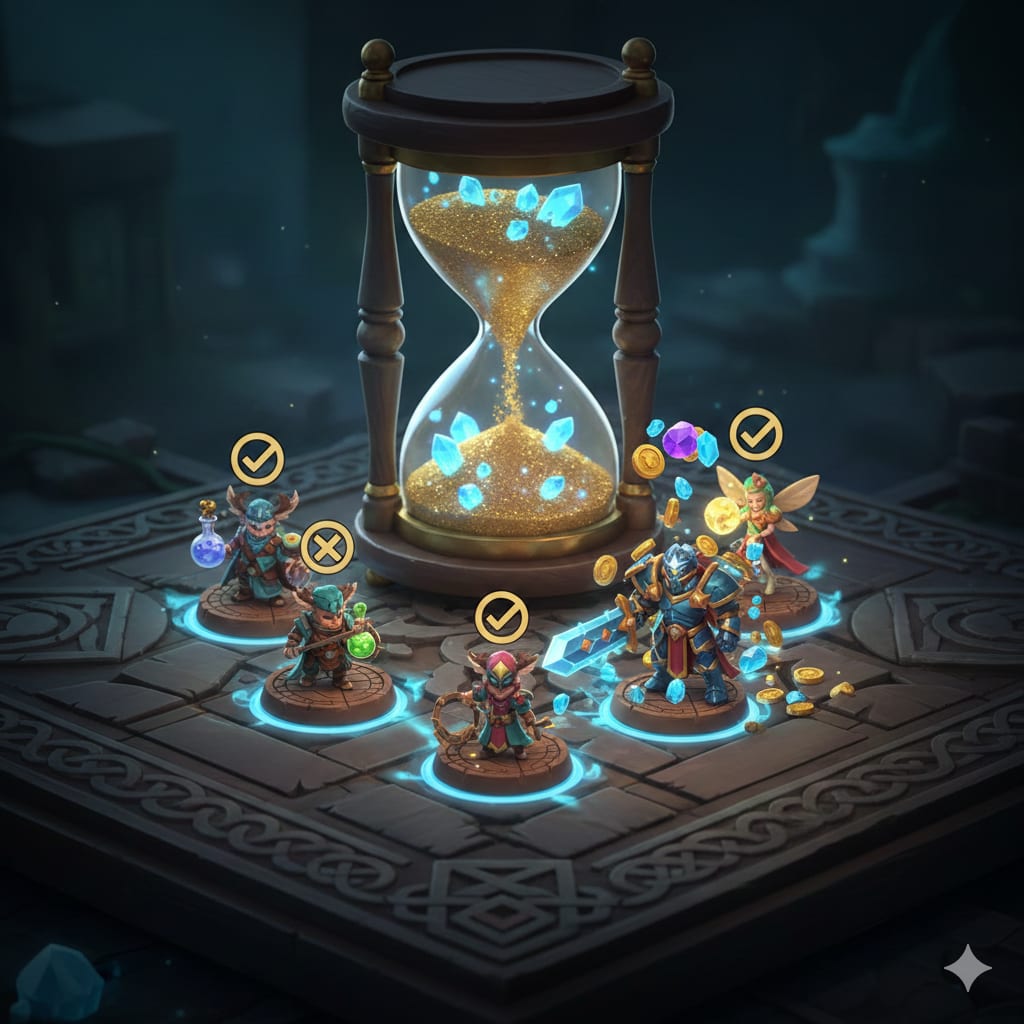
In the high-stakes competitive arena of Rush Royale, resource management is the thin line between a crushing defeat and a glorious victory. Players often obsess over the damage output of their primary carries—Inquisitors, Demon Hunters, or Monks—while neglecting the nuanced math behind their supporting cast.
However, knowing exactly when to stop pouring gold and Cores into your support units is the hallmark of a top-tier player.
Upgrading units blindly is a trap that drains your gold reserves and provides diminishing returns. This article explores the concept of unit breakpoints, specifically focusing on when your support units reach their maximum functional utility.
Understanding the Concept of Breakpoints
A "breakpoint" in Rush Royale refers to the specific level or Ascension talent where a unit’s effectiveness peaks relative to the cost of further upgrades. While a damage dealer benefits from every single level due to the base damage increase, support units often rely on percentage-based buffs or specific mechanical triggers.
If a Chemist provides a 40% armor reduction at level 11 and only increases to 42% at level 13 for a cost of 50,000 gold and several crystals, that is a poor investment. Your gold is better spent elsewhere. Understanding these thresholds allows you to optimize your deck's power level without wasting precious materials.
The Pillars of Support: Trapper and Chemist
Trapper and Chemist are the bread and butter of armor destruction. They allow your primary DPS to shred through high-health bosses and armored waves in the late game.
Chemist: The Consistency King
The Chemist is a passive support unit. Its value lies entirely in its armor-breaking flask.
Level 9-11: This is the sweet spot for most F2P and mid-range players. At these levels, the armor destruction is significant enough to handle Triple Bosses in League 7.
The Breakpoint: Stop at level 11. The jump to level 15 offers a negligible increase in armor reduction percentage. Unless you are pushing for a Max Level account for Critical Damage percentage, those crystals are better used on your legendary DPS.
Trapper: Slows and Shreds
Trapper adds a layer of crowd control (CC) by slowing enemies with traps.
The Breakpoint: Level 9 is the essential minimum to unlock the first set of talents. However, level 11 is the functional ceiling for most competitive decks. The increase in trap duration and slow percentage after level 11 scales poorly compared to the massive gold investment required.
Legendary Supports: The Talent Threshold
Legendary support units like Dryad, Harlequin, and Enchanted Sword change the game's fundamental mechanics. Here, breakpoints are almost always dictated by Ascension Talents rather than raw levels.
Dryad: The Fairy of Growth
Dryad is arguably the most important unit in the game. It allows you to increase the merge rank of your units without the risk of RNG.
The Level 9 Breakpoint: This is mandatory. The "Growth Gift" talent allows the Dryad to increase a unit's power when it reaches a certain number of merges.
The Level 11 Breakpoint: For most players, Level 11 is where you stop. The "Fairies of Rage" or "Fairies of Growth" talents provide a massive boost to your board's offensive capabilities. Pushing to level 13 or 15 provides more damage for the Dryad itself, which is largely irrelevant since she isn't your primary source of DPS.
Enchanted Sword: The Buff Machine
The Enchanted Sword provides a stacking damage buff that is vital for late-game scaling.
The Level 9 Breakpoint: Unlocking the first talent allows you to choose between the "Awakened Sword" (for buffing) or the "Ancient Sword" (for de-buffing).
The Level 13 Cap: If you are a high-level player, level 13 is a significant breakpoint because it enhances the speed at which you can apply or remove orbs. However, for 90% of the player base, level 9 is the functional stopping point.
Mana Power-Ups vs. Permanent Levels
A common mistake is confusing in-game Mana Power-ups (the buttons at the bottom of the screen during a match) with permanent unit leveling.
Support units often have "soft caps" on Mana Power-ups. For example, the Priestess provides a flat amount of mana upon merging or being destroyed. Once you reach the maximum Mana Power-up level in-game, the increase in mana gained usually plateaus.
Stat checking. Always check the "Info" tab of your unit during a match. If a Mana Power-up only increases a support unit's attack speed by 0.1 seconds, save your mana for a unit that gains a 20% damage boost.
For more technical data on how mana scaling works across different patches, you can consult the official Rush Royale Wiki or check the community-driven spreadsheets on the Rush Royale Reddit.
The Critical Damage Dilemma
There is one major caveat to the "Stop Leveling" rule: Global Critical Damage. Every time you level up any unit, your account's total Critical Damage percentage increases. In the end-game, having 3,000% Crit is often more important than the specific talents of a support unit.
- Gold Efficiency: Leveling a common unit from 12 to 13 is often cheaper than leveling a legendary support from 8 to 9, yet both might give the same +10% Critical Damage boost.
- Priority: You should only level support units past their functional breakpoints if they are the cheapest option available to raise your total Critical Damage.
When to Stop: A Practical Checklist
Before you spend your next 40,000 gold, ask yourself these questions:
- Does this level unlock a new talent? If yes, and the talent is meta-relevant (like Dryad's level 9), proceed.
- Is the percentage increase greater than 5%? If the buff only increases by a fraction of a percent, hold your resources.
- Could this gold be used to level a Hero or Heroic Item? Heroes like Gadget or Jay often provide better scaling than a level 12 Chemist.
Are you struggling with Boss HP or Wave Clear? If you can't kill bosses, you need more DPS. If you can't kill them because they have too much armor, then (and only then) consider your support levels.
The Role of Scrap and Cores
Cores are the rarest resource in Rush Royale. Using Magic Cores to ascend a support unit when your primary Damage Dealer isn't fully ascended is a strategic blunder.
Focus on one faction. If you play a Forest Alliance deck (like Boreas or Alchemist), save your Forest Cores for the units that actually end the game.
The Scrapper Exception: Scrapper is a unique support. Its level matters less than its talent. Once you have the "Scrap Recycling" talent at level 9, the unit is functionally complete for most competitive play.
To stay updated on the latest balance changes that might shift these breakpoints, keep an eye on the official Rush Royale Discord, where developers frequently post patch notes.
The art of Rush Royale isn't just about placing units on a board; it's about the economy behind the screen. By respecting unit breakpoints, you ensure that every gold coin spent contributes to your victory. Stop over-leveling your supports and start investing in the raw power that carries you to the top of the ladder.
About the Creator
Richard Bailey
I am currently working on expanding my writing topics and exploring different areas and topics of writing. I have a personal history with a very severe form of treatment-resistant major depressive disorder.
Keep reading
More stories from Richard Bailey and writers in Gamers and other communities.
Master the New Economy: The Best Way to Use Magic Dust After Update 34.0
The recent arrival of Update 34.0 in Rush Royale has completely shifted the ground beneath our feet. For long-time players, the game once felt like a steady climb of critical damage and equipment grinding. Now, the developers have introduced a total rework of the gear system, replaced enchantments with artifacts, and redefined how we value our most precious resources.
By Richard Bailey2 months ago in Gamers
Far Cry 6 Will Drop You Into a Revolution You Won’t Forget Anytime Soon
Few open-world shooters offer the combination of freedom, story, and chaos like Far Cry 6. Developed by Ubisoft Toronto and published by Ubisoft, Far Cry 6 immerses players in a living world on Xbox where danger lurks around every corner and the fight for freedom is never straightforward.
By Lukáš Hrdličkaabout 2 hours ago in Gamers
A Knight of the Seven Kingdoms Series Review (Season 1)
As one of the biggest properties in fantasy, A Song of Ice and Fire remains immensely popular with audiences. After reaching far into the past with House of the Dragon, a second spin-off was on the cards. A Knight of the Seven Kingdoms serves up a bite-sized slice of action and drama, but it still claims a spot among the best small-screen titles.
By Robert Cain4 days ago in Geeks




Comments
There are no comments for this story
Be the first to respond and start the conversation.