
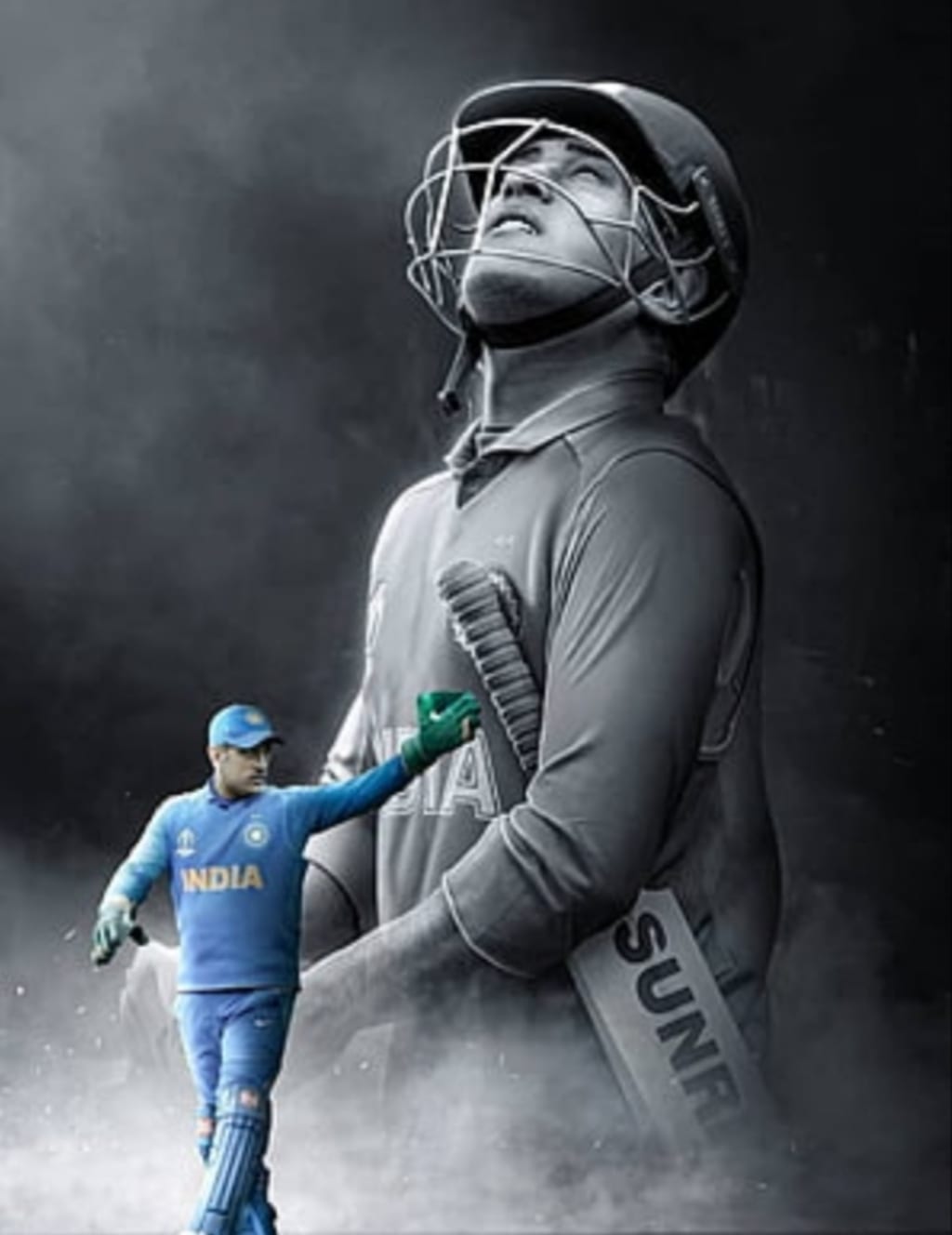
Any cricket fan worth his salt just read this in Ravi Shastri's most dramatic voice, as Mahendra Singh Dhoni enchanted the Wankhede on the night of 2nd April 2011.
The Foundations
Hailing from Jharkhand, Mahendra Singh Dhoni’s rise through the ranks into international cricket is a tale of rebellion, extraordinary merit, perseverance, and, most of all, belief. After being scouted on the whims of his school P.E. teacher as a wicketkeeper, Dhoni created whispers in the cricketing circles of Ranchi - a teenage boy with no measurable upper-body strength clearing boundaries against some of the best fast bowlers of the district. However, the system failed him as he found it difficult to make the cut against candidates of the more affluent A-tier states. Consequently, in a desperate move, he joined the Railways Ranji team and started to work as a ticket collector at the Kharagpur railway station to make ends meet.
Nevertheless, in a few months, the stars started to align themselves for the precocious wunderkind from Ranchi. Inspired by the KSCA, the BCCI started a country-wide Training Research Development Wing to scout talent from the more financially backward states. Dhoni immediately caught the eyes of the scouts and was sent on an A tour to Kenya, where his talent burst forth for the world to see as he showcased his batting pyrotechnics against world-class bowlers in alien conditions. He immediately shot to national reckoning and was selected for the tour of Bangladesh in November 2004.
By then a broad 22-year-old with long locks, Dhoni’s India career got off to an inauspicious start, as he scored a duck in his first ODI and a string of low scores followed. However, the selectors and the then-captain Sourav Ganguly decided to persist with him and gave him an extended run. Dhoni repaid their faith with an exhibition of his charisma and audacious stroke-play in his fifth ODI against Pakistan, who certainly didn’t see the butchery coming, as he butchered his way to 148 at Vishakhapatnam. Later in 2005, he went one step further bludgeoning his way to a brutal 183* in Jaipur to make a mockery of a 300-run chase against a Sri Lankan attack that looked aghast at his bizarre-but-effective stroke-play and the unparalleled physical power that he imparted on the ball.
As teams all over the world tried to work a way around his fireworks, Dhoni established himself as a reliable batsman in Tests too, with a technique that worked against pace, seam, swing and spin. In his 5th Test, he coincidentally scored another 148 against Pakistan in an uncharacteristically stoic effort to save the match, thereby portraying his versatility as a batsman. After a string of wicketkeeper-batsmen being tried in the side, Dhoni had finally become a mainstay in the side - a powerful pinch-hitter towards the end of the innings capable of more than just cameos, and a more-than-reliable wicketkeeper in the side.
In a state where leather ball cricket was a luxury, Dhoni grew up playing tennis ball cricket tournaments. With heavy Kashmir willow bats, light and hollow tennis balls, and long boundaries, he developed a bottomhand-dominated technique to impart maximum power on the light tennis ball which undergoes energy-damping upon impact. However, Dhoni stood out when he, along with a friend, developed an elevated body-weight shot with an exaggerated follow-through that cleared boundaries with ease. On that count, cricketing folklore will remember MS Dhoni as the man who had the audacity to play the 'helicopter shot' against the leather ball.
About the Creator
Keep reading
More stories from writers in Gamers and other communities.
Rsvsr Life in Monopoly GO!: What a Day Really Feels Like
When you first open Monopoly GO!, it might look like just another board game on your phone. Roll the dice, move around the board, grab some money, hope for a lucky streak. Simple, right? But once you’ve played for a bit, you start noticing all the little things that make each day in the game feel different.
By Dangyc Ding7 days ago in Gamers
🅼🅸🅳🅽🅸🅶🅷🆃 🆂🅽🅰🅲🅺🆂
"It's 10 in Tuscon! We all know what that means... It's Time for Midnight Snacks with your man, Gerald Gee! Ready to spend the night together? Me too! I'm full of snacks and can't wait to regurgitate them all back into your hungry ears. Crack a brew! Pop some corn! Anything to get ready for one hell of a show where the talk maybe cheap but the words cut deep...
By Lamar Wiggins6 days ago in Fiction




Comments
There are no comments for this story
Be the first to respond and start the conversation.