Latest Stories
Most recently published stories in Gamers.
Play Free Online Games on Poki in 2025
If you are a game lover and want to play many games for free on a single platform, then we are glad you are in the right place. Poki is a single platform where you can play different types of games without wait. We have brought you many exciting games that will make you happy and relaxed.
By adila baloch6 months ago in Gamers
Assassin's Creed Shadows Map Size & Regions – Full Exploration Guide
The world of Assassin's Creed Shadows is vast, layered, and deeply immersive. For fans of the franchise, the setting in feudal Japan marks a bold new direction. But this isn't just a backdrop—it's an intricate, living world with meaningful geography.
By Richard Bailey6 months ago in Gamers
Step Inside the Future at Caroline Springs VR Theme Park. AI-Generated.
Caroline Springs has never seen anything like this. The VR Theme Park Caroline Springs isn’t just an arcade or a fun center. It’s a full-scale, immersive entertainment venue where you don’t just watch the action — you become it. Step through the doors and you’re no longer in the suburbs. You’re in a different world. Actually, several different worlds.
By M Yawer Yousaf6 months ago in Gamers
"The Power of Football: Unlocking Health, Skills, and Community"
The Power of Football: Unlocking Health, Skills, and Community Football, the world's most beloved sport, is much more than just a game played with a ball. It’s a global connector, a catalyst for personal growth, and a builder of communities. Whether it’s played in a formal stadium with thousands of cheering fans or on a dusty patch of ground in a small neighborhood, the impact football has on individuals and communities is undeniable. In this story, we’ll explore the many benefits of football that make it one of the most popular and transformative sports around. A Game that Transcends Boundaries It’s no secret that football is the most widely played sport in the world, with an estimated 4 billion fans spanning across continents. But what makes football so universally loved? The answer lies not only in the thrill of the game itself but in its unique ability to transcend social, cultural, and geographical boundaries. From rural villages to bustling cities, from the streets of Rio de Janeiro to the fields of rural Africa, football has the power to bring people together. In these settings, football is often seen as a universal language. It doesn’t matter if you speak the same language, if you come from different socioeconomic backgrounds, or if you have different beliefs—on the football pitch, everyone shares a common goal: to score, to defend, to play their best. This shared experience fosters a sense of belonging, camaraderie, and mutual respect. It is in this sense that football creates not just players, but communities. Health Benefits: A Total Body Workout While football’s social and community benefits are widely celebrated, one of its most compelling advantages is its ability to improve physical health. The sport is a full-body workout that engages almost every muscle group in the body. Players must run, jump, sprint, and change direction quickly, making football a dynamic cardiovascular exercise. Regular participation in football can help reduce the risk of chronic illnesses such as heart disease, obesity, and diabetes. The aerobic nature of the sport helps to increase stamina, enhance lung capacity, and improve cardiovascular health. In fact, studies have shown that people who play football regularly have improved overall fitness levels compared to those who engage in less active sports. Moreover, football is excellent for developing coordination and balance. The quick reflexes required to control the ball, make passes, or defend against an opponent demand a high level of hand-eye coordination and spatial awareness. These physical benefits not only improve athletic ability but also contribute to general well-being and overall health. Mental Health and Teamwork Football isn’t just a great way to get fit; it also has a significant impact on mental health. The sport’s fast pace and strategic nature require players to stay focused, make decisions under pressure, and remain calm in high-stress situations. This develops resilience, confidence, and critical thinking skills—qualities that transfer to daily life. On a psychological level, football offers an opportunity for players to express themselves, release stress, and build a sense of achievement. For many people, particularly those from disadvantaged backgrounds, football serves as an outlet for frustration and a source of pride. It is not unusual to see players transform from shy individuals into confident leaders, thanks to the supportive environment fostered by their teammates. Moreover, football has long been regarded as an antidote to mental health struggles such as depression and anxiety. Studies have shown that regular physical activity can boost mood by increasing endorphin levels in the brain, creating a sense of happiness and contentment. In a sport like football, which emphasizes teamwork and collaboration, individuals can gain a sense of purpose and connection, both crucial for mental well-being. Developing Life Skills One of football’s greatest advantages is its capacity to teach life skills that go far beyond the field. Teamwork, communication, discipline, and leadership are just some of the invaluable qualities that players develop as part of the game. These skills not only help individuals excel on the field but also prepare them for success in other areas of life. Football requires constant communication among players, who must work together to form strategies and execute plays. Through these interactions, players learn the importance of clear and effective communication. They also understand the value of teamwork: while one player may be the star of the game, it’s the collective effort of the entire team that leads to success. This mindset is crucial for success in the workplace, school, and family life. Football also teaches discipline. From maintaining a regular practice schedule to following team rules and respecting opponents, the sport instills a sense of responsibility. In addition, it helps develop leadership skills as players take on different roles, whether as team captain or as a key player who leads by example. A Global Force for Good Football’s reach extends beyond the game itself. In many parts of the world, football is a force for social change, particularly in marginalized communities. Organizations such as FIFA’s "Football for Hope" and grassroots initiatives like "StreetFootballWorld" are using the sport to address issues such as poverty, education, and gender equality. Through football, they are creating opportunities for young people to gain life skills, access education, and even improve their communities. In conflict zones and refugee camps, football has been used as a means of bridging cultural divides and promoting peace. It offers people from different backgrounds a chance to unite under a common passion, breaking down barriers and fostering mutual understanding. The Future of Football As the world continues to change, so too does the role of football. With increasing awareness of the sport’s power to influence social change, more initiatives are emerging to leverage football for good. These efforts are not only improving health and well-being but also promoting positive values such as inclusion, teamwork, and respect. The future of football is one where its positive impact on individuals and communities is felt even more strongly. In conclusion, football is not just a game. It is a tool for personal development, a bridge for social connection, and a platform for global change. Whether played for fun, fitness, or professional success, the sport has an unmatched ability to unite people and inspire positive change in ways few other activities can. So, next time you lace up your boots, remember: you’re not just playing a game; you’re becoming part of something much bigger—a global movement with the power to change lives, one kick at a time.
By Muhammad Saad 6 months ago in Gamers
The Beautiful Game: Football's Global Impact
The Beautiful Game: Football's Global Impact Football is more than just a game. For millions around the world, it’s a language spoken without words, a unifying force that transcends borders, languages, and cultural differences. Whether in the streets of Rio de Janeiro, the fields of rural Africa, or the bustling cities of Europe, football is the beating heart of communities. The passion it ignites, the stories it weaves, and the bonds it forms have made it the world’s most beloved sport. The allure of football is undeniable. It’s a game of simplicity yet depth, where the rules are easy to understand but the strategies and plays require years of honing and precision. All you need is a ball, an open space, and the will to play. From the poorest villages to the most glamorous stadiums, the game welcomes all. A Global Community Perhaps the most remarkable aspect of football is its ability to bring people together. The World Cup, held every four years, is the pinnacle of this global unity. For a month, nations set aside their differences, and the world watches in collective anticipation as the best teams compete for the coveted trophy. The tournament is a celebration of skill, national pride, and the shared joy of competition. In the run-up to the 2018 World Cup, millions of fans from countries like Argentina, Germany, Nigeria, and South Korea painted their faces in the colors of their national flags, singing anthems and waving banners. It wasn’t just about winning; it was about belonging to something larger than themselves. Whether they were in the stands or watching from their living rooms, fans formed an invisible bond, united by their love of the game. It’s not just the grand spectacle of the World Cup that fosters this sense of unity. Football’s impact is felt every day in neighborhoods, schools, and communities around the world. In Brazil, children play barefoot on dusty streets, dreaming of one day being as great as their heroes—Ronaldinho, Neymar, or Pelé. In Argentina, the streets come alive as fans sing, “¡Vamos Argentina!” as they follow their beloved team through every match. In cities like Manchester and Barcelona, rivalries run deep, but even in defeat, football fans find common ground in their shared experience of the sport. Football as a Bridge Between Cultures Football also serves as a bridge between cultures, creating an understanding that goes beyond the confines of language and geography. Players who come from vastly different backgrounds—whether it's a star from the bustling streets of Lagos or a talent discovered in the quiet suburbs of Stockholm—can find themselves playing side by side, representing not just their clubs, but the entire spirit of the game. Take the example of the renowned footballer Mohamed Salah. Born in the Egyptian city of Nagrig, Salah’s journey to becoming one of the world’s best players is a testament to the power of football to create opportunity. From playing in small local leagues to representing the Egyptian national team, his rise has inspired millions, particularly in the Middle East and North Africa. Salah's success on the global stage has shown the world that talent can come from anywhere, and football is a vehicle through which individuals can break free from social constraints and achieve greatness. Another example is the rising popularity of football in countries where the sport was once considered secondary. The development of leagues in Asia, the Middle East, and the United States has introduced new cultures to the game, leading to an exchange of ideas and strategies that enrich the sport. In countries like Japan, football has become a symbol of national pride, with fans filling stadiums to cheer for their local clubs and the Japanese national team. In South Korea, the sport has bridged generational divides, bringing together older fans who remember the team's 2002 World Cup run and younger generations eager to see their country return to international glory. Football's Role in Social Change Football's influence extends beyond entertainment; it has the power to shape social change. In communities where poverty, inequality, and political unrest are everyday realities, football provides an escape and a means for self-expression. Many grassroots organizations around the world use the sport as a tool to empower youth, teaching them life skills, discipline, and teamwork. Through football, young people from disadvantaged backgrounds gain access to scholarships, travel opportunities, and a sense of belonging that they might otherwise lack. In the townships of South Africa, football has played a key role in overcoming the legacy of apartheid. During the darkest days of the regime, football became a space where people of all races could come together, a place where unity could be forged despite the oppressive system that sought to divide them. Even today, football remains a symbol of resilience and hope for many South Africans, with local leagues providing a platform for young players to showcase their talents and pursue professional careers. The Future of Football As the world continues to evolve, so too does football. The sport’s global reach has expanded with the rise of social media, allowing fans to connect with their idols and fellow supporters in ways that were previously unimaginable. Digital platforms have enabled young players from remote villages to share their skills with the world, often leading to opportunities with professional clubs. In addition, the rise of women’s football is rewriting the narrative of the sport. Female players are beginning to receive the recognition they deserve, with women’s leagues and tournaments growing in visibility and influence. Stars like Marta, Alex Morgan, and Vivianne Miedema have become household names, inspiring young girls around the world to pursue their dreams of playing football. Football is evolving, but one thing remains constant: its ability to unite people. Whether it’s a last-minute goal, a dramatic penalty shootout, or a jubilant celebration with friends after a local match, football connects people in ways that few other things can. It’s more than just a game; it’s a global community that binds us all together in the joy of sport.
By Muhammad Saad 6 months ago in Gamers
New World Season 9 PvP Builds Guide
Let’s face it—New World PvP has come a long way since launch. And with Season 9 in full swing, the meta has shifted yet again. Whether you’re diving into Outpost Rush, 3v3 Arenas, or large-scale Faction Wars, having the right PvP build in New World Season 9 can mean the difference between domination and getting farmed at respawn.
By AnthonyMays6 months ago in Gamers
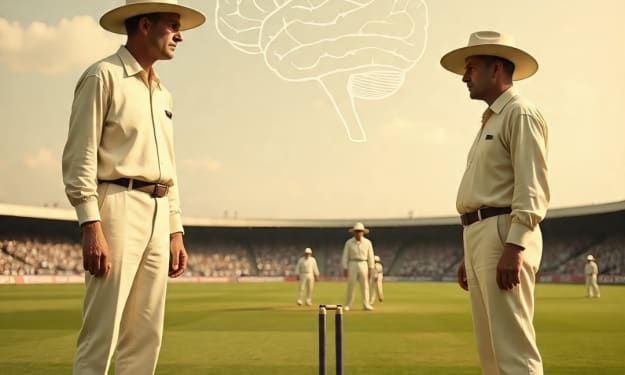
The Mind Behind the Bat: Exploring Ancient Psychology in the Early History of Cricket
In the rolling green hills of 18th-century England, long before cricket became an organized international sport, it was already a psychological game. The year was 1744. A group of men from neighboring villages gathered on a makeshift pitch in Surrey. Some wore patched waistcoats, others finer linen shirts. They weren’t professionals—just farmers, blacksmiths, and minor gentry seeking diversion. But as the wooden bat met the ball with a satisfying crack, something deeper than sport stirred in their minds: competition, strategy, pride, and community. Cricket, even in its rudimentary form, was more than a physical contest. It was a game of the mind. Historians often focus on cricket’s rules, development, and colonial expansion. Less often do they consider the psychology at play from its earliest days. Yet even in these early rural matches, the sport offered a stage where human instincts—cooperation, rivalry, performance anxiety, and even deception—played out. Take Thomas Rayner, for instance, a middle-order batsman remembered in local journals from Kent. Rayner wasn’t the strongest hitter, but he was known for his patience. While others swung wildly, trying to impress the crowd or assert dominance, Rayner waited. He watched bowlers’ movements, learned their habits, and anticipated their deliveries. He turned cricket into a thinking man’s game. Modern psychologists would recognize Rayner’s skill as "cognitive restraint"—the ability to suppress immediate impulses in favor of long-term goals. This trait, often linked to higher emotional intelligence, gave him a quiet edge. The villagers didn’t use such terms, of course. They simply called him "the shadow," for how he silently turned the tide of matches. There was also an unspoken psychology among bowlers. In an era before standardized pitches, bowlers adapted quickly to inconsistent terrain. Their tactics weren’t just about where to place the ball—it was about reading the batsman’s fear or overconfidence. One village scribe wrote of a bowler who “stared until the batsman trembled, then bowled low and quick.” It was a simple act of intimidation—primitive, but psychologically effective. Crowd dynamics played a role too. Early matches drew spectators from miles around, often fueled by local rivalries. Emotions ran high. Supporters cheered and jeered, placing bets or mocking opponents. This pressure affected players, revealing early examples of what psychologists now call "performance under social evaluation." A missed catch or a duck in front of neighbors could haunt a man for weeks. And then there was the social structure of the game itself. Cricket became one of the first games to bridge the class divide—at least superficially. The term “gentleman versus player” would later formalize the distinction between amateurs and professionals, but even in the 1700s, subtle class psychology played out on the field. Upper-class players often led the teams, expected to be the composed tacticians. Working-class players, though sometimes more skilled, were stereotyped as emotional or impulsive. This dynamic influenced gameplay and roles within teams. Yet paradoxically, cricket also gave the working class a rare opportunity: a chance to outwit and outperform their social superiors in public view. Perhaps the most fascinating psychological layer was the concept of sportsmanship—or its early form. The idea of playing "fairly" wasn’t codified yet, but informal codes existed. Players who bent the rules were remembered and sometimes shunned. This early conscience, a mixture of honor and peer pressure, laid the foundation for the famed "spirit of cricket" centuries later. Stories from the time speak of players who would confess to touching the ball with their hand, even when no one saw. Others would feign injury to manipulate outcomes. The moral tension between honesty and advantage was already embedded in the game. Psychologists would later study this tension in theories of moral development and group dynamics. As cricket spread across the British Empire, these psychological dynamics evolved with it—but they never disappeared. From the dusty fields of colonial India to Caribbean beaches and Australian bushland, the same mental games were played: reading opponents, managing emotion, responding to crowds, and navigating status. Back in Surrey, on that warm afternoon in 1744, the villagers didn’t know they were part of something larger. But when Thomas Rayner calmly blocked yet another fast delivery, forcing a frustrated bowler into error, the locals roared with appreciation—not just for the run, but for the mind behind the bat. Today, centuries later, cricket remains as psychological as ever. Analytics may track performance, and sports psychologists may coach elite players, but the core remains unchanged. From dusty village greens to roaring stadiums, the battle of wits still pulses beneath every match. The game has changed. The minds playing it have not.
By Muhammad Saad 6 months ago in Gamers
The Timeless Mind Game: How Classic Cricket Shaped Human Psychology
The Timeless Mind Game: How Classic Cricket Shaped Human Psychology In the golden light of an early summer afternoon in 1934, a young boy named Hari sat cross-legged on a hill beside his village ground in northern India, watching an old cricket match with quiet reverence. There were no loudspeakers, no painted faces, no flashing scoreboards. Just the hush of anticipation, the rhythmic sound of leather meeting willow, and the occasional cheer breaking through the stillness. To most, the match seemed slow, even uneventful. But for Hari, every delivery was a lesson in human psychology. Cricket in its traditional form was not just a sport—it was a mental discipline. It demanded patience, strategy, emotional control, and an acute awareness of human behavior. A batter might spend hours at the crease, defending more than attacking, waiting not for the perfect shot but for the perfect moment. Bowlers, meanwhile, tested their opponents not just with variations of spin and pace, but with calculated psychological pressure—each over a quiet dialogue in the language of fatigue, temptation, and misjudgment. Hari, though just 11, was fascinated. He’d heard tales from his grandfather about test matches that lasted five full days—where a player’s endurance and mindset mattered as much as their technique. “It’s not about hitting the ball hard,” his grandfather once said. “It’s about knowing when not to hit it.” As Hari grew older, he began to realize that these games had left their imprint on the minds of generations. The old system of cricket, with its long hours, slow tempo, and subtle tactics, nurtured qualities that mirrored life itself. Restraint was as important as ambition. Focus, more powerful than force. One’s greatest opponent was not the person at the other end of the pitch—but the voice inside one’s own head. Modern psychology would later describe this mental state in terms of cognitive endurance and emotional regulation. But long before textbooks labeled it, cricket players had practiced it. They developed a form of “flow,” immersing themselves fully in the moment, maintaining concentration across long periods without external stimulation. Hari remembered a match where a batter named Prakash stood his ground for nearly six hours, scoring just 70 runs. The crowd had grown restless, even bored. But later, a local teacher praised Prakash’s innings as “a masterclass in mindfulness.” He had withstood the pressures of impatience—not only from his opponents but from his own teammates and the crowd. In this way, cricket’s old system quietly reinforced traits that modern society often struggles to teach: delayed gratification, mental resilience, and strategic thinking. A young person who played by these rules learned more than batting or bowling. They learned how to endure criticism without reacting. They learned how to wait, to observe, to adapt. And most of all, they learned how to lose without losing themselves. By the 1980s, cricket began to change. Shorter formats emerged—first One Day Internationals, then Twenty20. The pace quickened, the game became more aggressive, and the spotlight shifted to big hits and fast finishes. The crowd wanted thrill, not tension. Action, not patience. Hari, now a middle-aged schoolteacher, didn’t resent the change. But he saw something fading. He watched his students gravitate toward fast-paced games and digital rewards. Attention spans shortened. The virtue of "waiting for the right ball" disappeared—not just from cricket, but from life. The new players were skilled, energetic, and entertaining, but the old psychological dance—the subtle, almost meditative inner game—was rare. One day, during a school assembly, Hari shared a story of a cricketer who once batted through an entire day without scoring a single boundary. A student raised his hand and asked, “What was the point?” Hari smiled. “The point,” he said gently, “was that the player knew what mattered most wasn’t how much noise he made, but how long he stayed true to his plan. Sometimes, the quietest innings are the strongest.” As he looked at the young faces before him, he realized that while the format of the game had changed, its deeper lessons could still be passed down—if told the right way. Perhaps cricket, in its older form, wasn’t just about a game played on the field. It was about a game played in the mind—timeless, profound, and deeply human.
By Muhammad Saad 6 months ago in Gamers