
When the Sun Disappears The Science and Magic of Solar Eclipses
Where ancient myths meet modern science, and day turns to night in the blink of an eye

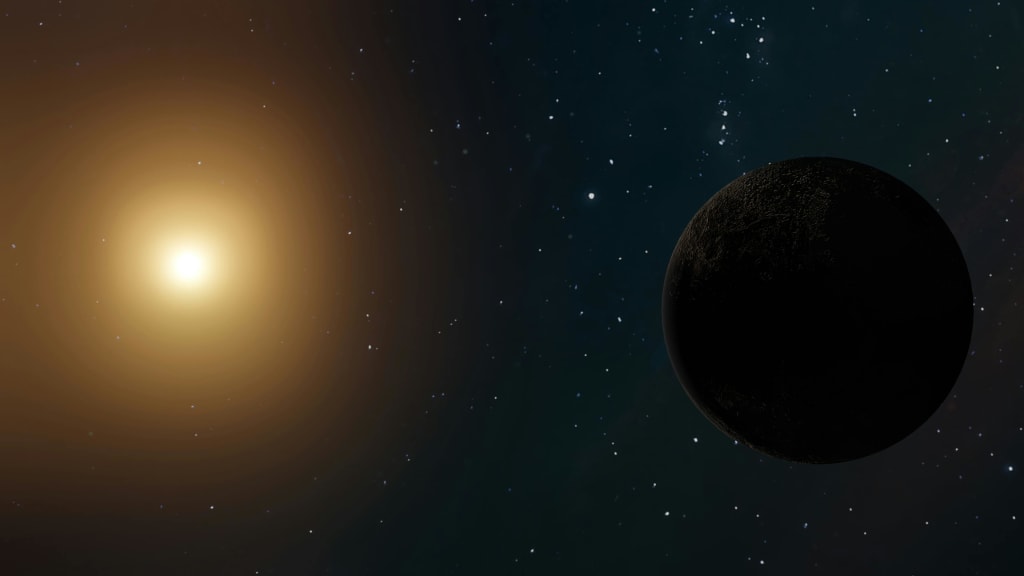
When the Sun Disappears: The Science and Magic of Solar Eclipses
Where ancient myths meet modern science, and day turns to night in the blink of an eye.
There are few natural events that rival the awe and wonder of a solar eclipse. For a brief, spellbinding moment, the blazing face of the Sun is darkened, and daylight vanishes as if the universe hit a cosmic light switch. It’s a phenomenon that has sparked fear, reverence, celebration, and scientific curiosity across human history. But what exactly is happening when the Sun disappears—and why does it move us so deeply?
Let’s explore the science behind solar eclipses and the magic they still hold in our collective imagination.
🌞 What Is a Solar Eclipse?
A solar eclipse occurs when the Moon passes between the Earth and the Sun, casting a shadow on Earth that fully or partially blocks the Sun’s light. But not every New Moon brings an eclipse—it happens only when the Moon’s orbit aligns perfectly with the Sun and Earth. This cosmic alignment results in three main types of solar eclipses:
1. Total Solar Eclipse – The Moon completely covers the Sun, plunging the Earth into temporary darkness. This happens in a narrow path called the "path of totality."
2. Partial Solar Eclipse – Only part of the Sun is obscured.
3. Annular Solar Eclipse – The Moon is slightly farther from Earth and doesn’t fully cover the Sun, creating a “ring of fire” effect.
Eclipses are rare because the Moon’s orbit is tilted about 5 degrees compared to Earth’s orbit around the Sun. That’s why we usually see the Moon pass above or below the Sun, missing an eclipse entirely.
🌘 The Dance of Shadows
During a total solar eclipse, two shadows are cast by the Moon:
The umbra: the central, darkest part of the shadow. If you’re in this area, you’ll see a total eclipse.
The penumbra: a lighter shadow around the umbra, where viewers experience a partial eclipse.
The path of totality is often no more than 100 to 200 kilometers wide, and the experience lasts only a few minutes. Yet those few minutes have inspired poems, pilgrimages, and even scientific revolutions.
🕰️ Eclipses in History and Myth
Before we had telescopes or physics, ancient cultures turned to myth to explain the Sun’s disappearance. And who can blame them? Watching the sky darken in the middle of the day feels like the universe breaking its own rules.
In ancient China, eclipses were believed to be dragons devouring the Sun. Drums and fireworks were used to scare them away.
The Vikings thought wolves were chasing and occasionally catching the Sun.
In Maya civilization, eclipses were seen as powerful omens—portents of war, death, or cosmic change.
Even today, in some parts of the world, eclipses are approached with spiritual caution. And yet, across cultures, they’ve always been deeply symbolic: endings, beginnings, transformations.
🔬 A Catalyst for Science
The first people to make sense of eclipses scientifically were ancient astronomers who noticed patterns in the sky. The Babylonians could predict eclipses as early as 700 BCE using the Saros cycle, a repeating pattern of eclipses every 18 years.
But it wasn’t just early math that made eclipses important. In 1919, a total solar eclipse became the proof of Einstein’s theory of general relativity. Scientists used the eclipse to observe how the Sun’s gravity bent light from distant stars—something only possible when the Sun was momentarily darkened.
Today, eclipses are still valuable for studying:
The Sun’s corona (its outer atmosphere)
Solar flares and magnetic fields
The Moon’s shifting orbit
How eclipses impact Earth's atmosphere, temperature, and even animal behavior
🌌 The Emotional Impact
While science can explain the mechanics, it’s the emotional experience of an eclipse that leaves the deepest mark.
Ask anyone who’s seen a total solar eclipse, and they’ll likely describe it as otherworldly. Birds fall silent. The temperature drops. Shadows grow strange and sharp. And then, as the Moon fully covers the Sun, a corona—a glowing halo of solar plasma—bursts into view.
For a few minutes, reality is rewritten. Day becomes night. Logic gives way to awe. People cry. People cheer. Strangers hold hands.
Why does it touch us so deeply? Perhaps because it reminds us how small and temporary we are. Or perhaps because, in an age of artificial lights and constant noise, nature still has the power to silence us with a single, perfect alignment.
📅 Preparing for the Next Eclipse
Eclipses don’t come often—and not always where we are. The next major total solar eclipse will happen on August 12, 2026, visible from parts of Europe and North Africa.
If you plan to witness it:
Get eclipse glasses – Never look at the Sun directly.
Travel to the path of totality – That’s where the magic happens.
Capture the moment, but don’t forget to feel it too.
✨ When Science and Wonder Collide
In the end, a solar eclipse is more than a cosmic coincidence. It’s a reminder that even in a universe governed by laws and numbers, there’s room for mystery and wonder.
When the Sun disappears, it reveals something more than the stars behind it. It reveals something in us—a longing to understand, to marvel, and to belong to something greater.
So next time the sky darkens midday, don’t just watch.
Remember. Reflect. And look up.
About the Creator
Muhammad ali
i write every story has a heartbeat
Every article starts with a story. I follow the thread and write what matters.
I write story-driven articles that cut through the noise. Clear. Sharp truths. No fluff.
Keep reading
More stories from Muhammad ali and writers in FYI and other communities.




Comments
There are no comments for this story
Be the first to respond and start the conversation.