
What is known about croissants: 20 Fun Facts
A croissant is a flaky, buttery, crescent-shaped pastry of French origin, though its origins are rooted in Austria.

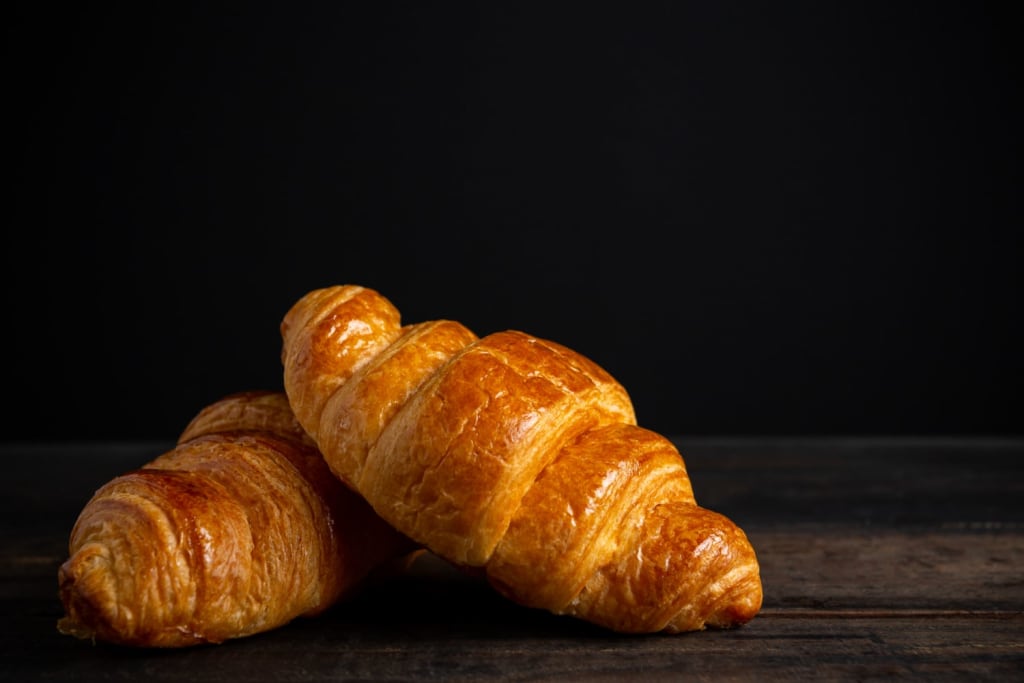
Few baked goods are as instantly recognizable and universally adored as the croissant. With its delicate layers, golden crust, and buttery aroma, the croissant is a symbol of indulgence and elegance. Often associated with French cafés and leisurely breakfasts, its true history is richer and more surprising than most people realize. Behind the flaky exterior lies a story of migration, invention, and culinary craftsmanship. Here are some fascinating and lesser-known facts about this beloved pastry that will make you appreciate it even more.
- The origins of the croissant can be traced back to Austria, not France. It evolved from the Austrian kipferl, a crescent-shaped bread that dates back to at least the 13th century.
- The French popularized and refined the croissant into its modern buttery form. Austrian baker August Zang is credited with introducing the kipferl to Paris in the 1830s, where it was transformed into the croissant we know today.
- The crescent shape of the croissant is believed to be a symbolic celebration of the defeat of the Ottoman Empire. According to legend, bakers in Vienna created the pastry after the city’s victory in the 1683 Battle of Vienna, shaping it like the crescent moon on the Ottoman flag.
- Croissants are made using a technique called laminating. This involves folding butter into dough multiple times to create layers, resulting in the pastry’s signature flakiness.
- A traditional French croissant contains more than 50 layers of dough and butter. The careful layering is what gives the pastry its airy texture and crisp exterior.
- French laws dictate what qualifies as a true croissant. For a bakery to call its product a croissant au beurre, it must be made with pure butter and not margarine.
- There are different types of croissants depending on the ingredients and shape. For instance, croissants made with margarine are often straight, while butter croissants are typically curved in France.
- Making croissants from scratch is a time-consuming process that takes several hours or even days. The dough must be chilled between folds and proofed carefully to ensure the correct rise and texture.
- Croissants have become a global phenomenon and are now found in bakeries around the world. Variations include almond croissants, chocolate-filled croissants, and even savory versions with ham and cheese.
- The pain au chocolat, another French favorite, is sometimes mistakenly called a chocolate croissant. However, it has a rectangular shape and is made with the same laminated dough but includes two bars of dark chocolate inside.
- In France, croissants are typically eaten plain or with a bit of jam. Unlike in some countries, it is uncommon to find them heavily glazed or overly sweetened.
- The word “croissant” means crescent in French. The shape is central to the identity of the pastry and is what gives it its name.
- Croissants are a staple of the French breakfast, often paired with a café au lait. They are commonly bought fresh from local boulangeries early in the morning.
- The croissant has inspired numerous culinary hybrids. One of the most famous is the cronut, a croissant-doughnut fusion that originated in New York City and quickly went viral.
- Although croissants are often seen as a light breakfast, they are deceptively rich in calories. A single butter croissant can contain up to 300 calories or more, depending on its size.
- Croissants are often used in gourmet sandwiches and brunch dishes. Their soft yet crisp structure makes them ideal for holding ingredients like eggs, avocado, and smoked salmon.
- In some parts of the world, croissants are used creatively in desserts. Examples include croissant bread pudding, croissant ice cream sandwiches, and even croissant French toast.
- The popularity of croissants has led to mass production, with frozen versions available in supermarkets. While convenient, these often lack the complexity and freshness of bakery-made croissants.
- Many modern croissants incorporate regional ingredients. In Japan, for example, matcha-flavored croissants are popular, while in the Middle East, date-filled croissants are sometimes served.
- Croissants have also made their way into pop culture and fashion. Their distinctive shape and association with Parisian style have made them a symbol of sophistication and indulgence.
Croissants are much more than a simple breakfast item. They represent centuries of culinary evolution, blending tradition, artistry, and global influence. Whether you enjoy them plain or filled, sweet or savory, croissants remain a timeless favorite. Their story reminds us that behind every flaky bite lies a world of history and skill.
Sources used and useful links on the topic of the article:
- https://millionfacts.co.uk/23-interesting-facts-about-croissant
- https://millionfacts.kz/tamaq/krwassan-twraly-19-qyzyqty-maelimetter/
- https://en.wikipedia.org/wiki/Croissant
What do you know about croissants? Share interesting facts about it in the comments below 👇
About the Creator
MillionFacts UK
Each post covers topics like science, history, animals, and space in a fun and easy-to-read way.
Keep reading
More stories from MillionFacts UK and writers in FYI and other communities.
What is known about seals: 40 Fun Facts
Seals are among the most captivating and adaptable marine mammals in the animal kingdom. With their expressive eyes, sleek bodies, and playful behavior, these creatures have fascinated people for centuries. Found in a variety of climates and environments, from icy polar regions to temperate coastlines, seals exhibit a remarkable range of survival skills and behaviors. Though often mistaken for being simple or lazy beach dwellers, seals are in fact complex animals with impressive physical abilities and social structures. The following collection of fun and informative facts reveals just how extraordinary seals truly are.
By MillionFacts UK7 months ago in FYI
Affection and Healing for Yourself
During the night of the last quarter moon, I gathered my ritual supplies. I carefully handled the chunk of black tourmaline that would protect me from your overall negative and narcissistic energy. I carefully walked the house with my stick of selenite in hand, asking the universe to cleanse our working space.
By Alisha Wilkins ✒️🦋🖋️2 days ago in Fiction



Comments (1)
I had no idea the croissant's from Austria! And that it's linked to the Ottoman defeat. Laminating sounds tricky. Good to know about the French laws too. Fascinating stuff!