
Water & Wastewater Treatment Market Size and Forecast 2025–2033
A Deep Dive into Global Demand, Technological Advancements & the Push for Sustainable Water Infrastructure


The global water and wastewater treatment market is entering a transformative decade. According to Renub Research, the market reached USD 347.16 billion in 2024 and is projected to grow from USD 371.53 billion in 2025 to an impressive USD 639.30 billion by 2033, registering a healthy CAGR of 7.02% during the forecast period. Demand for clean water, rapid urbanization, stricter environmental regulations, and technological advancements are creating unprecedented momentum across all segments—from chemicals and equipment to municipal and industrial applications.
As climate change intensifies water scarcity and pollution challenges, the urgency to treat, recycle, and conserve water has never been more critical. This market sits at the heart of global sustainability, health, and economic resilience.
Water & Wastewater Treatment Market Overview
Water and wastewater treatment encompasses a multi-stage process designed to remove contaminants, pollutants, pathogens, and hazardous chemicals from water, making it safe for consumption, industrial processes, or safe environmental discharge.
The treatment journey typically includes:
Sedimentation
Filtration
Biological treatment
Chemical conditioning
Disinfection
These processes ensure any treated water meets safety and regulatory standards. Beyond potable use, treated water supports agriculture, industrial cooling, manufacturing, and environmental preservation.
Wastewater treatment, particularly in urban environments, plays a vital role in managing sewage, stormwater, and industrial effluents. Increasingly, treated wastewater is reused for landscaping, power plants, and various non-potable applications—an essential practice for regions facing chronic water shortages.
Growth Drivers Shaping the Water & Wastewater Treatment Market
1. Rising Global Demand for Clean Water
The world is heading toward a severe water deficit. According to experts at the UN Water Summit, global demand is expected to exceed freshwater supply by 40% by 2030. Population growth, industrial expansion, and modern agricultural needs are placing enormous pressure on existing water resources.
Governments, NGOs, and industries are ramping up investments in treatment technologies to ensure safe drinking water, prevent waterborne diseases, and build long-term water security.
2. Stringent Environmental Regulations
Water pollution has reached alarming levels, threatening aquatic ecosystems and public health. This has prompted governments worldwide to implement strict regulatory frameworks such as:
Clean Water Act (CWA) – United States
European Water Framework Directive (WFD)
Local wastewater discharge standards across Asia & Middle East
Industries must now treat wastewater before release, increasing demand for advanced treatment systems. Regulations around sustainability—including resource recovery and circular water use—are accelerating market expansion as well.
The European Union’s ongoing commitment to the 2030 Sustainable Development Goals (SDGs) continues to drive regulatory enforcement and green transformation across the region.
3. Innovations in Treatment Technologies
Technology is revolutionizing the water and wastewater industry. Breakthrough solutions include:
Membrane filtration
UV disinfection
Advanced oxidation processes (AOPs)
IoT-enabled monitoring
AI-driven optimization in treatment plants
These innovations improve treatment efficiency, reduce energy consumption, and lower operational costs.
In April 2024, Watertech China highlighted a wave of transformative water technologies that promise enhanced treatment capabilities for municipalities and industries worldwide.
Key Market Challenges
1. High Capital & Operational Costs
Building modern treatment plants requires substantial investment. Energy-intensive processes, maintenance, and skilled workforce requirements add to operational expenses. For developing nations and small municipalities, these costs can be prohibitive, slowing adoption despite pressing needs.
2. Limited Awareness & Infrastructure Gaps in Emerging Economies
Countries in Africa, South Asia, and parts of Latin America face structural barriers:
Poor funding
Lack of technical expertise
Weak policy enforcement
Rural areas lacking basic facilities
Without targeted investments and infrastructure development, large volumes of untreated wastewater continue to pollute rivers and groundwater. Bridging these gaps will be essential for long-term market growth.
Segment Analysis
Coagulants & Flocculants
These chemicals are the backbone of solid-liquid separation. They help aggregate suspended particles, improving water clarity and enabling efficient sedimentation. With rising municipal and industrial demand, this segment continues to expand steadily. Stricter water quality regulations further boost adoption.
Antifoam Chemicals
Foam can disrupt the treatment process, overflow systems, and damage equipment. Antifoam chemicals prevent and control foam formation—especially crucial in industrial wastewater facilities. Growing industrialization and the need for uninterrupted operations are driving this segment’s demand.
Disinfection Technologies
Disinfection is essential for eliminating harmful pathogens. Key disinfection methods include:
Chlorination
UV irradiation
Ozone treatment
With rising demand for safe drinking water, the disinfection segment remains one of the fastest-growing markets. The shift toward advanced UV systems reflects a push for chemical-free, high-efficiency disinfection.
Biological Treatment Systems
Biological processes such as activated sludge, bioreactors, and anaerobic digestion break down organic contaminants. These eco-friendly systems are widely used in municipal plants and industries.
The rising emphasis on sustainability and the growing interest in wastewater reuse and biogas production are accelerating investments in biological treatment technologies.
Municipal Water & Wastewater Treatment
Municipalities remain the largest market segment due to:
Rapid urbanization
Aging water infrastructure
Rising population density
Government-led modernization
Cities worldwide are expanding capacity and upgrading outdated systems to address rising demand and improve resilience against climate-induced water stress.
Regional Market Highlights
United States
The U.S. maintains strong leadership driven by:
Strict environmental regulations
Aging infrastructure in need of modernization
Industrial water reuse initiatives
In January 2024, Advanced Drainage Systems, Inc. introduced advanced septic wastewater solutions through Infiltrator Water Technologies, expanding its treatment offerings.
With strong innovation ecosystems and federal funding support, the U.S. market is set for consistent growth.
Germany
Germany stands at the forefront of green innovation and strict environmental compliance. The country’s industrial sector demands high-performance wastewater treatment systems.
Germany’s commitment to resource recovery and sustainable water management fuels market expansion. In April 2024, Membion secured €5 million in investment to scale its advanced MBR modules, reducing operational costs while enhancing treatment efficiency.
India
India is witnessing rapid growth in the water & wastewater treatment sector due to:
Urbanization
Water pollution challenges
Large-scale government programs (Jal Jeevan Mission, Namami Gange)
Industrial clusters are major adopters of advanced treatment technologies.
In February 2024, TERI licensed its patented TADOX technology to Ion Exchange India Ltd, enabling innovative treatment solutions for industrial wastewater.
Saudi Arabia
With minimal freshwater resources, Saudi Arabia relies heavily on desalination and wastewater recycling. The country’s Vision 2030 agenda promotes sustainable infrastructure and water management.
In January 2025, the Emir of Jazan launched 73 water, environmental, and agricultural projects worth SAR 4.7 billion (USD 1.2 billion), strengthening the nation’s commitment to water security and modernization.
Market Segmentation Snapshot
By Chemicals
pH Conditioners
Coagulants & Flocculants
Disinfectants & Biocides
Scale & Corrosion Inhibitors
Antifoam Chemicals
Others
By Equipment
Membrane Separation
Biological Systems
Disinfection Equipment
Sludge Treatment
Others
By Application
Municipal
Industrial
By Countries
United States, Canada, France, Germany, Italy, Spain, U.K., Belgium, Netherlands, Turkey, China, Japan, India, Australia, South Korea, Thailand, Malaysia, Indonesia, New Zealand, Brazil, Mexico, Argentina, South Africa, Saudi Arabia, UAE
Key Players – Competitive Landscape
Major companies leading the global water & wastewater treatment market include:
Ecolab Inc.
Veolia Group
3M Company
Pentair plc
The Dow Chemical Company
Aquatech International Corporation
Calgon Carbon Corporation
Xylem Inc.
DuPont
Parkson Corporation
These players are consistently innovating through advanced technologies, strategic partnerships, acquisitions, and sustainability initiatives.
Final Thoughts
Water is the most essential resource on Earth—and one of the most threatened. As global scarcity, pollution, and climate variability intensify, the water and wastewater treatment market is becoming central to public health, economic resilience, and environmental sustainability.
From advanced membrane systems to AI-driven water intelligence, the next decade will redefine how nations manage their water resources. With steady market growth and rising investments, the sector is well-positioned to meet the world’s accelerating need for clean, safe, and reusable water.
About the Creator
Keep reading
More stories from Aaina Oberoi and writers in FYI and other communities.
North America Fertilizer Market Set to Cross US$ 92 Billion by 2033: Innovation, Sustainability, and Food Security at the Core
The North American fertilizer industry is entering a pivotal era marked by rapid modernization, sustainability goals, and rising agricultural demands. According to Renub Research, the North America Fertilizer Market is projected to grow from US$ 68.68 billion in 2024 to US$ 92.23 billion by 2033, expanding at a CAGR of 3.33% from 2025 to 2033. The region’s escalating food consumption, soil nutrient depletion, sustainability mandates, and adoption of smart farming technologies are creating a new blueprint for fertilizer innovation and consumption.
By Aaina Oberoi2 months ago in FYI
Pizza Boxes Market Size and Forecast 2025–2033
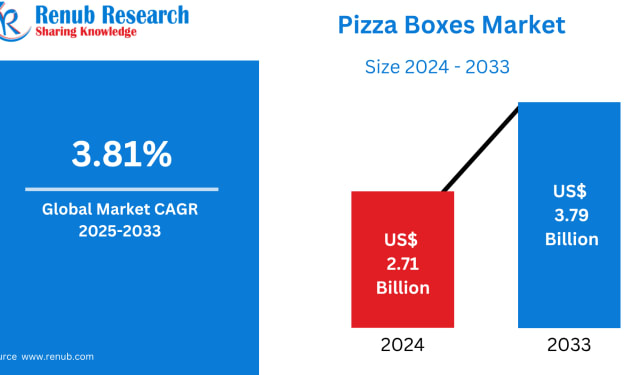
Pizza Boxes Market: A Global Packaging Staple in Transformation The global Pizza Boxes Market is expected to reach US$ 3.79 billion by 2033, up from US$ 2.71 billion in 2024, registering a CAGR of 3.81% from 2025 to 2033. This steady expansion is driven by the accelerating demand for takeout and home delivery, rising global pizza consumption, rapid growth of quick-service restaurants (QSRs), and increasing environmental awareness that is reshaping packaging choices worldwide.
By Marthan Sir6 days ago in FYI



Comments
There are no comments for this story
Be the first to respond and start the conversation.