
Typica Coffee : Queen of the Coffee World
A cherished choice for specialty coffee markets.

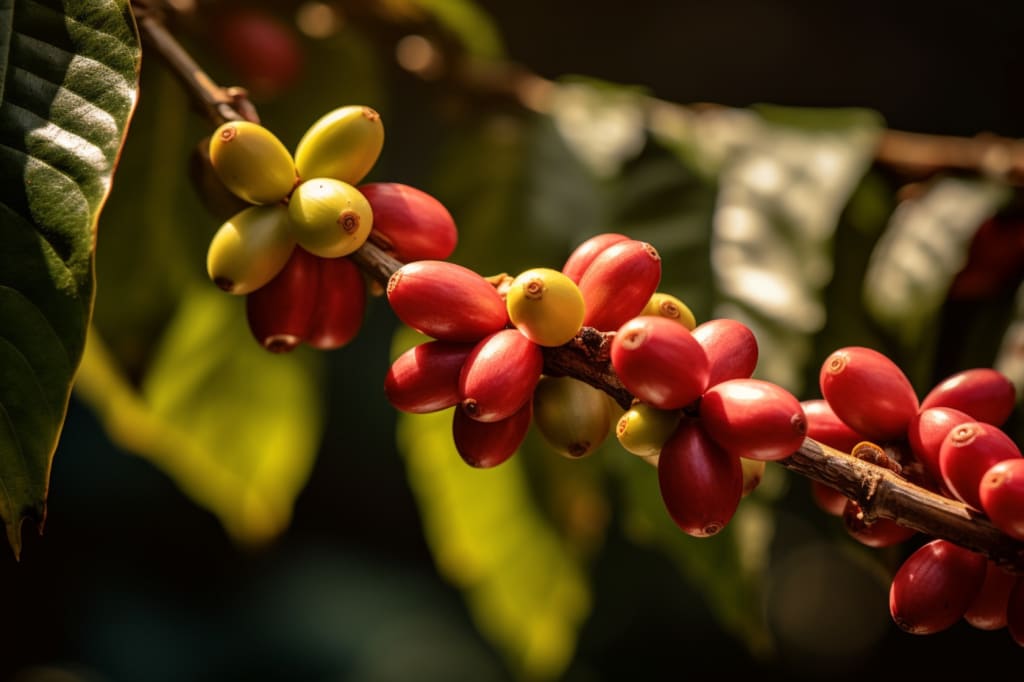
One variety in the vast world of coffee stands out as a true OG: Typica. This grandmama of Coffea Arabica has been around for ages, and its genetic fingerprints can be found in many other varieties that we enjoy today. Typica might not produce a ton of beans, but what it lacks in quantity, it makes up for in quality. Its beans are prized by coffee lovers for their unique flavor.
Historical Journey of Typica Coffee
Typica's journey began in the 15th and 16th centuries when it was taken from southwestern Ethiopia to Yemen. Over the centuries, its seeds travelled through various routes, planting the roots of Typica across the world:
- Late 1600s: Seeds from Yemen were sown in India.
- 1696–1699: Coffee seeds were sent from the Malabar coast of India to Batavia (Java, Indonesia), leading to the distinct Typica variety.
- 1706: A single plant from Java reached Amsterdam's botanical gardens, eventually reaching France in 1714.
- 1719: Seeds were sent to Dutch Guiana (now Suriname).
- 1722: Reached Cayenne (French Guiana).
- 1723: Transplanted to Martinique in the West Indies.
- 1727: Arrived in northern Brazil from French Guiana.
- 1730: Introduced to Jamaica by the English from Martinique.
- 1735: Reached Santo Domingo.
- 1740: Cultivation began in El Salvador.
- 1748: Spread to Cuba from Santo Domingo.
- 1760–1770: Expanded to southern Brazil.
- 1779: Sent from Cuba to Costa Rica.
- 1840: Extended to El Salvador from Cuba.
Throughout the late 18th century, Typica spread across the Caribbean, Mexico, Colombia, and eventually throughout Central America.
Reference: World Coffee Research
Typica Coffee Genetic Description and Varietal Influence
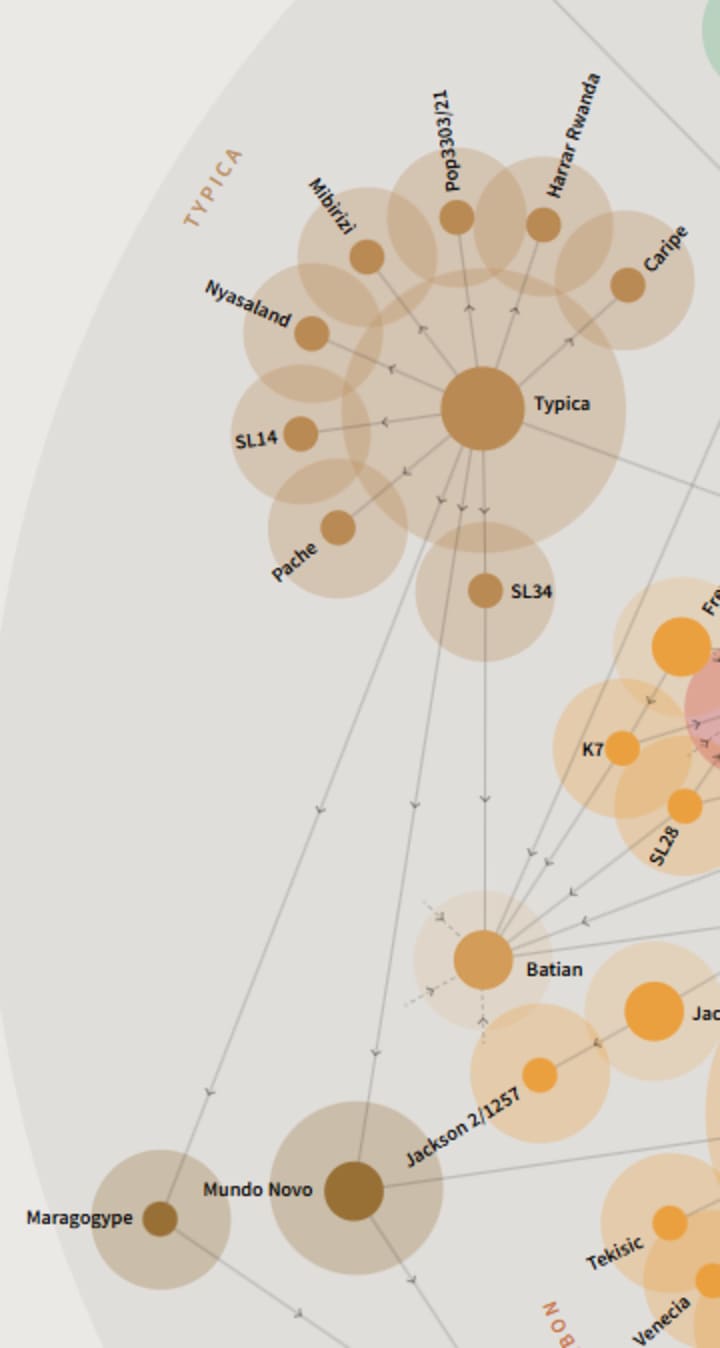
Typica, a member of the Bourbon-Typica family, is like a genetic grandparent to many Arabica coffees. Its DNA has spread far and wide, resulting in lots of different names and related varieties popping up around the globe. Think of it like this:
- Criollo (Creole): in Spanish-speaking countries.
- Indio (Indian): from its early cultivation in India
- Arábigo (Arabica): pointing to its Arabian roots.
- Blue Mountain: grown in Jamaica's Blue Mountains.
- Sumatra: found in Sumatra, Indonesia
Spreading and adapting
Typica spreading journey show its adaptability to various climates. Its cultivation has significantly shaped the coffee landscapes in regions such as the Caribbean, Central and South America:
- Until the 1940s: Dominated plantations in South and Central America.
- Post-1940s: Gradually replaced due to low yields and disease susceptibility, but remains cultivated in Peru, the Dominican Republic, and Jamaica.
Characteristics of Typica Coffee
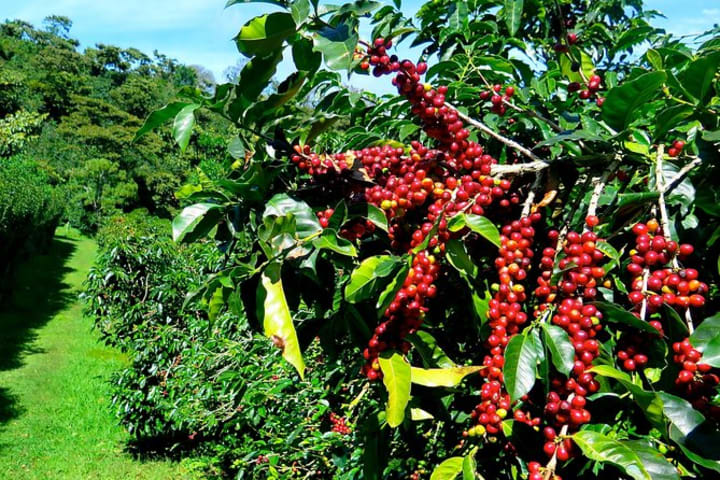
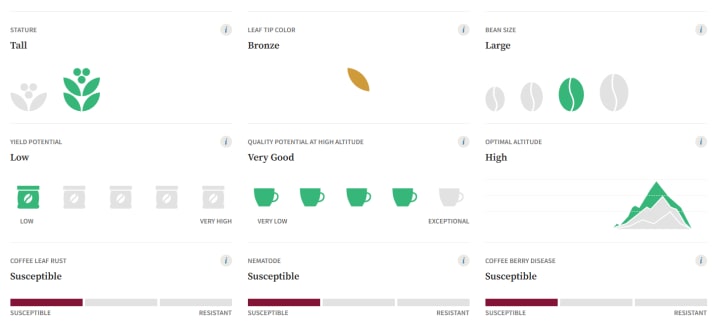
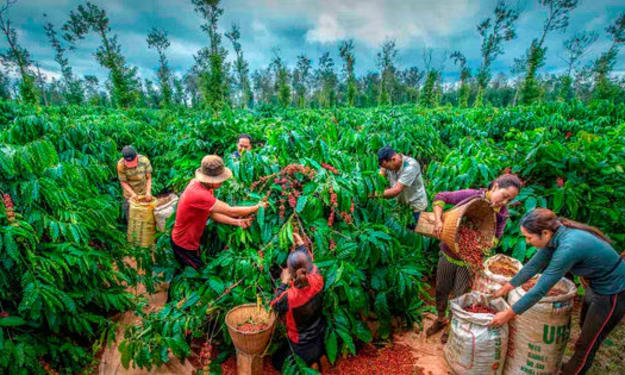
Typica is a tall coffee tree, with bronze-tipped leaves and big beans. It doesn't produce a ton of coffee, but what it does make is top-notch, especially when grown up high in the mountains. Quality over quantity, you could say.
Cultivation Considerations:
Location and Altitude:
- Central America: Produces high-quality beans.
- Optimal Altitude: Varies from 1000m to above 1600m in equatorial regions and 700m to above 1300m in areas further from the equator.
Nutritional Requirements and Planting Density:
- Requires moderate nutritional input.
- Typically planted at a density of 3000–4000 plants per hectare with single-stem pruning.
Reference: World Coffee Research
Typica Coffee Group Varieties
Several varieties have originated from Typica, each adapted to specific regions and conditions:
- Nyasaland: a Malawi local.
- SL14: Kenyan varieties built to resist disease and deliver great taste.
- Pache: From Guatemala, a natural mutation of Typica.
- SL34: Kenyan varieties built to resist disease and deliver great taste.
- Mibirizi: From Burundi, known for local adaptation and quality.
- Batian: Developed in Kenya for disease resistance and quality.
- Mundo Novo: A Brazilian hybrid of Typica and Bourbon, known for yield and adaptability.
- Maragogype: Brazilian, famous for large beans (elephant beans).
- Catuai: a high-yield, high-quality Brazilian hybrid.
- Pacamara: A Salvadoran hybrid known for its unique flavor profile.
- Pop3303/21, Harrar Rwanda, Caripe: Lesser-known yet significant due to genetic lineage.
Conclusion
Typica isn't just a coffee; it's a legend. It's a bit fussy (low yields, prone to disease), but those beans are pure magic when grown in the right spot. That's why it's a specialty coffee, darling.
About the Creator
Pham Duc Toan
Family, strong bonds, and the perfect cup of coffee—that's my world. I'm sharing my experiences, the good, the challenging, and the deep thoughts.
Keep reading
More stories from Pham Duc Toan and writers in FYI and other communities.
Robusta Coffee: A Deep Dive
Introduction to Coffea Canaphora Coffea Canephora, commonly known as Robusta, is one of the two primary coffee species cultivated commercially, the other being Coffea Arabica. This coffee is vital to the global coffee industry. It's a major source of income for many countries and supports millions of people. Over the past 30 years, growing coffee demand has led to more Robusta coffee being grown and sold worldwide.
By Pham Duc Toanabout a year ago in FYI
Oil Prices and the Hidden Struggles Behind Global Energy
Oil prices influence daily life in ways many people rarely notice. From the cost of gasoline at the pump to the price of food in grocery stores, shifts in oil prices ripple through the global economy. A sudden rise can strain family budgets, while a sharp drop can shake entire industries. Behind these changes are complex forces such as political tension, supply shortages, economic growth, and environmental concerns. Yet for many people, oil prices remain a distant headline rather than a personal story. The truth is far more connected to everyday life. Understanding how oil prices move, why they change, and who feels the impact most can reveal a deeper picture of the modern world and the fragile balance that keeps global energy flowing.
By Muqadas khan6 days ago in FYI
A Transparent Look at Vocal Challenges and Top Stories
Almost three years ago, we shared a resource article that served as a place for people to suggest new challenge prompts. We thought it would be a good idea to refresh that thread, and take the opportunity to answer a few common questions about top stories, how challenges are judged and how submissions are reviewed.
By Vocal Curation Team3 days ago in Resources



Comments
There are no comments for this story
Be the first to respond and start the conversation.