Top Stories
Stories in FYI that you’ll love, handpicked by our team.
The Biggest Paradox of All: Language is a Lie
Only one with hypermnesia could cranially farctate the brontide of linguistic nuances that the English language possesses. A philodox who adores the sound of his own vocal ruminations, a virago with vulpine command of tongue, or a rapscallion sciolist might cavil the uselessness of elaborate verbatim; but seldom the banal factotum. It is with a frisson of ardour that I indite of the gorgonising peregrination of heady literary escapes, a feeling akin to gargalesthesia, tucked up in beldam arms, as I first discovered the joy of words. An ambuscade of aliment for my natural brain, each letter instilling an appentency within me for any orts or scruples of learning; but to collogue like a clerk was never my destiny. Betimes I excogigated a fantasy land, fuzzled on fudge; my bookcase a chicane of intelligence, a fane to fandangle tomes. Forsooth, the bootless act of reading is as ineffectual as a dextrosinistral with no one to dispraise. First a dandiprat, I grew into a beef-witted morosoph, my crumpet tied to the archaic isms of my childhood; but soon I discovered the pleasure of lalochezia; my sensibilities and my words torn asunder, suddenly athwart each other. Erewhile I grew up with the classics, erelong the four-letter malisons enthrall me now.
By Francesca Devon Heward5 years ago in FYI
The Overlooked Pollinators
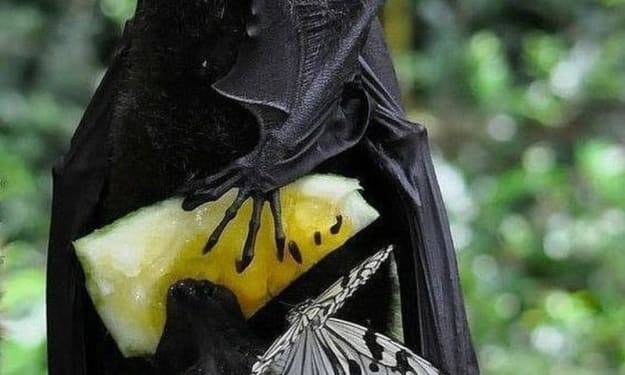
While bees get most of the attention when it comes to pollinating our crops, there is an integral nighttime pollinator that shouldn’t be overlooked: bats. Bats are responsible for pollinating over 500 types of tropical plants and flowers across the globe, including dates, bananas, agave, cashews, eucalyptus, avocados, cacao, and durian. They are important in the medicinal world as well, with several remedies—such as treatments for epilepsy and night blindness—originating from plants that rely on bats for survival.
By M.R. Cameo5 years ago in FYI
Vicious Beast to Victim: Folklore of the Tasmanian Tiger
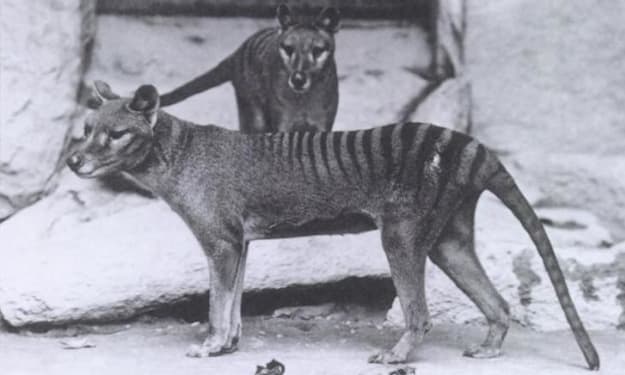
The Tasmanian Tiger or Thylacine is an iconic Tasmanian animal that went extinct in 1936 when the last Tiger died in captivity. Today, the animal is steeped in myths and legends that have been weaved into its history since the nineteenth century. The Thylacine experienced varying treatment by groups that each had different values and dealings with it. This includes the contributions of a struggling scientific front in trying to understand the unfamiliar, farmers with inept farming practices and naturalists in support of the animal. Not many people are aware of why the Tiger is embraced as a state icon in Tasmania, Australia, and how the media and public perception evolved over centuries to end with a population with deep-seeded guilt and responsibility for the decimation of a species.
By Eloise Robertson 5 years ago in FYI
The History of Play-Doh is the History of American Capitalism
I have a fascination with the history of products and companies. I find that you can learn a lot about American history and the history of capitalism by collecting random facts about ancient products that have thrived for decades. One such product is Play-Doh, the children’s colorful clay product that nearly every child in America has fashioned into various shapes for decades. Where did Play-Doh come from? I happen to know the answer for some reason.
By Sean Patrick5 years ago in FYI
The Curious Case of Robert Lincoln
On April 14th, 1865, John Wilkes Booth entered the Presidential Box in Ford’s Theatre during a performance of Our American Cousin and shot Abraham Lincoln (ultimately, killing him). This is a fact known to most everyone in the Western world. What fewer are aware of is that the night Honest Abe was assassinated, his son Robert Lincoln was invited to join him at Ford’s Theatre for the show. Robert chose to stay home, fatigued from having spent much time recently on the Civil War battlefront.
By Reuben Blaff5 years ago in FYI
Celebrating Staten Island
New York City. The Big Apple. When most people speak of New York City, they are often talking about Manhattan. Home of the Empire State Building, Times Square and The Statue of Liberty. But actually, New York City consists of five boroughs. These include Manhattan, Brooklyn, Queens, The Bronx and my home town, Staten Island.
By MATTHEW FLICK5 years ago in FYI