
The Overlooked Pollinators
Bats Are Integral to Our World


While bees get most of the attention when it comes to pollinating our crops, there is an integral nighttime pollinator that shouldn’t be overlooked: bats. Bats are responsible for pollinating over 500 types of tropical plants and flowers across the globe, including dates, bananas, agave, cashews, eucalyptus, avocados, cacao, and durian. They are important in the medicinal world as well, with several remedies—such as treatments for epilepsy and night blindness—originating from plants that rely on bats for survival.
There are over 1,400 species of bats, with more than 300 directly responsible for pollination. Pollinating in a way similar to bumblebees—hovering or landing on flowers to consume nectar—some of the plants’ pollen ends up clinging to the fur on the bats’ heads, torsos, or legs. They have exceptionally long tongues, which they keep rolled up in their bodies under the rib cage, and use to extract nectar. Covered in pollen, they inevitably visit another plant, transferring some of the pollen and thus facilitating pollination. Bats differ from bees in that they generally prefer flowers that are not brightly colored and do not emit strong scents.
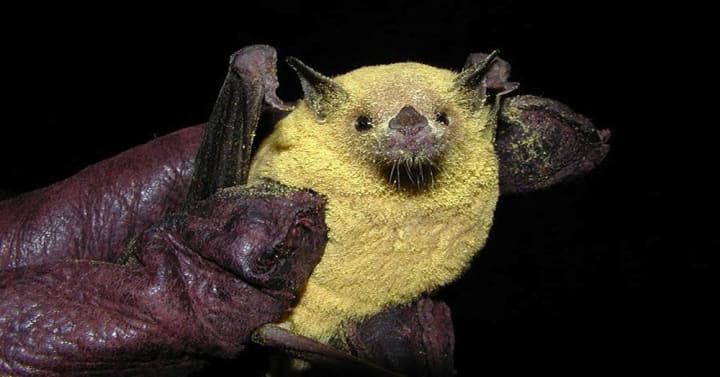
Some bat species also consume seeds, and after dispersing them through their guano, new plant growth can result. Bats often fly long distances before dropping seeds, aiding in maintaining high biodiversity. Because of this, they are credited with introducing new plants to different regions. One example is the Mexican long-tongued bat, which enjoys eating the seeds of agave plants, helping spread them across the American Southwest, Mexico, El Salvador, and Honduras. Guano is also high in nitrogen, making it an important and widely used fertilizer around the globe.
Bats are also recognized for keeping pests away from crops, as they consume insects such as stink bugs, corn worm moths, flies, mosquitoes, and beetles. In a healthy ecosystem, their role reduces the need for toxic pesticides, which can harm both humans and the environment. In fact, two antique libraries in Portugal keep bats to maintain a bookworm-free environment.
Different species of bats vary greatly in their diet. Some are carnivorous, feeding on rodents, fish, and frogs; others consume fruits or even animal blood. The majority, however, are insectivores, feeding primarily on insects. A pregnant or nursing bat may eat its body weight in insects in a single night. One fascinating species is the Otonycteris hemprichii, a long-eared bat from Israel's harshest deserts, which feeds predominantly on scorpions.

With over 1,400 known species, bats exist on nearly every continent, aside from extreme deserts and polar regions. They vary greatly in size—the smallest being the bumblebee bat, which weighs less than a penny, and the largest being the flying fox, which can have a wingspan of up to six feet. Bats are the only mammals capable of true flight, reaching speeds of up to 100 miles per hour. They also live exceptionally long lives for animals of their size, averaging 20 to 30 years, with the oldest recorded bat—a Myotis brandtii from Siberia—living to the age of 41.
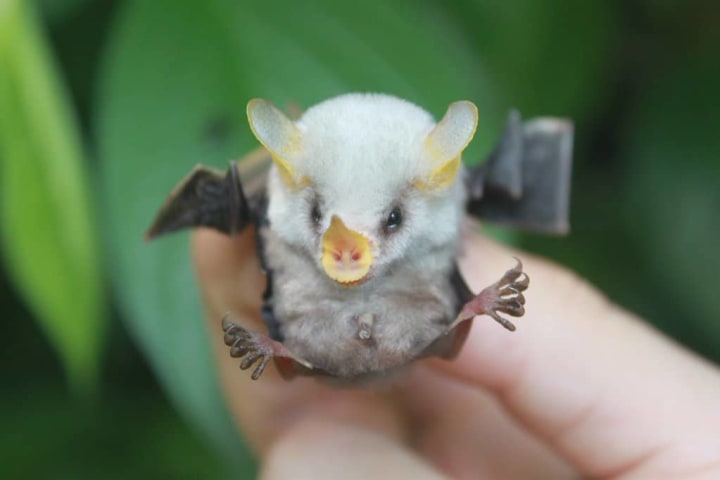
Beyond their contributions to the food supply and medicine, bats have impacted many other sectors. Their guano, rich in nitrogen, has historically been used in the production of explosives. During the American Civil War, soldiers excavated guano from bat caves to make gunpowder. Bat flight mechanics and echolocation have also inspired technological advances, including sonar systems, navigation technology, and airplane maneuverability.
However, bats are currently facing severe threats and are declining in population nearly everywhere. Globally, around 24% of bat species are classified as vulnerable, endangered, or critically endangered, due to habitat loss, pesticide use, wind energy development, and white-nose syndrome. Understanding these captivating creatures and their ecological importance is essential for conservation efforts.
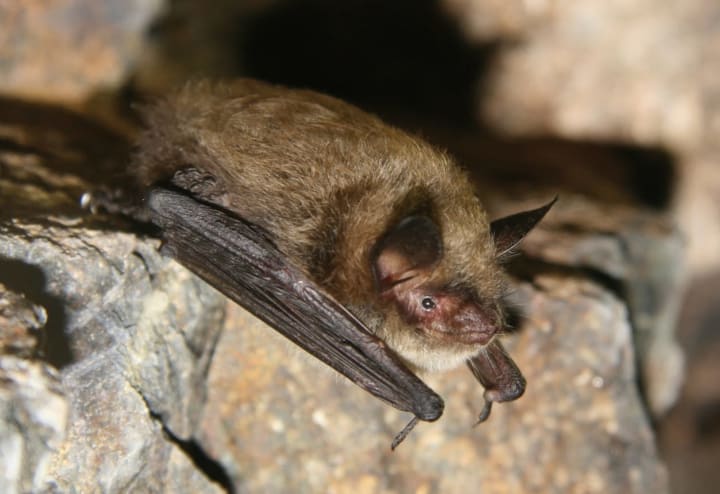
Threats to Bats
Habitat Loss
Habitat loss is largely caused by land clearing for human use, removing the dry, warm, quiet roosts bats need. Urbanization, vandalism, agriculture, and industrial development are major culprits. Cave tourism during cold seasons is especially harmful, as it rouses hibernating bats, depleting their stored energy. Pesticide use near roosts also forces abandonment and, when ingested through contaminated insects, can be fatal.
Wind Energy
Wind turbines are responsible for millions of bat deaths annually, with over half of North American species impacted. In addition to collisions, many bats suffer from barotrauma—lung damage caused by sudden pressure changes near spinning blades.
White-Nose Syndrome
This disease, first discovered in 2006, has killed over six million bats. Originating in New York, it has spread as far west as Washington State and as far south as Mississippi. The disease causes fungal growth on the bats’ muzzles and wings, irritating them and repeatedly waking them from hibernation. As a result, they expend vital energy stores when it’s still too cold or food is unavailable.
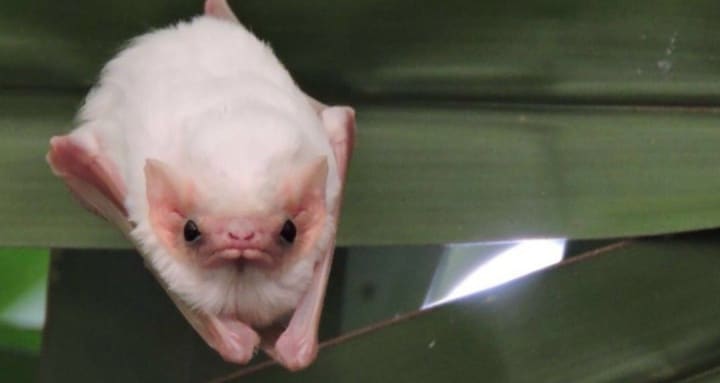
How You Can Help
Bat houses are extremely easy to build and install, or one can even purchase prefabricated options. When going with this option remember to avoid tearing down dead trees in the area as bats love to use them to lounge and play in. Don’t use pesticides as they will poison the bats and will not be necessary. Also ensure to keep cats inside after dark as cat attacks are one of the most common causes of bat casualties. Bats are consistently losing roost sites every day, so providing a bat house is an excellent way to ensure their survival.
Bats are absolutely vital to a healthy world, ensuring our food supply, steering economies, controlling pests, and aiding in medical and technological advances. Learn more about bats and various ways to preserve the species by visiting the websites below.

Bat houses are extremely easy to build and install, or one can even purchase prefabricated options. When going with this option remember to avoid tearing down dead trees in the area as bats love to use them to lounge and play in. Don’t use pesticides as they will poison the bats and will not be necessary. Also ensure to keep cats inside after dark as cat attacks are one of the most common causes of bat casualties. Bats are consistently losing roost sites every day, so providing a bat house is an excellent way to ensure their survival.
Bats are absolutely vital to a healthy world, ensuring our food supply, steering economies, controlling pests, and aiding in medical and technological advances. Learn more about bats and various ways to preserve the species by visiting the websites below.
Bat Conservationists International
An amazing group of conservationists and scientists dedicated to ensuring the health and survival of all bat species.
Bat week is an annual, international celebration highlighting the role of bats in nature and the importance of bat conservation. Discover ideas on how to celebrate these wonderous creatures and get the word out in your community.
Bats and Wind Energy Cooperative
Working to create solutions where bats and wind energy can safely coincide, such as high frequency noise emitters that would only be audible to bats but would deter their approach, or a new turbine design that would predict high risk conditions for bats, automatically turning off.
An organization that closely works with other allies in the conservation community, dedicated to bringing forth and supporting policies that address major threats to bat habitats and colonies.
White-nose Syndrome Response Team
Dedicated to the study, management, and eradication of the new disease ravaging these amazing animals.

About the Creator
M.R. Cameo
M.R. Cameo generally writes horror, sci-fi, fantasy, and nonfiction, yet enjoys dabbling in different genres. She is currently doing freelance work for various publications.
Keep reading
More stories from M.R. Cameo and writers in FYI and other communities.
Obscure Fruits from Around the World
While there are over 2,000 fruits in the world, most people have only tried around ten percent of them. Fruits are nutrient powerhouses that are vital to health and provide an abundance of flavor. These tropical and strange varieties are not only certain to bring vigor to your step but to rev your tastebuds in ways you’ve never experienced before.
By M.R. Cameo5 years ago in FYI
Outside Lands 2026: Music, Memory, and Magic
There is something different about a festival held in a park surrounded by fog. The air feels softer. The sound carries in a strange, beautiful way. Strangers stand shoulder to shoulder, waiting for a song that might stay with them for years. Outside Lands 2026 is already stirring that quiet excitement. Even before the lineup is announced, people are talking about outfits, travel plans, and who they want to see on stage. It is not just another music festival. It is a yearly ritual for thousands who return to Golden Gate Park for three days of sound, food, and shared emotion. Outside Lands 2026 promises more than performances. It promises moments.
By Muqadas khan2 days ago in FYI


Comments
There are no comments for this story
Be the first to respond and start the conversation.