
The Silent Sun: How the Atomic Bomb Changed the World Forever
A Tale of Power, Destruction, and the Birth of a New Era.
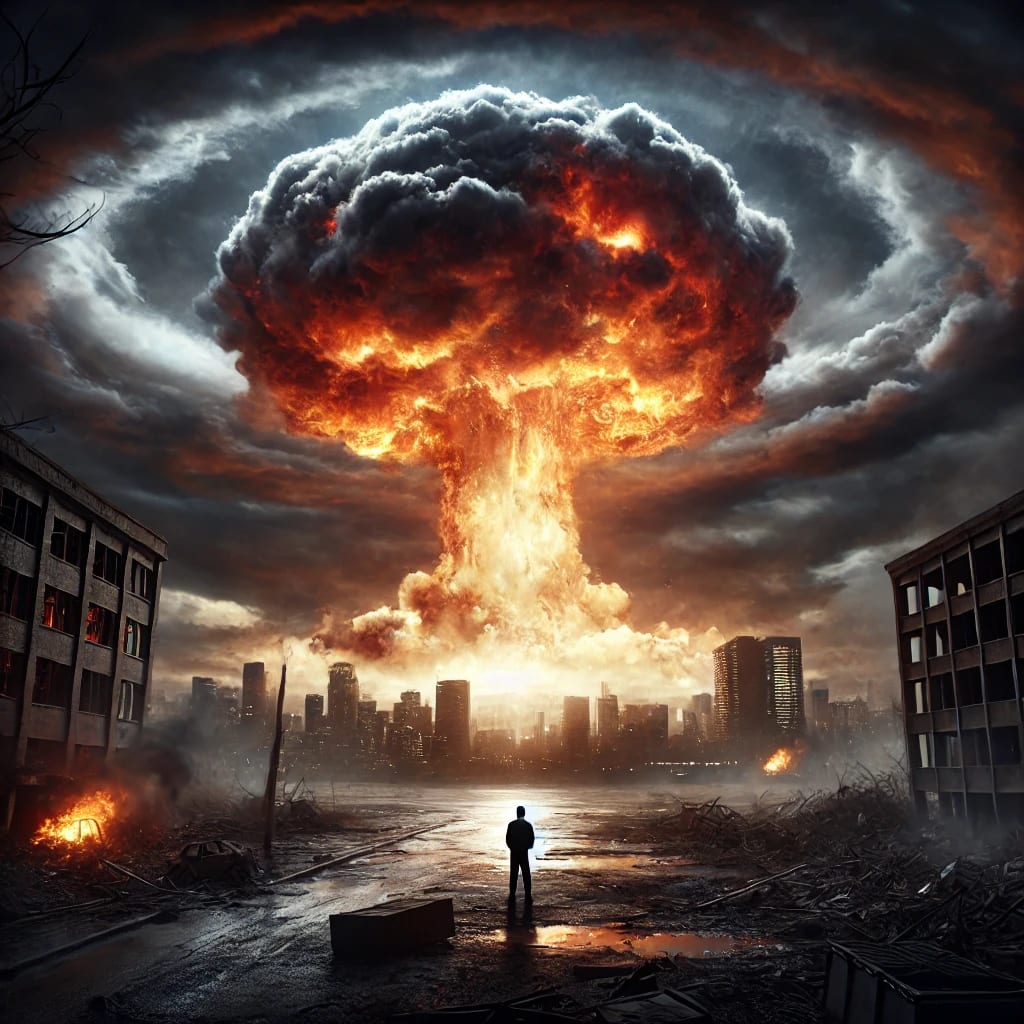
The Silent Sun: How the Atomic Bomb Changed the World Forever
A Tale of Power, Destruction, and the Birth of a New Era
In the early morning of July 16, 1945, a blinding light erupted in the desert of New Mexico, forever altering the course of human history. This was the Trinity test — the world's first successful detonation of an atomic bomb. It marked not only a scientific breakthrough but also the beginning of a new era defined by power, fear, and unprecedented destruction. The invention of the atomic bomb reshaped politics, war, society, and even human psychology. It was a moment when mankind harnessed the fundamental forces of nature — not to explore or heal, but to annihilate.
The atomic bomb was the brainchild of the Manhattan Project, a secret U.S. military endeavor during World War II. Thousands of scientists, engineers, and workers labored in secrecy to develop the ultimate weapon. Led by physicist J. Robert Oppenheimer, the project brought together some of the most brilliant minds of the time. But what began as a race to defeat Nazi Germany quickly became a test of human morality and responsibility. When Germany surrendered in May 1945, Japan remained the only Axis power still fighting. The United States, eager to end the war swiftly and decisively, made a choice that would reverberate through history.
On August 6, 1945, the U.S. dropped the first atomic bomb, codenamed "Little Boy," on the Japanese city of Hiroshima. Within seconds, the city was engulfed in fire and ash. Tens of thousands of people perished instantly. Three days later, a second bomb, "Fat Man," was dropped on Nagasaki, killing thousands more. The devastation was beyond comprehension. Entire neighborhoods turned to dust, shadows of people burned into walls, and survivors — the hibakusha — carried scars for life, both physical and psychological. Six days later, Japan surrendered. World War II was over. But the age of nuclear terror had just begun.
The use of the atomic bomb raised haunting moral questions. Was it necessary to drop the bomb to end the war? Could Japan have surrendered without it? Was the targeting of civilians justifiable? Historians and ethicists have debated these questions for decades. Supporters argue that the bombings saved millions of lives by avoiding a prolonged invasion of Japan. Critics argue that it was an act of sheer terror — a demonstration of power more than necessity. What is undeniable is that the bomb fundamentally changed the rules of warfare. No longer was victory about numbers or strategy alone. Now, a single bomb could erase a city.
The impact of the atomic bomb went far beyond Japan. It triggered an arms race between the United States and the Soviet Union, plunging the world into the Cold War. Nuclear weapons became symbols of geopolitical power and tools of deterrence. The doctrine of mutually assured destruction (MAD) meant that no nation could use nuclear weapons without risking its own annihilation. This paradoxical balance of terror kept a fragile peace, but also brought humanity to the brink of extinction more than once — during the Cuban Missile Crisis, the Korean War, and other tense moments.
Beyond politics, the atomic bomb left a deep scar on human consciousness. It became a symbol of mankind’s ability to destroy itself. Literature, art, music, and film began to explore the terrifying implications of living in a nuclear age. From the haunting photos of Hiroshima to dystopian novels and apocalyptic cinema, the bomb reshaped our imagination. The very idea of progress was questioned. Was technological advancement truly a blessing, or a curse in disguise?
In the decades that followed, nuclear weapons proliferated. India, Pakistan, China, the UK, France, and others joined the nuclear club. Treaties like the Non-Proliferation Treaty (NPT) tried to limit the spread, but tensions remained high. Despite calls for disarmament, over 13,000 nuclear warheads still exist today, many on high-alert status. The threat of nuclear war has never completely disappeared. With emerging powers, rogue states, and global instability, the danger remains — silent, distant, but ever-present.
Yet, amid the fear, there have been moments of hope. Survivors of Hiroshima and Nagasaki have shared their stories to warn future generations. Activists, scientists, and diplomats have worked tirelessly to reduce the nuclear threat. In 2017, the International Campaign to Abolish Nuclear Weapons (ICAN) won the Nobel Peace Prize. Still, the question remains: can humanity truly control the power it has unleashed?
The story of the atomic bomb is not just about destruction. It is also a story of awakening. It forces us to confront the dual nature of human intelligence — capable of creating life-saving vaccines and horrifying weapons. It challenges us to reflect on our values, our priorities, and our future.
As the mushroom cloud rose over Hiroshima, Oppenheimer recalled a line from the Hindu scripture, the Bhagavad Gita: “Now I am become Death, the destroyer of worlds.” Those words still echo today — a reminder that the choices we make with our knowledge can either light the way forward or darken the skies forever.
About the Creator
Keep reading
More stories from Mr haqqani and writers in FYI and other communities.
The Lion and the Cow: A Tale of Power and Innocence
In the golden wilderness of the African savannah, where the sun rose like fire and set like a golden dream, there lived a lion whose name struck fear into every living creature. He was strong, majestic, and known as the undisputed king of the land. His mane flowed like burning silk, and his eyes could pierce the soul of any prey. Animals fled at the sound of his roar. Birds scattered, monkeys climbed higher, and even the hyenas whispered his name with respect and fear.
By Mr haqqani10 months ago in Fiction
A Failed Artist, A Disillusioned Poet, An Underpaid Game Show Host
I took my son and niece to Gori, a small town in Georgia where Joseph Stalin was born. They talked me into visiting the Stalin's Museum, the largest in the post-Soviet space. I had resisted going there because I just can't stand the monster and know enough about him, or so I thought.
By Lana V Lynxabout a month ago in FYI


Comments (1)
نایسسس