
The Role of Technology in the Transformation towards Customer Experience
Technology accelerates customer experience by making it smooth, personalized, and seamless.

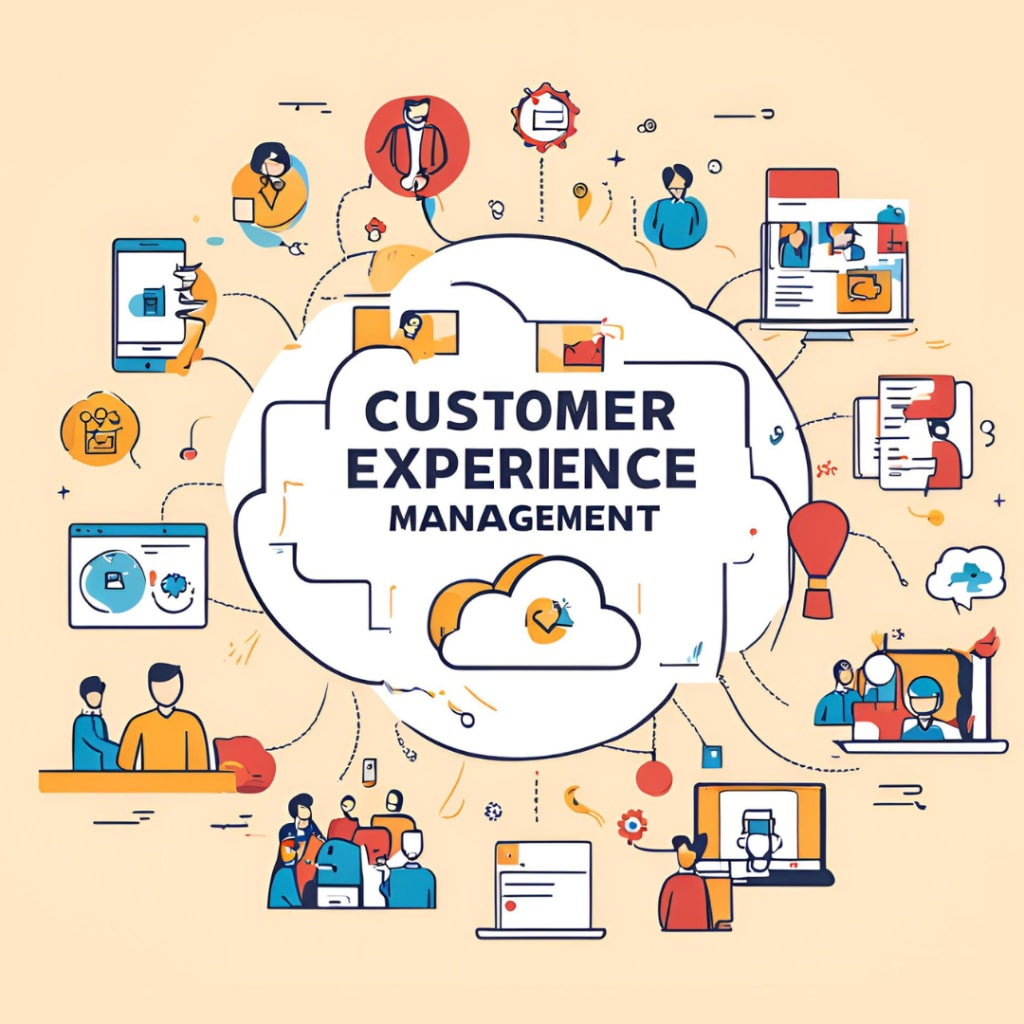
In today's digital-first world, technology has evolved to be a strong enabler in customer experience transformation across industries. The rapid evolution of digital tools has shifted the way businesses engage customers and has provided a seamless path to creating frictionless, personalized interactions that meet demand from consumers that is on the rise. Coupled with an effective customer experience strategy, technology amplifies customer satisfaction while driving efficiency and scalability of the brand to ensure consistent high-quality experiences. This can be realized when appropriate technological solutions are put into place for businesses that need to stay competitive, develop closer relationships with customers, and realize success in the long run.
Why Technology Matters in Customer Experience
With increasing customer expectations, technology will continue to bridge the gap between customer desires and business capabilities. Today's customers will be asking for more than just a quality product or service; the interaction with the brand will have to be personalized and convenient, easy at every touch point. Technology helps businesses meet these expectations through real-time communication, automation of repetitive tasks, and offering personalized solutions that enhance the overall customer journey.
This is how the use of technology integrated into the company's CX strategy can benefit a business in several ways:
• Operational Efficiency: Technology automates routine processes, like tracking orders or responding to common customer queries, which enables teams to focus their time and energy on deeper issues and provide higher quality service.
• Scalability: Technology has, in a way, helped business processes scale up in terms of volumes that a business can handle without compromising on quality. With the help of automated systems supported by AI tools, it is possible to attend to thousands of customers at the same time with consistency across all touchpoints.
• Better Personalization: Through collecting and analyzing data, businesses understand the individual tastes and preferences of customers, thus enabling them to provide personalized recommendations, services, and support based on the needs of every customer.
• 24/7 Availability: AI-powered chatbots and automated systems are being used to ensure customers have support around the clock. This speeds up the customers in getting their problems resolved and enhances their satisfaction experience.
Indeed, incorporation of advanced technologies into business processes will enable organizations to provide experiences that would meet and surpass customer expectations, hence yielding long-term customer loyalty and subsequently driving more revenue.
Key Technologies Driving CX Transformation
Several key technologies are the basis of the future for Customer Experience. These tools are changing how companies treat and reach their customers, allowing easy personalized real-time support, and predicting what will be wanted in the future. Following are some of the main leading technologies that shape the CX panorama:
1. AI and ML : AI and ML are disrupting how businesses interact with customers through the use of powerful tools for process automation, personalization of customer interactions, and predictions of customer behavior. For example, AI-based chatbots in customer service have become widespread. These bots can handle routine inquiries, such as order status or simple troubleshooting, freeing up human agents to deal with more complex issues.
AI also facilitates predictive analytics, where businesses can predict customer needs based on previous behavior; this makes the customer experience proactive instead of reactive. For example, AI recommendation systems can suggest certain products or services that are going to be good for a particular individual in order to increase conversion rates and customer satisfaction.
2. CRM Software: CRM software has become a cornerstone of any modern CX strategy. Such systems enable one to gather, store, and manage data related to customers in one place, getting a complete vision of how each interacts with their brand. Based on this data centralized at a single base, businesses can personalize communication and offers for each customer profile, increasing the overall experience.
CRM systems let teams track customer interactions, their preferences, and behavior so that the mission of providing a seamless experience goes all the way from sales to customer care. CRM platforms provide business opportunities for automation of follow-up activities, tracking customer satisfaction, and ultimately nurturing long-term relationships.
3. Automation Tools : Automation is at the heart of every good CX strategy. From automated email campaigns to customer service responses, appointment setting, and so on, automation lessens human effort while keeping the interaction with customers on schedule and timely. Examples are follow-up emails after a purchase to keep customers engaged, recommending products relevant to their purchase or browsing history.
This, in turn, frees the business resources to focus on high-touch, high-value, personalized interactions. That means better customer outcomes. Automation minimizes human error; thus, a customer is treated with information at the right time and in the right amount.
4. Omnichannel Platforms : Engaging with customers through multiple touchpoints-websites, social media, mobile apps, and in-store experiences-is the way most customers face brands in today's multi-device world. This omnichannel approach, enabled by an underlying suite of technologies, connects every single interaction and makes it seamless for the customer at whatever point they choose to interact with your company.
Omnichannel platforms allow companies to integrate all touchpoints for customers into one fluid continuum. Therefore, if a customer begins on their mobile phone to view a product and then puts it in their cart, they can go to their desktop computer and finalize the purchase. For example, such touchpoints will be seamless and personalized across devices so that at every turn, customers feel they are being taken care of.

The Impact of Data on CX
With the guarantee of much-needed insight into customers' behavior, preferences, and pain points, data analytics is poised at the forefront of customer experience transformation. Analysis of customer data helps businesses make proper decisions on how to enhance their CX strategy and tune services for catering more precisely to the needs of customers. Following are a few trends in data analytics that are being brought into focus for transforming customer experiences:
1. Predictive Analytics : Predictive analytics is basically a form of analytics that helps businesses forecast customer behavior by analyzing historical data. This will allow companies to get ahead of their customers either by predicting which products they may be interested in or even identifying issues before those issues become a worse problem.
It might be used to predict when a customer is going to churn and proactively offer incentives with the hope that the customer may stay on with the company. Data-driven insight into the customer experience will always help businesses stay at the forefront by making the customers feel valued and understood.
2. Personalization : Data analytics enables deeper levels of personalization-one of the key drivers of customer satisfaction and loyalty. Analyzing consumer data provides companies with a clear view of each customer's individual preferences, behaviors, and buying cycles, enabling the personalization of interactions. Businesses can deliver personal experiences to each customer, whether through personalized product recommendations, targeted marketing campaigns, or even personalized support.
Data-driven personalization will encourage better relationships, enhanced customer loyalty, and increased overall satisfaction because customers will feel wanted and appreciated.
Conclusion
Technology plays the role of an accelerator in reshaping customer experience. It helps companies make the experience of customers smooth, effective, personalized, and seamless. Be it AI-powered tools, CRM software, data analytics, or automation, having the appropriate technological solutions will enable the business to meet and even exceed customer expectations.
A well-articulated CX strategy leverages the power of recent technologies in driving business success through operational efficiency, customer satisfaction, and long-term growth. Offering personalized experiences in real time through a variety of technologies will truly differentiate the business in a crowded marketplace and create solid, long-lasting relationships to drive growth and profitability.
Also Read: How Customer Experience Shapes Long-Term Business Growth
About the Creator
Lisa Gerard
Professional technology consultant specializing in CX strategy. I help businesses by delivering 1:1 personalized experiences, enhancing customer satisfaction, growing revenue streams, and building a resilient future-ready business.
Keep reading
More stories from writers in FYI and other communities.
A Failed Artist, A Disillusioned Poet, An Underpaid Game Show Host
I took my son and niece to Gori, a small town in Georgia where Joseph Stalin was born. They talked me into visiting the Stalin's Museum, the largest in the post-Soviet space. I had resisted going there because I just can't stand the monster and know enough about him, or so I thought.
By Lana V Lynx29 days ago in FYI
Men Who Go To War
This morning started a fire within me about how our military in the US is being run. They have taken the LGBTQ+ out of the military, while using the phrase "REAL MEN GO TO WAR". This morning I woke and started my doom scrolling on TikTok, when a TikToker by the name of The Infernum Asylum (warning: it is a man dressed up as a demon per se, however, his words are true) gave the story, THE TRUE STORY behind the phrase, behind the movie 300. I remember when I was heavily involved in Greek History and Mythology when I was in High School, and vaguely remembered as I listened to his video.
By Jessie Lynn Nelson5 days ago in FYI



Comments
There are no comments for this story
Be the first to respond and start the conversation.