
The Life and Times of Peanut Butter and Jelly
From Gourmet to Everyday: PBJ It’s What’s for Dinner (and breakfast, lunch and snack too!)
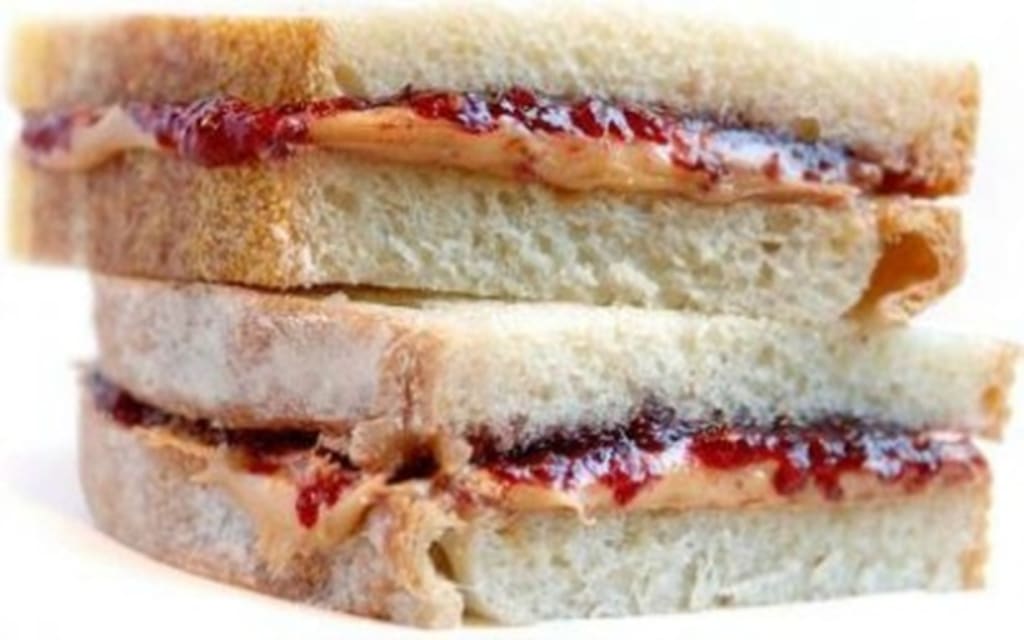
“For variety, some day try making little sandwiches, or bread fingers, of three very thin layers of bread and two of filling, one of peanut paste, whatever brand you prefer, and currant or crab apple jelly for the other. The combination is delicious, and as far as I know, original.”
This recipe is from the Boston Cooking School Magazine of Culinary Science and Domestic Economics written in 1901 by Julia Davis Chandler, a home economist, teacher and writer. It describes the creation of the first peanut butter and jelly sandwich. Little did anyone know at this time how much of a superstar this simple yet satisfying dish would become.
When I first read this culinary excerpt, I couldn’t help giggling at the name peanut paste (Really?! Peanut paste?) and the similarity between the first PBJ sandwich and a Big Mac with the slice of bread in the middle. Two of my favorites when I was little. Then I actually remembered creating this three bread layer PBJ sandwich as a kid with Skippy Peanut Butter, Welch’s Grape Jelly and Wonder Bread. An American classic. I’d make this layered sandwich and then squish it down as much as I could before I ate it. I’m not sure why I thought it tasted better that way!
After finding out who first created the famous peanut butter and jelly sandwich, other historic questions came popping up in my mind like who was the first person to smash peanuts into peanut paste and why? Who first made jelly and what did they thicken it with? Who invented the first bread slicing machine? Why was that bread I loved to squish so much as a kid called Wonder Bread? Who was smart enough to figure out they could put a meal between two slices of bread for convenience and why is it called a sandwich? And when did all these different events happen? So many questions and so much history involved in such a simple sandwich.
Let’s start with the bread. We know bread has been around for a long, long time in many different forms made out of assorted ingredients. Archaeologists discovered 14,000 year old bread crumbs in Jordan left by the Natufians, a hunter/gatherer tribe, along with other locally sourced food remains. I find it incredible that these remains lasted for so long and that the archaeologists can actually figure out what the local tribes ate back then.
Pre-sliced bread, on the other hand, isn’t so amazingly old. In 1928, Otto Frederick Rohwedder invented the first commercial bread slicing machine which was used at Korn’s Bakery in Otto’s hometown of Davenport, Iowa. Actually, he did make one prior to this that was used in Chillicothe, Missouri at Bench’s Bakery but it broke down after only six months of use. Otto advertised his new invention as “the greatest step forward in baking since bread was wrapped”. This slogan eventually turned into “the greatest thing since sliced bread”. Interesting!
At first, some people were a bit skeptical of why anyone would want to buy pre-sliced bread but that ended quickly when they realized how convenient it could be. By 1929, The Mac-Roh Company was getting numerous orders and producing lots more of this new and convenient bakery tool. And by the next year, The Continental Baking Company was selling sliced bread under the Wonder Bread label.
By this time in history, Wonder Bread had already been around for about nine years so we know the name didn’t come from the “wonder” of commercially sliced bread. I actually did think that! In 1921, Elmer Cline, a branding executive for The Taggart Baking Company, came up with the name after attending the International Balloon Race at the Indianapolis Speedway and seeing hundreds of hot air balloons. He was inspired by the “wonder” of witnessing these colorful balloons glide across the sky so named the bread after them. That explains the colorful dots all over the packaging! I never knew they were meant to represent hot air balloons!
Now that we know how the pre-sliced outer shell of a PBJ came to be, let’s get to who was the first recorded person to put food between two slices of bread and why it got called a sandwich. I’m sure people have been putting food on bread since bread first appeared but I don’t believe it had a certain name for such a wide variety of combinations to be made until the word sandwich came along. This happened in the eighteenth century when John Montagu, who happened to be the fourth Earl of Sandwich, ordered his servant to bring him meat tucked between two slices of bread because he was too busy in the midst of a long gambling session to stop and eat a meal. It was supposedly salt beef and toast. I also read it was possible he ate these bread and meat meals regularly while he worked at his desk which helped make them popular with other people.
Since John Montagu was the noble Earl of Sandwich, people copied him when ordering a meal and would say, “the same as Sandwich”. So, the fourth Earl of Sandwich didn’t actually name the sandwich but it was named after him, actually the town for which he was Earl of. I have to admit, I’m glad it was named after the town name and not his or else we might be eating Johns or Montagus instead of sandwiches. Peanut butter and jelly john or peanut butter and jelly montagu just doesn’t seem to work.
Peanut butter, or should I say peanut paste, had an interesting beginning. And it wasn’t with George Washington Carver like many people seem to believe, including me. This belief stems from the fact that Mr. Carver was an incredible agricultural scientist and inventor who created over three hundred uses for the peanut giving him the nickname, the peanut man. These peanut creations included food items like Worcestershire sauce, chili sauce, flour, milk and cooking oils but also non-edible things like glue, cosmetics, paper, insulation and wood stain. Wow! He also discovered and promoted alternative crop farming to prevent soil depletion, like with cotton and peanuts. And in case you didn’t know, peanuts are actually legumes and grow underground like potatoes. Amazing!
So, who first took these versatile legumes and decided to grind them up into a tasty and nutritious paste? According to historians, it was ancient Incas from South America. Researchers have found pottery from around 1500 BC in South America in the shape of peanuts and also other vessels that were decorated using some kind of peanut paste concoction. I’m pretty sure this ancient form of peanut paste was much coarser than the smooth peanut butter we eat today so, who was the first to create this smoother version? It actually began with three different individuals.
Sometime during the 1880s, Dr. Ambrose Straub, a St. Louis physician, ground up peanuts into peanut paste for older patients who had trouble swallowing or had bad teeth. In 1884, Canadian chemist Marcellus Gilmore Edson patented a process making peanut paste from milling roasted peanuts between two heated surfaces. This type of peanut paste made its first appearance to consumers in 1893 at the Chicago World's Fair. In 1895, Dr. John Harvey Kellogg patented a different process using raw peanuts (some sources say raw but some say steamed) and marketed it as a nutritious protein source for people who couldn’t chew solid food. I believe this is when it started to be called peanut butter instead of peanut paste but I couldn’t find exact information on that. And thank goodness the name did change or else we’d be calling them PPJs instead of PBJs which isn’t quite as tantalizing.
This particular peanut butter making doctor is the same eccentric Dr. Kellogg from the Battle Creek Sanitarium (this place was like a new age wellness retreat; part medical center, part spa and part grand hotel for the elite) who mistakenly created corn flakes after leaving a batch of dough out for too long until it dried and became flaky. This is also the same doctor who believed in some very interesting and odd wellness practices like fifteen-quart enemas, electric currents sent into the eyeballs and sexual abstinence (with someone else or alone) through his ideas of clean living. A comedy/drama movie was made about him in 1994 called The Road to Wellville starring Anthony Hopkins, Bridget Fonda and Matthew Broderick. Very entertaining!
Besides just providing handmade peanut paste for his patients in the late 1800s, Dr. Ambrose Straub patented an actual peanut butter making machine in 1903 and had a company start producing his peanut butter. They brought this new creamy spread to the St. Louis World’s Fair and it was a big hit. Soon, stores started carrying peanut butter for everyone to purchase and at around the same time, it was also offered in New York City at upscale tea rooms served as a delicacy with additions like watercress and pimentos. That to me is hilarious! It’s such a simple and not very fancy sandwich nowadays but used to be considered a delicacy! I can just imagine a bunch of hoity toity rich folks adorned in their fancy clothes trying to carry on conversations while peanut butter sticks to the roof of their mouths. No wonder they served it with other foods like watercress and pimentos!
So, at this point many people got to consume the great taste of peanut butter on a regular basis but it probably needed to be stirred often since the oils separated from the paste. Just like the natural kind you can buy today. This brings in chemist Joseph Rosefield who invented the no stir creamier version with the use of partially hydrogenated oil. He licensed this invention in 1928 to Swift and Company who were already selling peanut butter under the name E.K. Pond. With their new creamier product, the company changed the name to Peter Pan after the J.M. Barrie character that was now appearing in a popular play. And then in 1932, Mr. Rosefield developed a new method of churning the peanut butter to make it even smoother and sold it as Skippy Peanut Butter, named after a popular comic strip character. He also added in chunks to create crunchy peanut butter. So interesting! I always wondered where those brands got their names from!
With peanut butter being able to be made more efficiently, this popular spread was no longer a rich person's food but an inexpensive and delicious high protein source for all. This became extremely handy for families during the Great Depression of the 1930s and for soldiers during WWII. Besides being high in protein, peanut butter was shelf stable and easy to travel with. And lucky enough, in 1917, a man named Paul Welch secured a patent for pureeing grapes and turning them into jelly creating Grapelade, the first commercially processed jelly. Soldiers already knew about this jelly since it was eaten with bread during WWI, but now they got to combine it with peanut butter for a more nutritious and satisfying meal. They continued to eat these sandwiches after the war which helped a great deal with their popularity.
Now we know that Grapelade, which kind of rhymes with marmalade, was the first commercially made jelly but let’s continue our historical breakdown of the PBJ sandwich and learn a little more about preserved fruit spreads. Historians don’t exactly know when fruit preservation actually started but a recipe for preserving fruit in honey appeared in the oldest cookbook, De Re Coquinaria (The Art of Cooking), which was believed to be written in the late fourth or early fifth century. In 1561, marmalade was made by the physician to Mary the Queen of Scots to help with her sea sickness. He crushed oranges and sugar together for the remedy. (Did that actually work for her?)
In 1682, a French physicist, mathematician and inventor named Denis Papin invented powdered gelatin which made making jams and jellies a lot easier. People then didn’t have to boil down animal bones to make their own gelatin to thicken their recipes. In 1849, Ephraim Wales Bull from Concord, Massachusetts created and bred Concord grapes and then in 1869, Dr. Thomas Bramwell Welch used these grapes to make juice and open the Welch’s Grape Juice Company. Dr. Welch was Paul’s (the Grapelade guy I mentioned earlier) father. In 1923, Welch’s Grape Jelly made its debut to the public.
Besides using jelly, jam and other types of fruit spread to combine with peanut butter to make this new and easy sandwich, there were also fruit butters, like apple butter. In 1897, Jerome Monroe Smucker opened a cider mill with apples from trees that Johnny Appleseed planted. A few years later, he started making apple butter which he and his wife sold door to door from a horse drawn wagon before they started selling to stores. I find it so interesting to read about the beginnings of such large companies like this one. Going door to door in a horse drawn wagon selling your goods must have been quite an experience!
Here’s the difference between assorted fruit spreads I found, I didn’t even realize this list was actually so long!
Jam is made with the cooked whole pureed fruit, sweetener and pectin (or some other kind of gelling agent, most people seem to use pectin now so I’ll just keep saying that for the rest of the list).
Freezer Jam is made with uncooked fruit puree, sweetener and pectin and kept frozen until use.
Jelly is made with fruit juice, sweetener, pectin and some type of acid like lemon.
Marmalade is made with the cooked whole citrus fruits (no to the seeds but yes to the rind) and sweetener.
Butter is made with cooked fruit, sweetener and sometimes spices or lemon juice then strained through a sieve.
Conserves are like jam but a bit thinner and with additions like dried fruit, nuts, liquor or spices added in.
Curd is very creamy and made with sugar, eggs, butter, and usually citrus fruit with their zest. Strawberry and cranberries are also commonly used.
Preserves are similar to jams but not as smooth, the fruit remains in large or whole chunks.
Spreads are jam or preserves without any sweetener added. (I definitely didn’t realize this was its own category!)
With all these different types of fruit spreads and the different types of fruit that can be made with them combined with either creamy or crunchy peanut butter (that can come sweetened or not and hydrogenated or not) on so many choices of bread we have around these days, the delicious combinations for such a simple sandwich like the PBJ seem endless. I wonder if Julia Davis Chandler had any idea her simple recipe from 1901 made with peanut paste and currant or crab apple jelly would become such a popular and versatile sandwich that is loved and adored by so many people in so many places. Thanks Julia!
I had a lot of fun working on this little research project and learned more than expected! Now, I will end this writing with a few fun facts about the famous PB&J............
April 2 is Peanut Butter and Jelly Day.
Archibutyrophobia is the fear of getting peanut butter stuck to the roof of your mouth.
If you combined all the peanut butter Americans eat in one year, it would cover the floor of the Grand Canyon.
According to The Guinness Book of World Records, the most peanut butter and jelly sandwiches eaten in one minute is six, consumed by Patrick Bertoletti.
Strawberry is the most popular jelly eaten in America; grape comes in at a close second.
Sanitarium Peanut Butter has been sold in Australia since 1898; it’s named after Dr. Kelloggs Battle Creek Sanitarium. (And I though Peter Pan and Skippy were interesting peanut butter brand names!)
Around 1930, South and Western Australia banned the name peanut butter and went back to peanut paste because dairy farmers were upset it didn’t actually contain any dairy. It slowly became peanut butter again but some people still say peanut paste instead.
An average American child will eat around 2,500 PBJs before they graduate high school.
The world’s largest peanut butter and jelly sandwich was made at the Great American Peanut Butter Festival in Grand Saline, Texas. It was 1,342 pounds! 720 pounds of bread, 493 pounds of peanut butter and 129 pounds of jelly!
Information researched from:
www.nationalpeanutboard.org
www.americanhistory.si.edu
www.ancient-origins.net
www.wonderbread.com
www.npr.org
www.whatscookingamerica.net
www.history.com
www.huffpost.com
www.peterpanpb.com
www.thespruceeats.com
www.statista.com
www.guinessworldrecords.com
www.mobile-cuisine.com
www.australianfoodtimeline.com.au
About the Creator
Keep reading
More stories from Steffy Bee and writers in FYI and other communities.
We Shall Never Surrender: The Speech That Turned Britain’s Darkest Hour Into Defiance
There are speeches that explain history, and then there are speeches that intervene in it. On June 4, 1940, Winston Churchill delivered one of the most consequential addresses ever spoken inside the House of Commons. Britain had just pulled off the miracle of Dunkirk—an evacuation that saved more than 330,000 Allied troops from annihilation. But make no mistake: this was not a victory. France was collapsing. Nazi Germany looked unstoppable. Invasion felt inevitable.
By Lawrence Lease7 days ago in FYI



Comments
There are no comments for this story
Be the first to respond and start the conversation.