
The Fashion Of Elizabeth I
The Fashion World
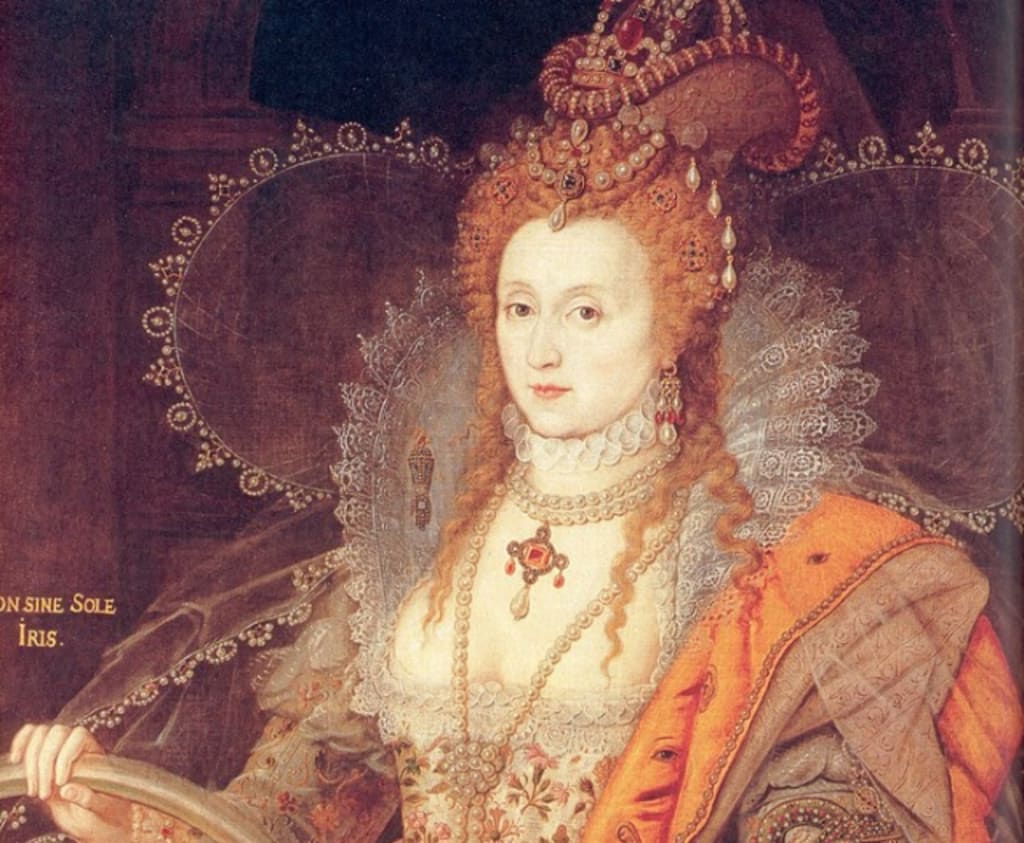
When she was a child, after her mother had been beheaded and the little Princess declared illegitimate, Lady Margaret Bryan (who was looking after Elizabeth) wrote to Thomas Cromwell: “Would the King deign to send his daughter new clothes? She had outgrown everything in the closets. She has neither gown nor kirtle nor petticoat nor linen for smock”. When Elizabeth I was Queen, she had over 2,000 gowns in her Royal Wardrobe. It is no wonder that “Fashion” became important to “Good Queen Bess”!
An inventory dated 1600 shows these 2,000 gowns, which were exquisite in silk, fur and damasks, and which were ‘decorated’ with jewels, as well as gold and silver thread. Following an attack of smallpox in 1562, Elizabeth started to wear make-up in an attempt to cover up the scars that were left on her face. The make-up in the Elizabethan Era was very different and very dangerous. Elizabeth would ‘paint’ her face with white lead and vinegar, the white lead would start to poison the body. She would put rouge on her lips which most probably was vermilion and which was made up of mercuric sulphide, and the Queen would also use this to paint her cheeks (or use as blusher). Elizabeth wore wigs (towards the end of her life), dying and bleaching her beautiful red curly hair which was now turning grey. It is thought that she had over eighty wigs.
This Queen loved to follow fashion and even became a ‘trend setter’ herself. When in private, Elizabeth would wear simple and plain gowns, but when in public — “she dressed to impress!” Clothes were a status symbol and a person had to dress in accordance to their social status. Laws were passed to enforce this. Of course, Elizabeth I had to dress more magnificently than anyone else, and no one was ‘allowed’ to rival their Queen. She had gowns in every colour but white and black were her favourite colours because they symbolised virginity and purity. These gowns were beautifully hand-embroidered with coloured thread, diamonds, rubies, sapphires and many other jewels.
Elizabeth I would (typically) wear: a chemise, a corset which was stiffened with wood or iron, a petticoat, a farthingale, stockings, a gown, sleeves, and a neck ruff and wrist ruffs. Accessories such as a fan, a pomander and (a lot of) jewellery would complete Elizabeth’s ‘look’.
Being Henry VIII’s daughter, who himself would be ostentatious in his appearance, Elizabeth proved to be his daughter. In many of her portraits, you can hardly see the gown she is wearing because of all of the jewels that had been sewn into the dress. However, a close eye was kept on the expenses, with many gowns, stomachers, etc., being unpicked and re-sown. The inventory for Elizabeth’s dresses is ‘exact’ and each item of clothing is carefully noted. Even the many gifts of cloth and items of clothing, which Elizabeth received, were listed. For example, when Elizabeth received her first pair of knitted silk stockings as a New Year’s Day gift, she was so delighted that she immediately commissioned more, refusing to wear any other type of stocking.
Elizabeth I also enjoyed the fashion of other countries. In her vast Royal Wardrobe, Elizabeth had gowns made ‘in the fashion of’ France, Spain, Italy, Denmark, and even Venice. She would often wear these for political reasons, for example, when ambassadors from these countries would visit.
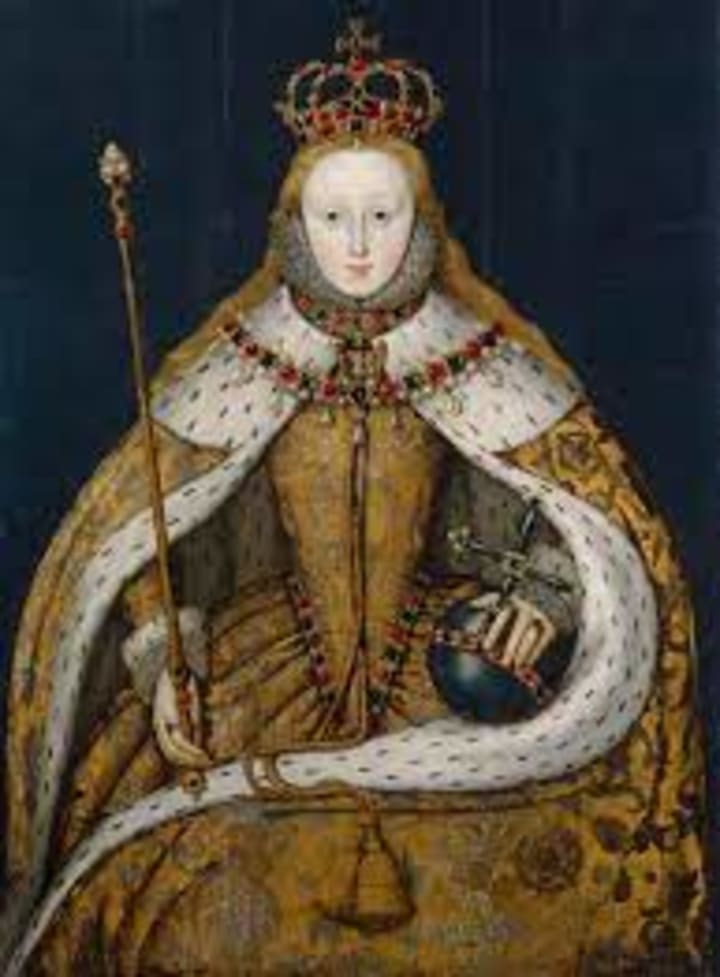
It is interesting how much we can learn about Elizabeth I’st fashion by looking at the many portraits she had commissioned. One such example is her Coronation Portrait. It shows the 26 year old Elizabeth in her Coronation robes (1559). The dress the new Queen is wearing is decorated with Tudor roses and fleur-de-lis, which is a reference to the English claim to French soil. The Queen herself has long flowing hair (which was traditional for that time). The fabric of the dress is made from woven gold and silver silk thread. The lining of the robe is ermine, and each ‘black dot’ is a tail of one animal. The whole portrait is beautiful and what we have come to expect from Elizabeth I.
About the Creator
Ruth Elizabeth Stiff
I love all things Earthy and Self-Help
History is one of my favourite subjects and I love to write short fiction
Research is so interesting for me too
Keep reading
More stories from Ruth Elizabeth Stiff and writers in FYI and other communities.
Georgian fashion
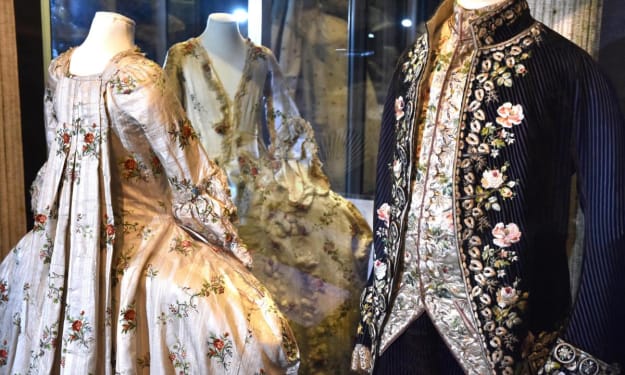
The Georgian Era had one of the most beautiful “fashions” of any Era, but it was also a very ‘impractical’ fashion. For the rich, upper-classes, the materials were lavish and the colours were ‘rich’, but women could only (just about) sit down in these exquisite dresses. This Century was known for its “Opulence”, with elaborate wigs, rich embroidery and (very) full skirts. The rich showed off their wealth through their clothes, and this applied to men as much as it did to women. The working-classes wore similar clothes, but they were not so rich in colour or material, and they owned fewer clothes, wearing more ‘practical’ clothes for working in.
By Ruth Elizabeth Stiff4 years ago in FYI
So You Decided To Become a Nurse Practitioner:
So you decided to become an "Advanced Practice" nurse. Congratulations!... is what I would say if this was a good idea. Grad school? In this economy? What were you thinking? Likely it was something along the lines of either 1) “I've seen these other chucklefucks do it— Why can't I?” or even 2) “I've got a nice career, I should shake it up. I miss feeling like I have no clue what I'm doing.”
By Sandor Szaboabout 23 hours ago in Fiction


Comments
There are no comments for this story
Be the first to respond and start the conversation.