
The Book Of Shadows: esotericism available for those who want to learn
Anyone can understand and make his own Book of Shadows if he spends the necessary time
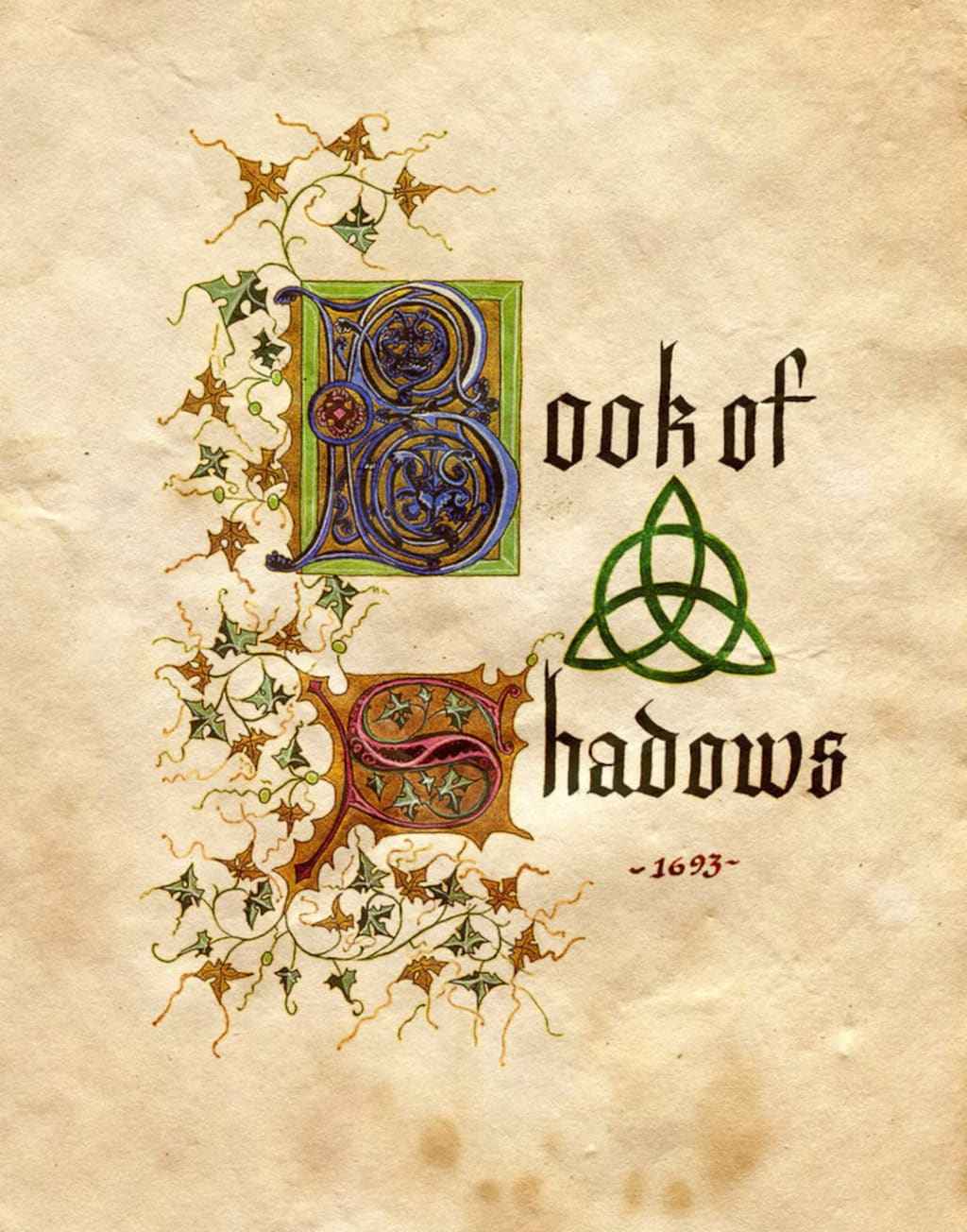
I was intrigued by The Book of Shadows all my life, even more so after my parents' death many years ago, since I wanted to know how they manifested themselves in the afterlife. Since I never had children because I never wanted to, I felt free to enter this unknown world. American and British practitioners guided me to understand the Wicca religion and to know how to read this famous book. The truth is that these texts are very interesting, even my cats are fascinated when I open the book, I start reading and they tease me amusingly.
I do not practice the Wicca religion but I recommend everyone to read The Book of Shadows freely and without prejudice.
The Book of Shadows is a unique work that introduces the practitioner to witchcraft and allows him to know its origins, beliefs, practices, rituals and ceremonies. When the reader is instructed in these pages he discovers the meaning of numbers and colors in magic, as well as the uses of various herbs and incense, or the applications of oils, candles, potions and gems. The text explains the covenants (covens) are formed and the readers will get to know their deities.
The Book of Shadows exposes the beauty of Wiccan ceremonies and the Great Rite. The practitioner learns from the initiations, the Wiccan alphabet and the sabbats and esbats festivals, in addition to discovering the ingredients of the most varied spells and magical recipes for any goal that one wants to achieve.
The term "Book of Shadows" was popularized by Gerald Gardner, the founder of Wicca, in the mid-20th century. Gardner created one of the earliest known Books of Shadows in the late 1940s or early 1950s, which he used in his coven practices. Since then, the concept has evolved and spread across various Wiccan traditions, including Alexandrian Wicca and others, becoming a staple in both coven and solitary practices.
With advancements in technology, many practitioners now maintain digital Books of Shadows, using apps and online platforms to organize their information. This shift allows for easier editing and sharing, making the BOS more accessible while still retaining its sacred nature.
The Book of Shadows is a vital tool in Wiccan practice, serving as both a personal journal and a communal resource. It encapsulates the beliefs, rituals, and experiences of its owner, making it a deeply personal and evolving document within the Wiccan tradition.
Differences Between Sabbats and Esbats in Wiccan Practice
In Wiccan practice, Sabbats and Esbats serve distinct purposes and are celebrated at different times, reflecting the cyclical nature of the earth and the moon. Here are the key differences:
1. Timing and Frequency
Sabbats: These are seasonal festivals that occur eight times a year, marking significant points in the solar calendar. They include celebrations such as Yule, Imbolc, Ostara, Beltane, Litha, Lammas, Mabon, and Samhain. Each Sabbat corresponds to specific solar events, such as solstices and equinoxes, and is celebrated approximately every six weeks.
Esbats: Esbats are lunar rituals typically held monthly, primarily during the full moon, although some practitioners also celebrate during the new moon and other lunar phases. The full moon is considered a time of heightened spiritual energy, making it ideal for rituals focused on manifestation and healing.
2. Focus and Purpose
Sabbats: These celebrations are communal and often involve larger gatherings, focusing on honoring the earth, seasonal changes, and agricultural cycles. Sabbats are times for celebration, reflection, and connecting with nature, emphasizing themes such as fertility, harvest, and the changing seasons.
Esbats: In contrast, Esbats are more personal and introspective. They provide an opportunity for individual or small group rituals that focus on personal growth, healing, and magical work. Esbats often involve spellcasting, meditation, and connecting with lunar energies, making them more flexible and adaptable to individual needs.
3. Ritual Structure
Sabbats: Rituals during Sabbats are often elaborate and may include traditional ceremonies, feasting, and community activities. They celebrate the collective experience of the changing seasons and often involve honoring deities associated with nature and fertility.
Esbats: Rituals for Esbats can vary widely in complexity, from simple meditations to more structured ceremonies. They typically focus on invoking lunar energies, performing spells, and reflecting on personal intentions. The rituals are often less formal than those of Sabbats and can be tailored to the individual’s spiritual practice.
Sabbats and Esbats are integral to Wiccan practice, each serving unique roles. Sabbats are seasonal celebrations that connect practitioners with the earth's cycles, while Esbats are lunar rituals that focus on personal empowerment and introspection. Together, they provide a comprehensive framework for spiritual practice within the Wiccan tradition.
About the Creator
Ninfa Galeano
Journalist. Content Creator. Media Lover. Geek. LGBTQ+.
Visit eeriecast ,where you'll find anonymous horror stories from all over the world. Causing insomnia since 2023.
Keep reading
More stories from Ninfa Galeano and writers in FYI and other communities.
Doppelgänger: What is it and what does it mean?
The term doppelgänger, originating from the European Nordic tradition, refers to a spectral double or sosias of a living person. Derived from German‘ 'doppel' means 'double’ and 'gänger' translates as 'walker'. Unlike a ghost, which represents someone deceased, the doppelgänger is a manifestation of the person himself. Jean Paul, a German writer, described him in 1796 as "the one who walks next door," suggesting the idea of an evil twin or a supernatural phenomenon in which an individual's body or spirit can coexist in two places simultaneously. Recent research has shown that this mythical figure has not only permeated literature, cinema and television in genres such as horror and science fiction, but could also have a real basis from a statistical and biological perspective, stripping away any fantastic or malevolent connotations.
By Ninfa Galeano6 months ago in FYI
3 Impossible Planets That Defy the Laws of Astronomy
For as long as humans have looked up at the stars, we’ve tried to make sense of our place in the universe. We’ve found thousands of exoplanets orbiting distant suns, and we thought we had a pretty good handle on how they formed.
By Areeba Umair3 days ago in FYI
The Devil's Cut
“Comrade, finally you’re awake.” The voice was smooth, sensual. A flickering incandescent bar was all that lit the white, sterile room. All Vladimir remembered was everything going black. He tried to move his arms and found them strapped to the gurney.
By Matthew J. Fromm5 days ago in Fiction


Comments
There are no comments for this story
Be the first to respond and start the conversation.