
Doppelgänger: What is it and what does it mean?
Doppelgängers often act as the evil twin of another individual, but the term became so popular that it took on other meanings

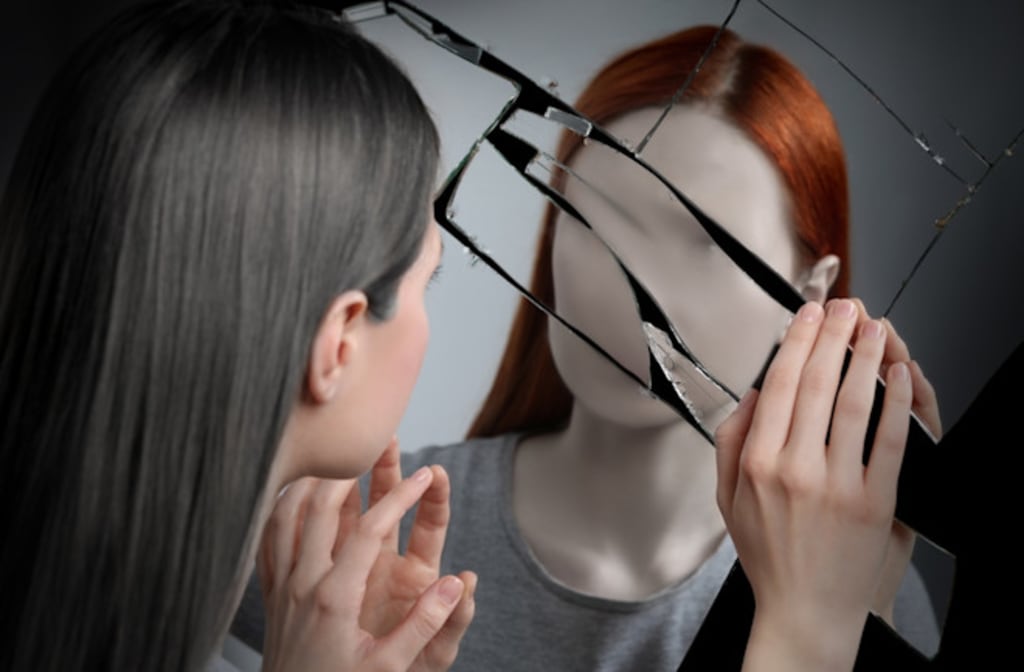
The term doppelgänger, originating from the European Nordic tradition, refers to a spectral double or sosias of a living person. Derived from German‘ 'doppel' means 'double’ and 'gänger' translates as 'walker'. Unlike a ghost, which represents someone deceased, the doppelgänger is a manifestation of the person himself. Jean Paul, a German writer, described him in 1796 as "the one who walks next door," suggesting the idea of an evil twin or a supernatural phenomenon in which an individual's body or spirit can coexist in two places simultaneously. Recent research has shown that this mythical figure has not only permeated literature, cinema and television in genres such as horror and science fiction, but could also have a real basis from a statistical and biological perspective, stripping away any fantastic or malevolent connotations.
Identity crises
The concept of doppelgänger is intrinsically related to identity crises, as it represents a confrontation with an "other self" that can destabilize a person's perception of himself. This phenomenon manifests itself in various ways in literature and psychology, reflecting the internal struggle between personal identity and external influences.
The appearance of a doppelgänger can trigger an identity crisis by confronting the individual with a version of himself that is both familiar and strange. This encounter can lead to deep questions about who we really are and what aspects of our personality are authentic. For example, in the book Doppelgänger by Naomi Klein, the author explores how her own identity is affected by the existence of an "other Naomi", which leads her to reflect on originality and individuality in a world saturated with information and misinformation.
Today, the concept of doppelgänger has been expanded to include the digital identities that people create online. The proliferation of social networks and the need to build a "personal brand" have led many to experience a disconnect between their real self and their digital self. This dissonance can result in an identity crisis, as people struggle to reconcile their multiple identities in a world where authenticity is constantly questioned.
The doppelgänger, as a symbol of duality and internal struggle, is a powerful reflection of the identity crises that people face in different contexts. Whether through literature, psychology or digital culture, the encounter with a doppelgänger invites reflection on the nature of the self and the complexities of identity in a constantly changing world. This phenomenon not only challenges our understanding of who we are, but also highlights the importance of authenticity in an environment where images and perceptions can be easily manipulated.
Literature
The most emblematic doppelganger in literature is found in The Strange Case of Dr. Jekyll and Mr. Hyde by Robert Louis Stevenson. In this work, Dr. Henry Jekyll struggles with his darkest side, which he releases through Edward Hyde, a malevolent and almost inhuman entity. As Hyde grows stronger, Jekyll loses control over his transformations, leading him to poison himself to stop his alter ego's crimes in the city.
Another notable example is presented in Edgar Allan Poe's William Wilson, where the narrator confronts a schoolmate who shares his name and appearance, but whose presence awakens in him an intense rivalry. This doppelgänger, who can only whisper, turns into a terrifying shadow that haunts him, forcing him to flee to Italy. In a revealing climax, the narrator realizes that his enemy has been inside him all along, mirroring his own darkness.
Both narratives explore the duality of the human being, but in Charles Dickens' A Tale of Two Cities, the physical similarity between Charles Darnay and Sydney Carton contrasts with their psychological differences. While Charles is a successful and virtuous man, Sydney lives in despair, seeing in Darnay the potential that he himself cannot reach, which adds a layer of tragedy to his existence.
Conclusion
Digital platforms have radically transformed the way we perceive our identity and that of others, creating an environment where doppelgängers— whether real or digital— have become more prominent. This phenomenon raises profound questions about authenticity, individuality and the nature of the self in the digital age.
Social media has redefined our perception of identity and doppelgängers, creating a landscape where authenticity and imitation coexist in complex ways. As we navigate this new environment, it is crucial to develop a critical awareness of how these platforms influence our self-image and our interactions with others. The era of the digital doppelgänger not only challenges our notions of identity, but also invites us to reflect on the meaning of truly being ourselves in an increasingly technology-mediated world.
About the Creator
Ninfa Galeano
Journalist. Content Creator. Media Lover. Geek. LGBTQ+.
Visit eeriecast ,where you'll find anonymous horror stories from all over the world. Causing insomnia since 2023.
Keep reading
More stories from Ninfa Galeano and writers in FYI and other communities.
Glitches in the Matrix: What are they? How to identify them?
In recent years, the term Matrix glitches has become popular. These glitches could be described as signs of unreality. Glitches in the Matrix are unexpected events that occur at any time and place, and which don't fit with logic. These errors make us question the nature of physical reality, which leads us to want to discover what is true and what is false about what we perceive with our five senses, which, by the way, are quite limited.
By Ninfa Galeano7 months ago in FYI
A Failed Artist, A Disillusioned Poet, An Underpaid Game Show Host
I took my son and niece to Gori, a small town in Georgia where Joseph Stalin was born. They talked me into visiting the Stalin's Museum, the largest in the post-Soviet space. I had resisted going there because I just can't stand the monster and know enough about him, or so I thought.
By Lana V Lynx9 days ago in FYI
How to Relieve Stomach Bloating Fast Naturally: A Doctor-Approved Gut Reset That Actually Feels Human
Bloating doesn’t announce itself politely. It shows up suddenly, tightens your abdomen, and makes everything—from sitting to breathing to wearing normal clothes—feel harder than it should. There’s a distinct moment when you realize something is off, and your brain jumps straight to one question:
By Darryl Hudsona day ago in FYI


Comments
There are no comments for this story
Be the first to respond and start the conversation.