
The 2025 India-Pakistan Conflict: A Crisis at the Brink
“A Deadly Escalation in South Asia: How the 2025 India-Pakistan Conflict Brought the Region to the Brink of War”
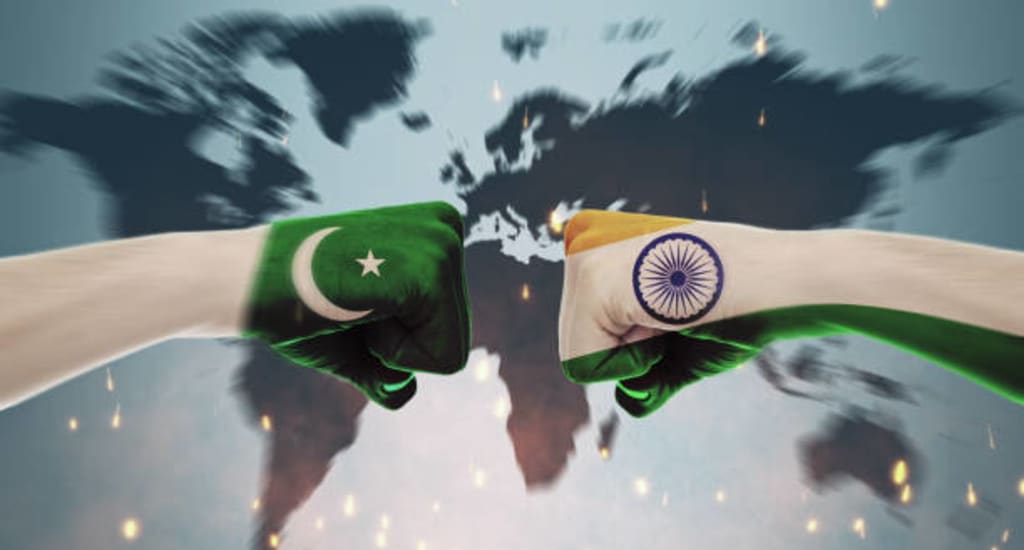
In April and May 2025, South Asia witnessed one of its most intense military confrontations in decades, as longstanding tensions between India and Pakistan escalated into a full-scale conflict. The catalyst was a terrorist attack in Pahalgam, Jammu and Kashmir, which led to a series of retaliatory actions, military operations, and a humanitarian crisis, all set against the backdrop of nuclear-armed nations.
The Pahalgam Attack: A Deadly Catalyst
On April 22, 2025, a terrorist attack struck Pahalgam, Jammu and Kashmir, killing 26 tourists, including 25 Indian nationals and one Nepali, at Baisaran meadow. India swiftly attributed the massacre to Pakistan-based groups Jaish-e-Mohammed (JeM) and Lashkar-e-Taiba (LeT). Pakistan condemned the attack but denied involvement. The incident ignited public outrage across India, fueling protests and setting the stage for a sharp escalation.
Diplomatic and Military Escalation
In response to the attack, India launched Operation Sindoor on May 7, 2025, a series of coordinated missile strikes targeting nine key locations across Pakistan and Pakistan-administered Kashmir. This action was a direct response to the April 22 terror attack in Pahalgam. Key targets of Operation Sindoor included Bahawalpur, Muridke, Muzaffarabad, and Kotli. Indian authorities stated the strikes were carefully planned to destroy terror infrastructure while avoiding direct hits on Pakistani military installations. However, Pakistani officials reported civilian casualties, including children, and claimed damage to public infrastructure like mosques and a hydroelectric dam. India denied striking civilian areas and maintained its focus was solely on terrorist camps and logistics hubs.
In retaliation, on May 10, 2025, Pakistan launched Operation Bunyan al-Marsus, involving missile and drone strikes targeting Indian military assets. Pakistani military sources claimed to have hit missile storage facilities and airbases in Jammu, Punjab, and Rajasthan. Pakistan’s military further claimed they shot down five Indian jets during the ongoing exchanges. Meanwhile, Indian authorities reported casualties due to shelling and drone attacks in border towns. Air raid sirens and evacuations continued in several Indian villages close to the Line of Control.
Humanitarian Crisis and Civilian Impact
The border regions, especially Kashmir, bore the brunt of the violence. Over 200 civilians were killed within the first three weeks, and more than 150,000 were displaced from villages along the LoC. Hospitals in Srinagar and Rawalakot overflowed with casualties, while mobile networks and internet access were shut down in multiple areas for “security reasons.” Cross-border shelling damaged schools, homes, and farmland. Refugee camps sprang up in northern Punjab (India) and Pakistan-administered Azad Kashmir, where humanitarian conditions quickly deteriorated. International NGOs attempted to provide relief, but many were denied access due to security concerns. In both countries, the media heavily censored wartime coverage, intensifying the fog of war.
Cyber Warfare and Information Operations
A significant aspect of the 2025 conflict was the intense cyber warfare between the two countries. Indian and Pakistani hackers targeted critical infrastructure, government websites, news media, and satellite communication channels. Propaganda flooded social media, amplifying nationalism, disinformation, and hatred. Deepfake videos showing fabricated attacks and manipulated speeches went viral, making it increasingly difficult for civilians and even military personnel to distinguish fact from fiction. Meanwhile, a coordinated misinformation campaign falsely claimed that India had launched a nuclear strike—leading to widespread panic in several cities before being debunked.
Economic Fallout
A potential full-scale war between India and Pakistan would have severe economic repercussions beyond the Line of Control (LoC). The article emphasizes that such a conflict would severely damage India's economy, despite it being the world's fastest-growing large economy. The financial strain of war would disrupt key industries, erode investor confidence, and significantly hinder GDP growth. India's economic vulnerability in the face of armed conflict means it stands to lose more in financial terms than Pakistan. The fallout would be visible through disrupted trade, impaired business operations, and damaged financial balance sheets, making war a costly affair not just in human terms but also economically.
International Mediation and Ceasefire
By mid-April, with both countries suffering militarily and economically, international pressure began to mount. The United States and China—despite their rivalry—jointly pushed for a ceasefire, holding backchannel talks with both governments. Russia also offered to host peace talks in Moscow. On April 28, 2025, under a deal brokered by a UN-led coalition, India and Pakistan agreed to a ceasefire at midnight. Both sides agreed to pull back troops to pre-conflict positions and allow international observers to monitor the LoC. The agreement also included prisoner exchanges and the establishment of a bilateral crisis communication hotline to avoid future miscalculations.
Post-Conflict Analysis: Who Won?
In military terms, neither side gained territory or decisive strategic advantage. However, both suffered significant losses: over 300 military personnel on each side, extensive infrastructure damage, and severe economic setbacks due to market instability and disrupted trade routes. Politically, the conflict boosted nationalistic rhetoric in both countries. In India, the ruling party portrayed the airstrikes and military response as evidence of strong leadership. In Pakistan, the government claimed to have defended its sovereignty successfully and maintained nuclear deterrence. But the human cost, economic fallout, and geopolitical isolation were profound. Both countries saw downgrades in foreign investment ratings, tourism declines, and criticism from human rights groups.
About the Creator
Keep reading
More stories from Farhan Rafid and writers in FYI and other communities.
The Ajmer 1992 Sex Scandal: India’s Forgotten Nightmare of Exploitation and Silence
India, a land often cloaked in conservatism and rigid social structures, has seen its fair share of dark chapters. Among these, the Ajmer 1992 sex scandal stands as a horrifying reminder of systemic failure, social silence, and the exploitation of the vulnerable. A tale not only of sexual abuse but also of political influence, fear, and the manipulation of justice, the Ajmer case is one of the most disturbing sex scandals in Indian history—one that shook Rajasthan and left deep scars in the collective conscience of a nation.
By Farhan Rafid8 months ago in Criminal
Post-Brexit Customs Compliance: A 2026 Guide for UK Importers and Exporters
Five years on from Brexit, UK businesses face a customs environment that continues to evolve. While many organisations have successfully adapted to the new normal of customs declarations, tariff classifications, and border controls, 2026 brings fresh developments that demand attention. For importers and exporters navigating this landscape, staying compliant isn't just about avoiding penalties—it's about protecting margins, maintaining supply chain efficiency, and building resilience in an uncertain trading environment.
By Saurav Singh7 days ago in FYI
How to Succeed at the Benson Directory®
Congratulations and welcome to the Benson Directory® employee #22391! As our newest call handler, you will have the privilege of speaking with dozens of unique and interesting people on a daily basis as well as the opportunity to earn bonuses for high performance. Contained within this handbook you will find a set of ease to follow instructions designed to help you settle in to your new role and begin paving the way to success.
By S. A. Crawford2 days ago in Fiction



Comments
There are no comments for this story
Be the first to respond and start the conversation.