Mystery
Pachita, the Mexican shaman who cured only with a knife
Bárbara Guerrero (1900-1979), better known as Pachita, was a Mexican shaman and psychic surgeon who cured only with a bush knife. Although she is questioned by the scientific community, the truth is that she was the most powerful psychic in Latin America. She attended people of all social classes at her home in Mexico City, who were looking for someone to cure physical and psychological ailments. Her connection with the indigenous cultures of her country profoundly influenced her career as a healer. Throughout her life, Pachita claimed to channel the spirit of the Tlatoani Cuauhtémoc, the last Aztec emperor, who guided her in her rituals to achieve the goals of healing.
By Ninfa Galeano10 months ago in FYI
The Fascinating Mysteries of Pi: Beyond Randomness
Pi (π), the mathematical constant, is one of the most intriguing and enigmatic numbers in mathematics. Known as the ratio of a circle's circumference to its diameter, Pi's value is approximately 3.14, but its true beauty lies in its endless decimal expansion, which continues infinitely without repeating. With more than 13 billion digits calculated so far, Pi has captivated mathematicians for centuries, inspiring both awe and mystery.
By Eleanor Grace10 months ago in FYI
Astronomers Found Planet That Could Suit Human Life
look at this fascinating planet it looks as if it's burning it must be hotter on its surface than in the middle of Death Valley the ground is parched cut by giant cracks there's not a drop of water in this boiling world now it's the same planet but it looks like a totally different place everything is frozen the temperatures are so low there isn't even a tiniest chance that life could survive on this planet this bizarre world is called HD20794D and it's located 19.7 light years away from Earth in the constellation Ardinous this planet is a super Earth this term means that it is larger than Earth but smaller than such ice giants as Neptune what makes this planet especially interesting is its unusual orbit which moves it in and out of its stars habitable zone the region where temperatures might allow liquid water to exist now we haven't seen this unusual planet directly astronomers detected it by measuring tiny wobbles in its star using two powerful instruments Espresso and HARPS located at telescopes in Chile these instruments measure radial velocity which is the small movement a star makes as a planet's gravity tugs on it the larger the wobble the more massive the planet later astronomers analyzed the data and figured out that the planet in question has a mass around six times greater than Earth's it orbits a star which is slightly smaller and dimmer than our sun what makes this star unique is that it is bright enough to be seen with the unaded eye unlike many other stars that host exoplanets you won't be able to see them without a telescope the star system has been observed for over 20 years astronomers have long suspected it had multiple planets in 2011 scientists discovered two other super Earths orbiting the star every 18.3 and 89.6 6 days respectively for some time researchers thought they had found a third planet with an orbital period of 40 days later they realized they had made a mistake but recently after reanalyzing years of data astronomers have confirmed that the third planet does exist and it's our extreme HD20794D a researcher from the University of Oxford played a key role in identifying the planet he used a special computer algorithm called Yurara to separate the planet's weak signal from the background noise it helped him confirm that the planet truly existed and was pretty unique unlike the planets in our solar system which have mostly circular orbits the newly discovered one follows a highly elliptical stretched out orbit it takes 647 days to complete one trip around its star that's just 40 days shorter than Mars' orbit around the sun at its furthest point the planet is twice the Earth's sun distance which makes it an icy world far outside the habitable zone at its closest point it moves inward to 75 AU where it enters the habitable zone where liquid water might exist this extreme movement creates truly bizarre seasons for some part of its orbit HD20794D is frozen like an icy wasteland as it approaches its star temperatures rise and ice likely melts forming temporary oceans the planet then experiences a short scorching summer it is so hot that the water on its surface might evaporate into the atmosphere shortly after the planet moves away again it triggers a gloomy fall with rains followed by a deep freeze in winter in other words the planet switches between extreme cold and intense heat which makes it a very unpredictable place for life if any life forms exist there they certainly need to adapt to dramatic changes in temperature and environment why does the planet follow such a mind-boggling orbit it might be a leftover effect from events billions of years ago when the planetary system was still forming at some point another large planet may have disturbed the orbit of our extraordinary friend another possible explanation is that a giant planet once existed in the system and its gravity pushed HD20794D into an elongated path later this giant planet may have been ejected from the system leaving the smaller planet in its current orbit this theory makes sense because the two other planets in the system B and C have more normal circular orbits the discovery of this planet is so exciting because it challenges what we know about habitable planets most planets in the habitable zone stay there permanently but HD20794D only passes through it scientists want to know if such a planet could still support life even briefly so future telescopes will study the atmosphere of this planet looking for signs of water gases or even light another super Earth that might have the right conditions for life orbits a star 137 light-years away in space terms this is considered relatively close a lightyear is around 6 trillion miles the planet is called TOI715b and it's about 1.5 times the size of Earth unlike HD20794D it's permanently located in the habitable zone look that's what astronomers think the planet might look like toi715b orbits its star very quickly completing a full orbit in just 19 days but even though it's close to its star it may not be extremely hot all because its star is a red dwarf that's a type of star that is smaller and cooler than our sun this means TOI715b could have a milder temperature compared to other exoplanets that orbit closer to hotter stars nasa discovered the planet using the transiting exoplanet survey satellite this space telescope finds planets by watching for small dips in a stars brightness which happen when a planet passes in front of it since red dwarfs are smaller and dimmer than the sun planets passing in front of them are easier to detect astronomers are planning to study the planet further using the James Webb Space Telescope this powerful telescope located 1 million miles away from Earth can analyze the atmospheres of distant planets if TOI715b has an atmosphere JWST could help scientists determine what gases are present in it and whether such conditions could support liquid water or even life one more promising world for our search for extraterrestrial life is an extremely dense super Earth in the K2360 system an international team of researchers from Japan and Europe has discovered this remarkable multilanet system orbiting a sun-like star located 750 light-years away this system has two planets including one of the densest rocky planets ever found the K2360b is a rocky super Earth about 1.6 times the size of Earth but with a mass 7.7 times greater this makes it as dense as lead the planet orbits its star incredibly fast completing one full orbit in just 21 hours it's the densest known ultrashort period planet with well-measured properties as for its sibling this is a much larger outer planet with at least 15 Earth masses it takes 9.8 days to orbit its star sadly since it does not pass in front of its star from our viewpoint scientists cannot determine its exact size the unusually dense planet might be the core of a much larger planet over time intense radiation from its parent star may have blown away its outer layers leaving behind only its dense rocky core so in fact this planet could show us what might happen to some planets that are too close to their stars astronomers think that the planet may have moved inward over time due to interactions with its larger companion planet one possibility is high eentricity migration where a planet's orbit becomes highly stretched out due to gravitational interactions before gradually becoming more circular near the star another theory is that the planet's spin and axial tilt can cause its orbit to become more circular such planets are rare and finding one with a massive outer companion can help scientists refine their theories about how planets form and evolve in extreme environments with its help we might also understand how rocky planets evolve and what happens to planets that get too close to their stars
By Riya singh10 months ago in FYI
Why You Should Be Way More Afraid of Ants
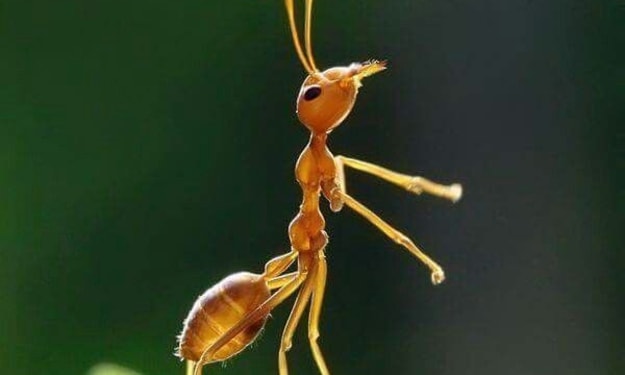
statistically 3% of inhospital amputations performed by skilled surgeons end up in amputation of the wrong limb but that's what happens in the human world ants somehow managed to do that right even without attending a medical school researchers have recently made a groundbreaking discovery regarding the medical capabilities of Florida carpenter ants they saw those ants perform amputations on their injured Colony members marking the first known instance of such behavior in the animal kingdom the study found that ants triage wounds and adapt treatments by amputating legs depending on the severity of the injury the ant in question engage in these amputation procedures after sustaining injuries in battles with neighboring ant colonies according to Specialists the ants are able to correctly diagnose wounds and decide whether amputation is necessary for survival injured ants willingly participate in the process demonstrating a unique form of cooperation within the ant colony while the exact reasons behind this Behavior remain unclear researchers speculate that ants that undergo amputations have a higher chance of survival compared to those with untreated injuries the study also revealed that additional species of carpenter ants May exhibit similar amputation Behavior indicating that this medical treatment might be more widespread in the Ant World than previous ly thought scientists hope to further explore the implications of these findings including the ant's ability to feel physical discomfort and other strategies they may have for treating injuries if there are ant surgeons there must be Ant nurses too right well mbella ants are like the nurses of the insect World rescuing and healing their wounded buddies after battles with termites these ants are native to Africa and aren't afraid to take on biting soldier termites in their quest for food these ants carry their injured comrades back home after raids but rescues don't stop there once back at the nest ants take turns caring for the wounded using their mandibles and front legs to hold the injured limb in place and lick the wound for up to 4 minutes at a time the ants don't just help their friends out of the goodness of their hearts it turns out that these rescues are essential for the injured ant survival with up to 80% passing away within 24 hours if left untreated researchers found that the licking Behavior might help prevent infections and improve the chances of survival while humans can't walk more than a couple of blocks without consulting Google Maps ants use the sun's position and visual memories of their surroundings to guide them home while walking backward with heavy loads of food research reveals that ants are not only skilled Navigators but also masters of adapting to their surroundings in creative ways previously believed to have two separate reflexes guiding their movements ants have now been shown to strategically look behind them and use the sun's position to set their course while walking backwards basically it's like ants have their own GPS system which is impressive considering their small brain yep Size Doesn't Matter when it comes to Intelligence on another note trap jaw ants have been found to have a surprising trick up their sleeves when facing Predators these quick and fierce ants can actually Propel themselves into the air using their powerful mandibles to escape threats researchers observed this behavior in trap jaw ants encountering pit building ant lions and found that this unique Escape mechanism significant ly increased their chances of [Music] survival the friendship between ants and aphids has been a topic of Fascination for scientists for ages despite being as different as night and day these two insects have joined forces to ensure their Mutual success like the ultimate dynamic duo in the bug world their partnership demonstrates mutualism a fancy word for a give and take relationship where everyone wins ants play bodyguard for aits keeping them safe from pesky predators and parasites while also making sure they never go hungry in return aphids whip up some delicious honeydew for ants to enjoy kind of like a bug potluck one of the perks of being pals with an ant is having a personal security detail on standby 247 using their impressive Jaws ants scare off any troublemakers trying to mess with their apid buddies some ant species even go above and beyond by taking aphids under their wings well legs and moving them to safer locations aphids may not have the best taste in plant meals but they sure know how to turn it into a yummy treat for their ant Friends by turning plant sugars into honeydew aphids provide ants with a tasty snack packed with all the energy they need to keep on trucking ants will go to Great Lengths to find their apid buddies and stock up on this sweet sustenance ants and aphids aren't just munching on snacks together they're Master communicators too using special chemical signals ants guide one another to food sources and warn of incoming threats they even exchange signals with their aphid Pals sometimes giving them a little tickle with their antenna to boost honeydew production aphids aren't just sitting back and soaking up the sun they're proactive members of this bug buddy system they listen to ants signals and adjust their feeding habits accordingly maybe even packing up and moving if ants say it's time for a change of scenery ants may not produce honey do like aphids do but despite being insects they can produce milk like all the mammals out there who knows maybe one day we'll get ant milk lattes at Starbucks just kidding so most researchers thought they knew just about everything there was to know about ants until they decided to take a closer look at their pupe scientists have observed ant colonies for over a century Amazed by how ants work together like one big superorganism but despite all the attention on ants busy activities researchers haven't really focused on the pupil stage this is when ants transform from larae into full-grown adults in a recent study scientists revealed that ant pupe play a crucial role in colonies by producing a milk-like substance that feeds the rest of the ants this discovery was surprising because milk-like secretions were found in at least one species from each of the five major ant subfamilies so this amazing find suggests that there may be many more antt species out there making their own milk and the milk making process might have originated early in the evolution of all ants trust me you don't want to be on bad terms with ants or else they might Adorn their houses with your head I know it sounds insane but here's the deal ants really use their fo's heads to decorate their homes for the past 60 years scientists have been puzzled by the behavior of a small ant called for fora AR Baldi these guys love to Adorn their nests with the skulls of trap jaw ants which are armed to the teeth with venomous stingers and massive snapping mandibles despite the odds formica Arc boldy ants in Florida are skilled at bringing down their larger adversaries and snagging their heads how do they manage to do it you ask well it's all about their quick and efficient acid spray turns out formica Arc boldy ants seem to have a taste for a few specific kinds of trap jaw ants by mimicking their prey scent these Head Hunters have found a clever way to overpower them in battle but why exactly do they collect their Fox skulls some experts think it could be a way to Mas mask themselves from kidnapper ants who brainwash entire ant colonies tiny Weaver ants have impressive nest building skills and can create nests that are a thousand times bigger than themselves they create their dwellings by carefully pulling tree leaves together and securing them with silk produced by their larvae to start their construction project ants pick out a tree branch that will work well for their nest then they gather around leaves and begin pulling them together until they can form a solid structure once the leaves are in place it's time for Weaver ant larae to shine adult ants carefully transport the larvae to spaces between the leaves where they use their silk producing abilities to glue everything together .
By Riya singh10 months ago in FYI
Randonautica: the creepiest app you could ever use in your life. AI-Generated.
Randonautica is a mobile app that has gained popularity for its amazing approach to exploring the world around users. It combines elements of randomness, adventure, and community engagement, encouraging users to venture into new and often unexpected locations.
By Ninfa Galeano10 months ago in FYI
The awakening of the stars. AI-Generated.
In the kingdom of Luminara, the nights were once illuminated by the dancing of the stars. Every night, the skies sparkle with a multitude of stars, each telling an ancient story, a forgotten dream or a lost hope. But over time, the stars began to fade, and the sky gradually grew darker, plunging the kingdom into increasing darkness.
By Christine Hochet10 months ago in FYI
Elon Musk's net worth overtook Mansa Musa's with $433 billion as of January 2025.
Elon Musk's net worth overtook Mansa Musa's with $433 billion as of January 2025. In the annals of history wealth has often been a measure of influence and power. Two figures stand out in this regard. Mansa Musa the 14th century emperor of the Mali Empire and Elon Musk the contemporary entrepreneur behind companies like Tesla and SpaceX. While Musk's net worth soared to unprecedented heights in recent years surpassing $400 billion at its peak the legacy of Mansa Musa's wealth remains unparalleled.
By Adnan Rasheed10 months ago in FYI
A spending bill to prevent a government shutdown#1
The Crisis at Hand 💥 As the deadline to fund the government loomed closer, fears of a shutdown were at an all-time high. Not only would the shutdown have impacted thousands of federal employees, but it could also have impacted healthcare services, national security, and even economic stability. A government shutdown costs money, causes chaos, and lowers public confidence in Washington. A significant political divide in Congress was the issue at hand. The Democratic-controlled House and the Republican-led Senate couldn’t seem to agree on a budget deal to keep the government functioning. It was abundantly clear that a compromise was required to prevent the complete collapse of the federal government, with President Trump caught in the middle. The Spending Bill Breakthrough 💵
By Md Johirul Islam10 months ago in FYI