
Peace Through Strength
Has Indonesia Ever Considered Its Role in Resolving International Conflicts?

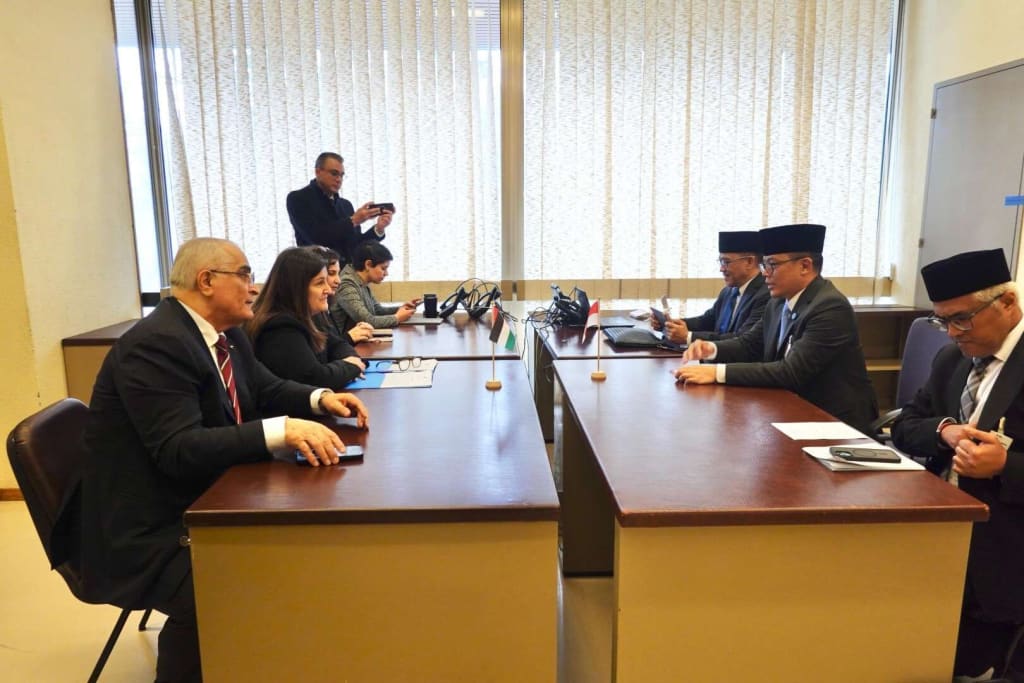
Have you ever imagined Indonesia's potential role in resolving international conflicts? Amid the ongoing Israel-Palestine conflict, our country possesses untapped potential to become an effective peace mediator. Let's examine this potential through the lens of the "Peace Through Strength" doctrine.
The Israel-Palestine conflict has persisted for decades, becoming one of the most complex conflicts in international relations. Various mediation efforts by major powers like the United States, Russia, and international organizations such as the UN have yet to achieve permanent peace. This is where Indonesia, as the world's largest Muslim country with a strong diplomatic tradition, could play a crucial role.
The "Peace Through Strength" doctrine, popularized by U.S. President Ronald Reagan in the 1980s, essentially advocates that peace can be achieved through a position of strength. Strength here refers not only to military capabilities but also economic, diplomatic, and moral power. How might this doctrine be applied to Indonesia in the context of the Israel-Palestine conflict?
First, Indonesia possesses significant diplomatic strength. As one of the founders of the Non-Aligned Movement and the country with the world's largest Muslim population, Indonesia has moral legitimacy to address Middle Eastern conflicts. Prof. Dewi Fortuna Anwar, an international relations expert from LIPI, argues, "Indonesia holds a unique position as it can be accepted by various parties. Unlike some Western or Gulf states, Indonesia is not perceived as having hidden agendas in this conflict."
Indonesia also has historical experience in resolving internal conflicts, such as in Aceh through the Helsinki process involving international mediators. This experience provides deep insights into the complexities of peace processes that can be applied in broader contexts.
Second, Indonesia's growing economic strength provides leverage in diplomacy. As Southeast Asia's largest economy and a G20 member, Indonesia's voice in international forums carries increasing weight. Dr. Rizal Sukma, an Indonesian diplomat and academic, states, "Indonesia's economic strength provides the foundation for more effective diplomacy. Countries tend to listen to those with economic influence."
You might wonder how Indonesia can apply the "Peace Through Strength" doctrine while maintaining its free and active principles and soft power approach. The answer lies in reinterpreting the doctrine.
Indonesia can redefine "strength" as a combination of moral legitimacy, diplomatic influence, and economic position, rather than merely military power. Prof. Hikmahanto Juwana from the University of Indonesia emphasizes, "Indonesia can use soft power to bridge differences and build trust between conflicting parties."
The practical implementation of Indonesia's mediator role could begin with multi-track diplomacy initiatives. Indonesia could organize informal dialogues between Israeli and Palestinian civil societies, facilitate academic exchanges, and support joint economic projects. These steps could build the foundation for more productive formal negotiations.
Prof. Amitav Acharya, an international relations expert from American University, underscores this potential, noting that Indonesia has a long tradition in consensus-based diplomacy and conflict resolution through dialogue. This approach is highly relevant for complex conflicts like Israel-Palestine, where win-win solutions are essential.
Of course, the mediator role comes with challenges. Indonesia must balance its historical support for Palestinian independence with the need to be seen as an impartial mediator. This requires careful diplomatic maneuvering and effective communication strategies.
Dr. Dino Patti Djalal, a former Indonesian diplomat, offers an interesting perspective: "Indonesia needs to demonstrate that supporting Palestinian rights doesn't mean being anti-Israel. An effective mediator must be able to speak with all parties and understand their security concerns."
Indonesia's opportunity to contribute to Israel-Palestine peace is also supported by its position in regional and international organizations. As an active member of ASEAN and the Organization of Islamic Cooperation (OIC), Indonesia can mobilize collective support for peace initiatives. Dr. Hassan Wirajuda, former Indonesian Foreign Minister, argues, "Indonesia can use multilateral forums to build momentum for an inclusive peace process."
Interestingly, the "Peace Through Strength" doctrine as applied by Indonesia could also involve the "strength of unity." By uniting like-minded countries to support a two-state solution and respect for international law, Indonesia could create the diplomatic pressure needed to encourage serious negotiations.
If we reflect on Pancasila values, particularly Just and Civilized Humanity and Social Justice, Indonesia's role as a peace mediator aligns with our national identity. Promoting global peace is a manifestation of these values in foreign policy.
In conclusion, Indonesia's potential as a peace mediator in the Israel-Palestine conflict through reinterpreting the "Peace Through Strength" doctrine offers a new path in Indonesian diplomacy. By combining moral legitimacy, growing economic power, and a strong diplomatic tradition, Indonesia could make a significant contribution toward achieving a sustainable solution to one of the world's most difficult conflicts.
The question now is: What concrete steps should Indonesia take to realize this potential? How can we as citizens support these peace efforts?
About the Creator
Defrida
Writing is how I create my own universe of thought. Without it, I'd vanish into the swirling depths of a black hole.



Comments
There are no comments for this story
Be the first to respond and start the conversation.