
The Relevance of Salary Levels to Corruption Potential
The Pertamina Case


Have you ever wondered why someone with a high salary might still be tempted to engage in corruption? I often think about this too. Let's explore together the relationship between salary levels and corruption tendencies, and how this relates to the recent Pertamina fuel corruption case that has captured public attention.
According to anti-corruption expert Robert Klitgaard, corruption occurs when there is monopoly power, broad discretion, and minimal accountability. In his famous formula: Corruption = Monopoly + Discretion - Accountability. Did you know that Gary Becker's classical economic theory states that individuals engage in corruption based on cost-benefit analysis? If potential gains exceed the risk of being caught and punished, corruption becomes a rational choice—regardless of salary level.
Research by Daniel Treisman from UCLA shows that low salaries can indeed drive "necessity corruption," but high salaries don't automatically prevent "greed corruption." In fact, some countries with low corruption rates actually have high public servant salary standards, such as Singapore and Scandinavian countries.
What about perspectives from Indonesia? Prof. Sarlito Wirawan Sarwono, an Indonesian social psychologist, argues that corruption in Indonesia is more influenced by culture and social values than merely by salary levels. What do you think about this?
Have you ever imagined a loss of Rp 193.7 trillion? This figure represents the alleged state losses in the corruption case at Pertamina recently uncovered by the Attorney General's Office. Truly a fantastic amount, isn't it?
You must be wondering what actually happened. Pertamina allegedly committed fuel fraud using a simple yet high-impact method. According to the Attorney General's findings, Pertamina allegedly purchased RON 90 (Pertalite) and then "blended" it to become RON 92 (Pertamax). This mixed fuel was then sold to us, the consumers, at the higher Pertamax price. Imagine, this happened during the period from 2018 to 2023!
Try to imagine how much fuel you've consumed over the last five years. Now multiply that by millions of other consumers. Data shows that total Pertamax consumption throughout the 2018-2023 period reached 30.87 million kiloliters. A very large number, isn't it?
Let's break it down together. In 2018, Pertamax consumption reached 5.64 million kiloliters. In 2019 it slightly decreased to 4.25 million kiloliters, and in 2020 dropped further to 4.06 million kiloliters. Consumption then increased in 2021 to 5.71 million kiloliters, in 2022 to 5.77 million kiloliters, and in 2023 to 5.44 million kiloliters. Were you among the Pertamax consumers during this period?
During this time, Pertamax and Pertalite prices fluctuated. Pertamax was priced at Rp 8,600 in 2018 and gradually rose to Rp 13,375 per liter in 2023. Meanwhile, Pertalite prices went from Rp 7,800 in 2018 to Rp 10,000 per liter in 2023.
Based on calculations assuming an average price difference between Pertalite and Pertamax of Rp 2,000 during 2018-2023, multiplied by Pertamax consumption during this period (30.87 million kiloliters), the potential loss experienced by Pertamax consumers reaches Rp 6.174 trillion. Aren't you shocked by this figure?
You might wonder, don't Pertamina officials and employees receive relatively high salaries? So why can corruption cases still occur?
Prof. Ari Kuncoro, an economist from the University of Indonesia, explains that in state-owned enterprises like Pertamina, the problem isn't just about salaries but also governance structures and oversight. "When an institution manages very large assets with weak supervision, the temptation for corruption becomes enormous regardless of salary levels," he says. What do you think?
Dr. Rizal Ramli, former Coordinating Minister for Maritime Affairs, once stated that corruption in state-owned enterprises often involves complex and systemic networks, not just individuals. Do you think this means the solution must also be systemic?
After examining various perspectives, we can conclude that the relationship between salary levels and corruption potential isn't simple. High salaries may reduce "necessity corruption," but don't automatically eliminate "greed corruption" driven by avarice or permissive culture.
The Pertamina case teaches us that to eradicate corruption, more than just salary increases are needed. Systemic reform is required, including enhanced transparency, accountability, strict oversight, and firm law enforcement.
As a society, we also play an important role. Have you been monitoring public fund usage and reporting suspected irregularities? Let's together create an anti-corruption culture at all levels of life.
In conclusion, the Pertamina corruption case reminds us that corruption losses affect not only the state but all of us as consumers and citizens. Isn't it time we moved together against corruption?
About the Creator
Defrida
Writing is how I create my own universe of thought. Without it, I'd vanish into the swirling depths of a black hole.
Javed Iqbal: The Monster Who Murdered 100 Boys in Six Months
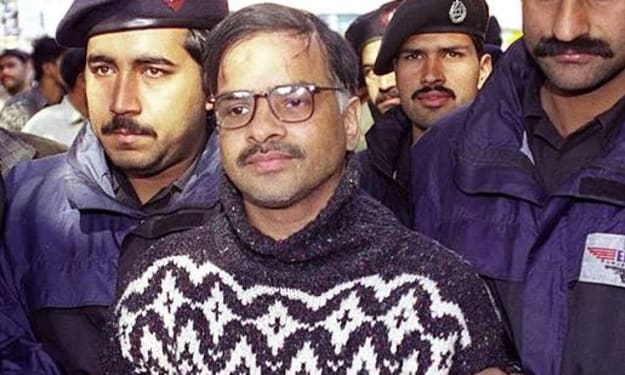
Javed Iqbal Mughal stands as one of the most horrifying and prolific serial killers in modern history earning the grim distinction of being Pakistan's worst serial killer. Born around 1961 in Pakistan Iqbal came from a relatively affluent background. His family provided him with significant privileges early in life by his late teens his father had purchased a villa for him and gifted him a powerful 200cc motorbike. These luxuries would later become tools in his predatory schemes.In the early 1990s Iqbal's dark tendencies first came to light when he was arrested following allegations from one of his victims. He faced accusations of sexually abusing young boys luring them to his residence with promises of food money or shelter. However, the case did not result in lasting consequences—no formal charges stuck, and he was released. This brush with the law left a deep scar on Iqbal. He later claimed that the stress and humiliation his mother endured during his arrest and the surrounding scandal contributed to her suffering a fatal heart attack. Consumed by grief and rage Iqbal vowed revenge—not directly against the authorities, but against society itself. He declared his intention to inflict the same level of anguish on 100 other mothers by taking their sons' lives.
By Kure Garba6 days ago in Criminal
The Ken Childs Controversy: Inside a Private Investigator Scandal Involving Surveillance, Cybercrime Allegations
Los Angeles is a city built on stories. Some are scripted in movie studios. Others unfold quietly in courtrooms, investigative offices, and digital networks far from the spotlight.
By Shane Smith4 days ago in Criminal
Why Didn't Anyone Tell Us
Men, move along. This is not for you. This is for the women. I was forty-five when I began menopause. It is pretty young for that to be going on in a woman’s life, but I had undiagnosed PCOS, my entire life. Thank you to all the gynecologists I had seen my entire life. That in itself should encourage women to keep seeking second opinions, especially when you are not getting correct answers or any at all.
By Alexandra Grant6 days ago in Humans



Comments
There are no comments for this story
Be the first to respond and start the conversation.