
Natural creatures lose 50 species every day, but do you know how many new species are produced?
A species goes extinct roughly every 4 years, between 13 and 135 times the normal fossil record.

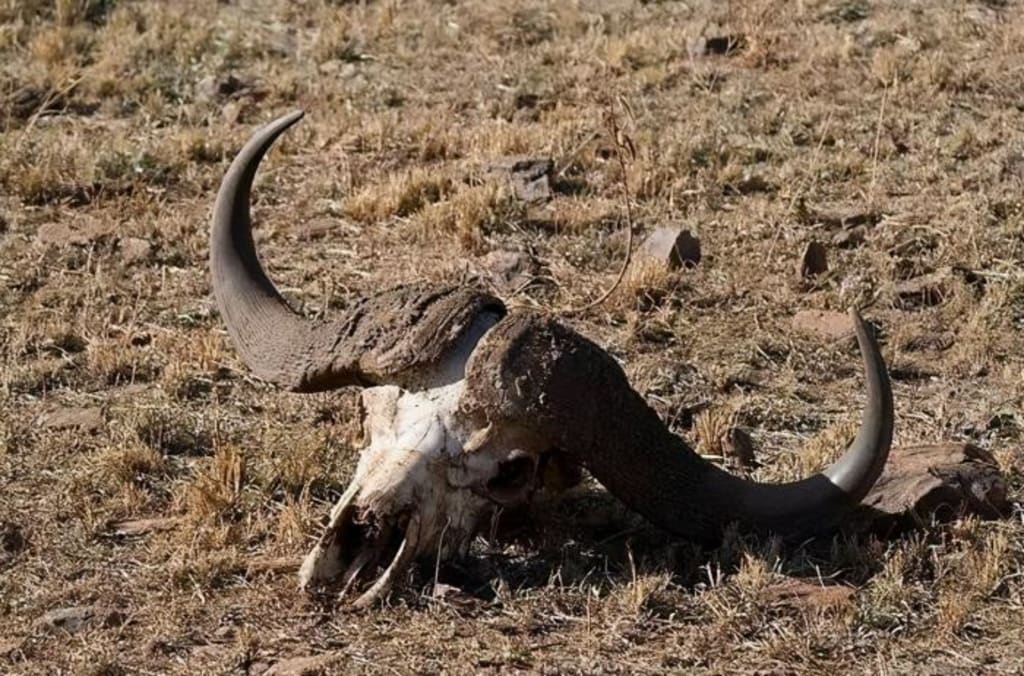
You must have heard a lot of news about natural creatures in the news, radio and other media. Thousands of species have gone extinct worldwide in recent centuries. In the past 400 years, the rate of species extinction has increased rapidly. A species goes extinct roughly every 4 years, between 13 and 135 times the normal fossil record.
From 1990 to 2020 in modern times, the rate of material extinction increased again because of the severe deforestation of tropical rain forests by humans. In the past 30 years, the world's species have decreased by 5% to 15%. On average, 5 to 150 species are lost every day, and the rate of species extinction has increased by 100 to 1,000 times.
With such an astonishing rate of species extinction, it is hard to imagine how many species will remain on the earth in hundreds of years? There is an old saying in China: "If the old does not go away, the new will not come."
The extinction and birth of species are both natural laws, but human beings have played a role in "disrupting the balance".
Over the centuries, tens of thousands of animals have become extinct, so are there new ones?
To understand this problem, we must first clarify what is the basis for the emergence of new species?
According to the theory of modern biology, there are two ways to generate new species, one is genetic mutation and the other is genetic recombination. Simply put, one is the result of natural selection and the other is the result of human intervention.
Natural selection will make the genes of organisms evolve in a predetermined direction (survival of the fittest). Of course, this process of evolution in a predetermined direction does not mean the formation of new species. Because the exchange of genes has always existed, and did not transcend the boundaries between species.
So if a new species wants to form, the most important sign is isolation. Isolation is a necessary condition for the formation of a new species.
Reproductive isolation is a sign of the formation of new species, and once the mutation occurs, the species will be reproductively isolated from the original species. Then congratulations to this creature, it has become a new species on earth.
All in all, the formation of a species is not out of thin air, but biological evolution.
In hundreds of years, how many new species have been created on the earth?
Knowing the basis for judging speciation, then we know how to breed new species. Since modern times, humans have created many artificial "new species" through genetic technology.
For example, several of the most famous genetically modified animals, spider sheep, fluorescent mice and so on. Their genes have been tampered with, so they take on the "characteristics" of many different species.
For example, the spider sheep, which produces half-span goat milk, can produce silk equivalent to the amount of silk spun by 100 spiders. This is faster than raising spiders and more valuable than simply raising goats.
The same is true for fluorescent mice. People have introduced the green fluorescent protein gene into the mouse genome through genetic technology. Livestock mice have acquired fluorescent properties, producing green fluorescence under violet light, which is something that cannot be achieved by the species of mice in nature.
Of course, in addition to these magical qualities, these GMOs also have one of the biggest features - reproductive isolation. Animals such as fluorescent mice and spider sheep cannot reproduce with the original species due to different genes.
So they have species segregation, and from a biological point of view, they are also "new species".
Of course, if such genetic experiments are not regulated, it will cause a "genetic disaster", and the natural world will be even more terrifying. Therefore, human beings should be cautious and strictly control genetic technology.
So the end result is that humans have created dozens of "new species" for decades, but these new species are difficult to survive, so they all disappear quickly.
While creating "new species", human beings should pay more attention to protecting the development of the diversity of today's species. The average species exists in nature for 1 million years, but the emergence of humans has greatly shortened this period of time.
What are the consequences of human intervention? You can discuss together in the comments section!
About the Creator
dardani lennon
The question mark is the key to any science
Keep reading
More stories from dardani lennon and writers in FYI and other communities.
Magnetar VS pulsar who is more powerful? What is the difference between a pulsar and a magnetar?
There are all kinds of celestial bodies in the universe, and magnetars and pulsars are very popular. We have always wondered which of them is more powerful. Let's talk about it today. Both magnetars and pulsars are a type of neutron star, and both are stars with a mass between three and eight times that of the sun. It was formed after the supernova explosion occurred due to the rapid collapse of the interior due to the exhaustion of fuel in the later years of its demise. However, there is a huge difference between the two celestial bodies.
By dardani lennon3 years ago in FYI
3 Impossible Planets That Defy the Laws of Astronomy
For as long as humans have looked up at the stars, we’ve tried to make sense of our place in the universe. We’ve found thousands of exoplanets orbiting distant suns, and we thought we had a pretty good handle on how they formed.
By Areeba Umair5 days ago in FYI


Comments
There are no comments for this story
Be the first to respond and start the conversation.