Latest Stories
Most recently published stories in FYI.
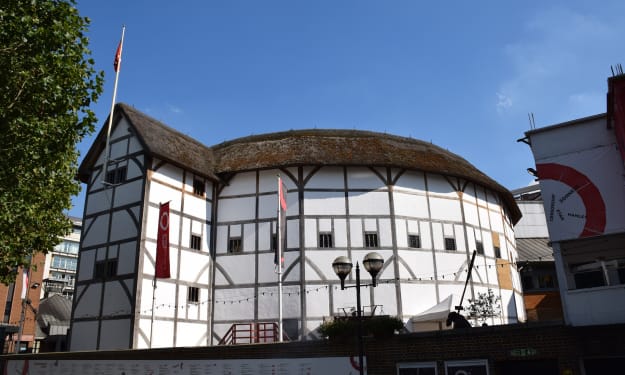
Thou, Thee, Thy: Shakespeare and Modern English
Many people find reading Shakespeare difficult. Students in particular dread units on “Romeo and Juliet” or “Julius Caesar” in their English classes. Sometimes, Shakespeare seems to have been writing in an entirely different kind of English from what we speak today. Some might go as far as claiming that he writes in “old” English.
By Haley Keller5 years ago in FYI
Claims of animal longevity are ridiculous.
We want stories about animals with a lifespan that’s way longer than humans or possibly even immortal. That’s exciting, almost magical. Of course you don’t have time to actually track an animal that long, so you’ll need to come up with some rationale for your declarations. Even if they don’t make sense.
By Buck Hardcastle5 years ago in FYI
How a butterfly defeated the powerful French Empire
To add some more depth to the the story and lore of Le Papillion, The Butterfly, that the world itself did not know but some of the facts are widely known as world history, I bring these facts to you as pieces of the puzzle that might make the current world make sense to you from out of the past world. This is how a butterfly defeated a tyrant and set the world free from his tyranny. Napoleon Bonaparte was a general in The French Army who declared himself Emperor of France. Some very famous words of his inspired his troops and there love of their native land. Napoleon himself and all the others may not have known, at the time, what all his words equaled. They were simply spoken and added to and added to. One of his famous quotes was "An army marches on its stomach ...Victory belongs to the most persevering...Glory is fleeting but obscurity is forever...Until you spread your wings you'll have no idea how far you can fly...If you want a thing done well do it yourself...Impossible is a word found in the dictionary of fools." The army on its stomach and the how far you can fly quotes by him remind me of the butterfly. The caterpillar marches on its stomach, it's long road to the leaves of plants and trees take perseverance to get to and then it's transformation into the beauty of the butterfly. After all the work of the caterpillar it's earns the freedom to fly and the faster mobility of flight. That keeps them more likely out of harms way as well. Napoleon's words so inspired Jacques MacDonald that MacDonald was a faithful follower and believer in the greatness of Napoleon. Another thing Napoleon said is, "Who is that man? Does he think he's God? Well he is not God." when speaking about a man and group of people he wanted to dominate into submission. Napoleon then sent one of his General's into a fight against me, he sent him after my ancestors and so he essentially attacked me as well. Bonaparte said "Then this will be his waterloo." He meant this will be his toilet, his latrine and he sent Jacques MacDonald to dispatch the news that Napoleon himself was unwilling to concede and had predicted French victory in the battle. Well Jacques and the French forces were defeated in that battle in 1813. This led to Napoleon's banishment and exile to Elba in 1814.
By James M. Piehl5 years ago in FYI
How do Electric Radiators Work?
Not all homes have access to mains gas – there are many properties up and down the united kingdom that need to keep warm by other means, either because they’re out on a limb or in an isolated part of the country. While LPG and oil boilers are common solutions, it can leave you at the mercy of your supplier, so what’s the simplest alternative? Of the two.2 million households in Great Britain that use electric heating, more and more are turning to electric radiators because of the answer, but despite that fact, misconceptions about ‘going electric’ still unfortunately persist. Don’t get trapped during a cycle of conflicting opinions – this guide will provide you with everything you would like to understand about electric radiators and bust some myths within the process.
By Sanjuana Cuellar5 years ago in FYI
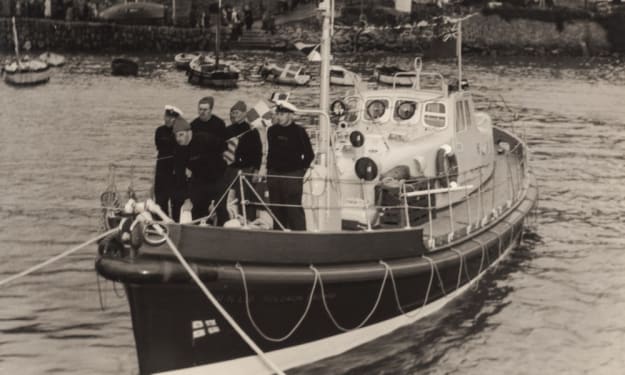
The Penlee lifeboat disaster, 1981
The Penlee lifeboat disaster of 19th December 1981 brought home to everyone who sets sail around the coasts of Great Britain just how much we owe to our lifeboat crews. They are all unpaid volunteers whose equipment is paid for entirely by public donations. They give their time, and sometimes their lives, in selfless devotion to their fellow seafarers.
By John Welford5 years ago in FYI
The Pig War of 1859
The Pig War of 1859 scarcely deserves to be called a “war” at all. Only one shot was fired, which accounted for the aforementioned pig, but the rest of the affair was a matter of threats and gestures, although it was not fully resolved for another thirteen years.
By John Welford5 years ago in FYI
Generation Z – The Trendsetters of Digital Communication
Generation Z grew up with technology and they are good at it. I was once texting my little cousin and he sent me a series of emojis combines in a systematic form. I didn't understand what he was trying to tell me and I am a millennial. Generation Z's way of communicating is a lot different from how we millennials communicate. It almost feels like they came up with their own language with the complex use of ever-growing emojis, text faces, stickers and GIFs.
By Mahesh Rathod5 years ago in FYI
Oh, You Didn't Know
We've all been treated to some of the biggest names in entertainment history in the form of television series we fell absolutely in love with. One of those series, for myself at least, was The Big Bang Theory. My second biggest television addiction, until it ended after its tenth season, was, of course, Friends. Let's face the facts, the networks found a formula that works. There's no denying that the twenties to mid-thirties formula of five to six young and attractive people who are tight and have chemistry with one another works. It's been working now since the middle of the 1990s.
By Jason Ray Morton 5 years ago in FYI
Meeting History
I always have had a love affair with history, but not just the generic history we were taught in school when I was younger; the real history that could only be found with loads of research. I am talking about old fashioned, go to the library, search through codexes and microfiche, reading dusty encyclopedias, and getting permission to look at even dustier newspapers. Real research! The only other real history that can be found is, if you are lucky enough to find someone who actually lived it and willing to share it with you!
By Phyllis L Phillips-Clower 5 years ago in FYI