
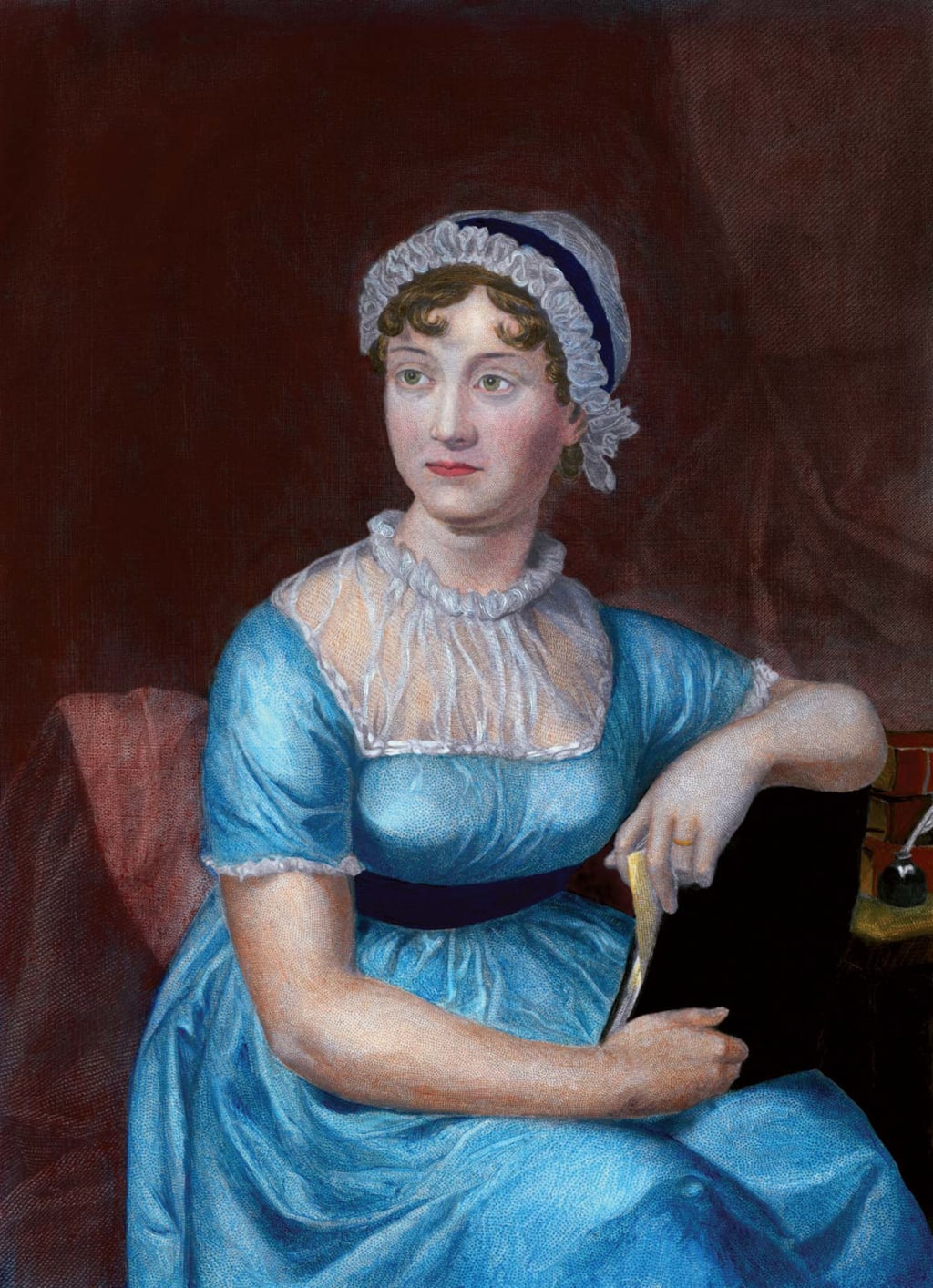
Jane Austen, a parson’s daughter who grew up in quiet rural Hampshire in the 18th century, is one of England’s most acclaimed novelists. She originally started writing to amuse herself and to entertain her family, who enjoyed reading aloud to each other. Although Jane’s books sold steadily during her lifetime, it was not until the Victorian period that she was recognised as a great author. By the 20th century her reputation had reached cult status and today a thriving commercial industry has grown out of her fame – a fact that would probably have astonished and amused Jane.
Jane Austen’s life was saved by her cousin
In 1783 Jane’s parents, the Revd George Austen and his wife Cassandra, decided to send Jane’s sister, also called Cassandra, to Oxford with her cousin Jane Cooper, to be tutored by a Mrs Ann Cawley. This was probably to reduce Mrs Austen’s workload, for as well as caring for five boys of her own she had to look after several boys who lived at the rectory while being tutored by her husband.
Jane, then aged seven, was devoted to her sister and would not be separated from her, so she went to Oxford as well. A few months later Mrs Cawley moved house to Southampton, taking the young girls with her. While there Cassandra and Jane became very ill with what was then called “putrid sore throat” – probably diphtheria [a potentially fatal contagious bacterial infection that mainly affects the nose and throat].
Jane was so ill that she nearly died, but Mrs Cawley, for some inexplicable reason, made no attempt to alert her parents. The young Jane Cooper took it upon herself to write and inform her aunt that Jane’s life was in danger. Without delay Mrs Austen and her sister Mrs Cooper set off for Southampton to rescue their daughters, taking with them a herbal remedy that would supposedly cure the infection.
The Austen sisters recovered under their mother’s care at home but tragically Mrs Cooper caught the infection and died soon afterwards at her home in Bath. The three girls never returned to Mrs Cawley.
Without her cousin’s timely intervention Jane Austen would almost certainly have died and the world would have been deprived of her outstanding talent.
Jane Austen had a little-known brother
The first biography of Jane Austen, which was written by her nephew James Edward Austen-Leigh in 1869, gives the impression that she had only five brothers: James, Edward, Henry, Frank and Charles. There were, however, six sons in the Austen family – George was the second child of Revd Austen and his wife. He was also largely omitted from family memoirs.
George, who was born in 1766, suffered from epilepsy and learning difficulties and was probably deaf too. For this reason he did not live with his family – he was instead looked after by a family who lived in the village of Monk Sherborne, not far from Steventon Rectory where Jane was born and where she grew up.
The Austens made financial provision for George and visited him regularly, but he was not truly part of their lives. Apart from a few early letters that mention George and reveal his parents’ concern for him, he was not mentioned in later correspondence or in any of Jane’s letters.
The Austens clearly cared about George and they perhaps felt that he would better receive the attention he needed living quietly with another family than in the overcrowded rectory, which was also home to several of Revd Austen’s pupils.
George died at Monk Sherborne on 17 January 1838 at the age of 71. He lies in an unmarked grave in the churchyard of All Saints Church.
Jane Austen was partial to a Bath bun
Jane became fond of Bath buns (or ‘bunns’) while staying, and later living, in Bath. These large, rich cakes, which were similar to French brioche bread, were served warm and soaked in butter. The Austen family ate theirs for breakfast (traditionally 10am in the Georgian period), with tea or coffee. Some bakeries, including the famous Sally Lunn’s Bakery in North Parade, delivered these buns to their customers warmed and ready to eat.
About the Creator
A Failed Artist, A Disillusioned Poet, An Underpaid Game Show Host
I took my son and niece to Gori, a small town in Georgia where Joseph Stalin was born. They talked me into visiting the Stalin's Museum, the largest in the post-Soviet space. I had resisted going there because I just can't stand the monster and know enough about him, or so I thought.
By Lana V Lynx20 days ago in FYI
On National Cheese Lover’s Day, Don’t Feel Bleu—Celebrate the Curds That Bind Us
January 20th rolls around every year with a simple but powerful message: don’t feel bleu, throw a feta, and absolutely act capriciously if cheese is involved. National Cheese Lover’s Day is the perfect excuse to lean into one of humanity’s oldest and most beloved foods. Whether you’re reaching for cheddar, asiago, fontina, or something that smells questionable but tastes incredible, this is a gouda day to celebrate it all.
By Lawrence Lease6 days ago in FYI
Affection and Healing for Yourself
During the night of the last quarter moon, I gathered my ritual supplies. I carefully handled the chunk of black tourmaline that would protect me from your overall negative and narcissistic energy. I carefully walked the house with my stick of selenite in hand, asking the universe to cleanse our working space.
By Alisha Wilkins ✒️🦋🖋️6 days ago in Fiction


Comments
There are no comments for this story
Be the first to respond and start the conversation.