
How to Choose the Right Checkweigher Supplier for Your Production Line: A Comprehensive Guide
In this guide, read about how to choose the right supplier for your production line

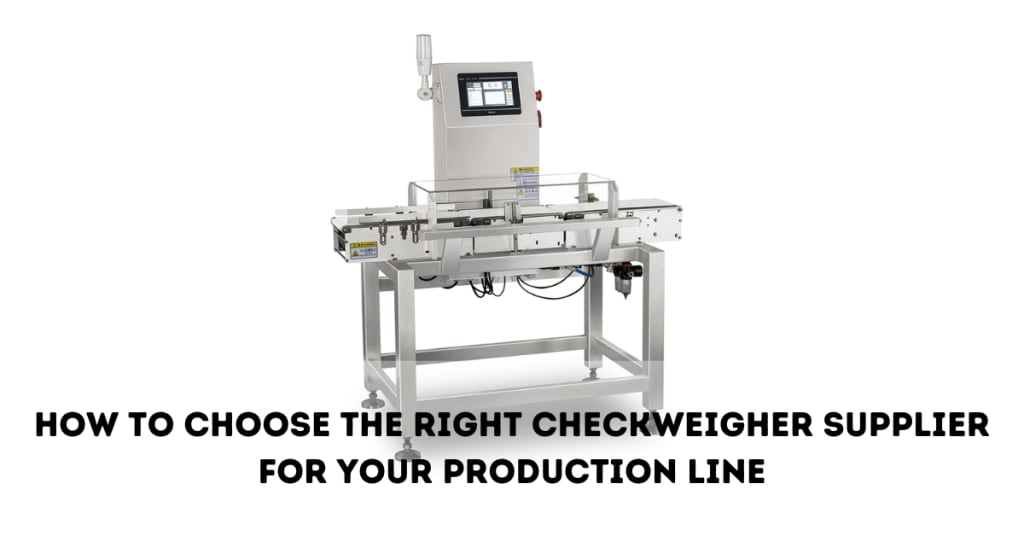
Checkweighers are indispensable tools for maintaining product quality, minimizing waste, and ensuring compliance in industries like food and beverage, pharmaceuticals, and logistics. However, selecting the right checkweigher supplier is just as critical as the equipment itself. A reliable supplier ensures seamless integration with your production line, long-term support, and adherence to industry standards.
This guide breaks down 10 essential steps to evaluate checkweigher suppliers, avoid costly mistakes, and secure a partnership that enhances your operational efficiency.
Step 1: Define Your Production Requirements
Begin by outlining your specific needs:
Product type and weight range (e.g., lightweight pharmaceuticals vs. heavy packaged goods).
Production speed (units per minute) to match the checkweigher’s throughput.
Environmental factors (humidity, temperature, hygiene standards) that may affect equipment performance.
Pro Tip: Create a checklist of must-have features, such as stainless steel construction for food-grade environments.
Step 2: Research Reputable Checkweigher Suppliers
Use targeted searches like “checkweigher supplier for [your industry]” to shortlist candidates. Prioritize suppliers with:
Proven industry experience (e.g., 5+ years serving pharmaceutical or food sectors).
Certifications (ISO 9001, GMP, HACCP) relevant to your field.
Case studies or testimonials demonstrating successful installations.
Step 3: Evaluate Equipment Accuracy and Speed
Accuracy and speed are non-negotiable. Ask suppliers:
What is the measurement precision (e.g., ±0.1 grams)?
Can the checkweigher handle your line’s maximum speed without bottlenecks?
Does it include automatic rejection systems for non-compliant products?
Red Flag: Suppliers who avoid sharing detailed performance data.
Step 4: Prioritize Customization Options
Off-the-shelf solutions rarely fit all needs. Ensure the supplier offers:
Modular designs to adapt to future production changes.
Integration capabilities with existing machinery (e.g., conveyors, labeling systems).
Software customization for real-time data reporting and analytics.
Step 5: Assess Technical Support and Maintenance
Downtime costs money. Verify the supplier provides:
24/7 customer support for urgent issues.
On-site training for your team.
Preventive maintenance plans to extend equipment lifespan.
Key Question: “What’s your average response time for technical emergencies?”
Step 6: Compare Pricing and Total Cost of Ownership (TCO)
While upfront costs matter, consider long-term expenses:
Energy efficiency (low power consumption models).
Spare parts availability and pricing.
Warranty coverage (aim for at least 2 years).
Tip: Use a TCO calculator to compare suppliers objectively.
Step 7: Verify Compliance and Certifications
Regulatory compliance is critical. Ensure the checkweigher meets:
Industry-specific standards (e.g., FDA for food, EU directives for pharmaceuticals).
Safety certifications (CE, UL).
Calibration traceability to national or international standards.
Step 8: Review Customer Feedback and References
Testimonials and reviews reveal a supplier’s reliability. Look for:
Consistent praise for on-time delivery and post-sales service.
Case studies highlighting problem-solving (e.g., resolving integration challenges).
Willingness to share client references upon request.
Step 9: Request a Live Demo or Trial
A demo allows you to:
Test the checkweigher’s performance with your actual products.
Evaluate user interface intuitiveness.
Identify potential integration snags before purchase.
Insight: Suppliers confident in their equipment will gladly offer trials.
Step 10: Scrutinize Warranty and After-Sales Terms
Before signing, clarify:
Warranty coverage (parts, labor, software updates).
Service-level agreements (SLAs) for repairs.
Costs for extended support post-warranty.
Checklist for Choosing a Checkweigher Supplier
✅ Aligns with your production specs and industry.
✅ Provides verified accuracy and speed data.
✅ Offers robust technical support and training.
✅ Complies with regulatory standards.
✅ Transparent pricing and warranty terms.
Why Partner with a Specialized Checkweigher Supplier?
Tailored solutions vs. generic equipment.
Expertise in troubleshooting complex production environments.
Future-proofing through scalable technology.
FAQs
Q: Can one checkweigher handle multiple product types?
A: Yes, if the supplier offers quick-changeover systems and programmable presets.
Q: How often should checkweighers be calibrated?
A: Depends on usage, but quarterly calibration is typical for high-precision industries.
Q: What if my production line expands?
A: Choose a supplier with modular designs to easily upgrade capacity.
Conclusion
Selecting the right checkweigher supplier requires balancing technical specs, compliance, and long-term support. By following this guide, you’ll minimize risks and invest in a solution that boosts efficiency, ensures compliance, and scales with your business.
Ready to take the next step? Download our free Checkweigher Supplier Evaluation Template or contact our experts for personalized recommendations.
About the Creator
John Lee
My Name is John Lee and I am a writer with a passion for exploring diverse topics. From thought-provoking essays to engaging stories, I try to bring curiosity and creativity to every piece.
A Failed Artist, A Disillusioned Poet, An Underpaid Game Show Host
I took my son and niece to Gori, a small town in Georgia where Joseph Stalin was born. They talked me into visiting the Stalin's Museum, the largest in the post-Soviet space. I had resisted going there because I just can't stand the monster and know enough about him, or so I thought.
By Lana V Lynx26 days ago in FYI
Who Could Be The Next Leader of Iran
As the cameras roll and analysts sharpen their talking points, the United States appears to be quietly assembling the pieces for a major military move in the Middle East—one that, if carried through, could aim directly at the heart of Iran’s political system. Whether this buildup ultimately leads to the removal of Ali Khamenei, Iran’s Supreme Leader, remains uncertain. Even senior officials in Washington admit as much. But the harder question, and the one that matters most, isn’t how such a move would happen. It’s what comes after.
By Lawrence Lease3 days ago in FYI


Comments
There are no comments for this story
Be the first to respond and start the conversation.