
How to Build a Stock Trading App In 2023
Stock Trading App Development


How Do Stock Trading Apps Work?
Stock trading apps let users buy and sell equities. Users can track the market on their smartphones and invest long-term and short-term. These platforms let brokers secure stock exchanges and profit from trades. Trade has two main types:
Buy-and-sell stock trading
Ripple, Bitcoin, Litecoin trading.
Remember that launching a stock trading software requires licenses and authorization according to country laws.
Stock Trading App Monetization
Initially. Before launching the app, decide on an execution approach. When constructing an app is its entire purpose, you must have a clear plan for making money from it. There are numerous business model and monetization alternatives.
Selling and purchasing stocks and managing investment portfolios should be straightforward with your stock trading mobile app. So, commission will be your main revenue source. It involves charging interest on stock, user, and deposit transactions.
You can also use freemium. In this instance, all users can use the app's core functions. A few premium-only services will be available. In-app ads, paid admissions, and other revenue sources are also available.
Things to Include in Your Stock Trading Mobile App
A great stock trading app's features are crucial. So, selecting the right features is vital to building a stock trading app. List all your app's features and choose which ones to keep based on customers' journeys and expectations.
Here's a list of stock trading app must-haves:
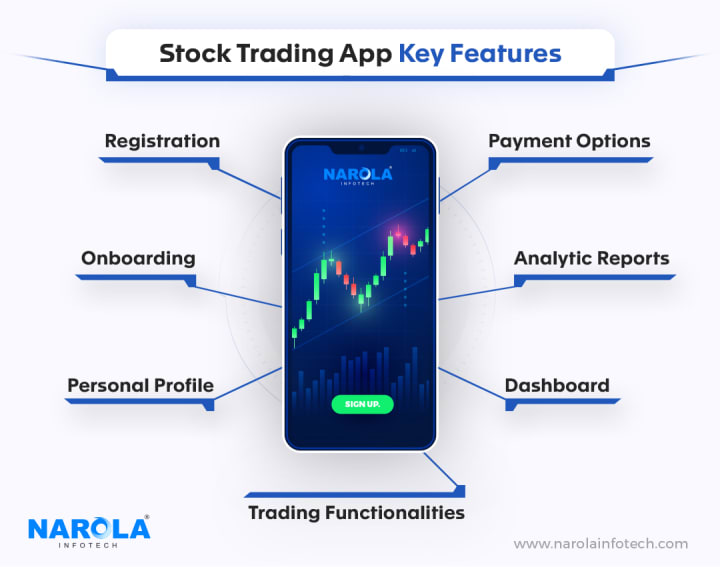
1. Registration
Know and remember your consumers to provide the best services. Hence, a login/sign-up is required to capture their information and allow them to safeguard their app operations. Make the registration form quick and easy. This involves a person's financial information, so data security is important. Provide an appropriate authorisation mechanism such phone codes, ID checks, social network integration, etc. To avoid any issues, explain the "Terms and Conditions."
2. Onboarding
Explaining the app's direction to users is crucial. Users won't be confused or frustrated if you explain how the app works right away.
3. Personal Profile
Most of the personal profile information is on the signup form. But, the personal profile page is crucial for getting to know your users. It includes language, residential, economical, and other preferences.
4. Dashboard
Users' portfolios and actions are managed through dashboard. The trader's balance, stocks, and options are listed. The dashboard has several numbers, charts, sections, and data that is updated online. Integrate a straightforward, easy-to-use page with the UX designer.
5. Trade Functionalities
This app part should include real-time market updates, growth overview, firm biographies, and other information to help consumers make decisions.
6. Analytics Reports
This tool allows users track their performance with market information and analytics. To keep users interested, your app might deliver auto-generated reports daily or weekly.
7. Payment Options
Payment options are essential for selling and buying stocks. Make sure these payment mechanisms are safe to protect financial and personal information.
To make your app more interesting, include these features:
- Web optimization
- Trends and postings in stocks
- Easy search with sorting and filtering
- Quick updates via push notifications
Stock Trading App CTA Legal Considerations
When creating a stock trading app, legal issues must be considered. Some key ones:
Compliance with securities laws: Stock trading apps must comply with securities registration, disclosure, and reporting rules. The Securities Act of 1933, Securities Exchange Act of 1934, and state securities regulations may apply depending on the jurisdiction.
AML and KYC: Your free stock trades app must comply with KYC and AML regulations, which may include validating users' identities and monitoring transactions for money laundering or other illicit conduct.
Privacy regulations: Your app should comply with privacy rules like the Global Data Protection Regulation (GDPR) and the California Consumer Privacy Act (CCPA), which require companies to get user consent before collecting and processing personal data and to give users access to their data.
Terms of service and user agreements: Stock trading apps should have clear and enforceable terms of service and user agreements that specify fees, liability limits, and dispute resolution mechanisms.
Payment processing: A stock trading app must comply with payment processing laws and regulations, including fraud prevention and consumer protection.
Intellectual property: Stock trading apps must protect others' patents, trademarks, and copyrights.
Security: Secure user data via strong passwords, encryption, and other techniques.
To ensure your stock trading app complies with all rules and regulations, consult legal experts and compliance professionals.
Stock Trading Mobile App Development Process
After deciding on the app's key features, a reliable mobile app development company can help implement the idea. It's the same method for developing any smartphone app. But, a summary:
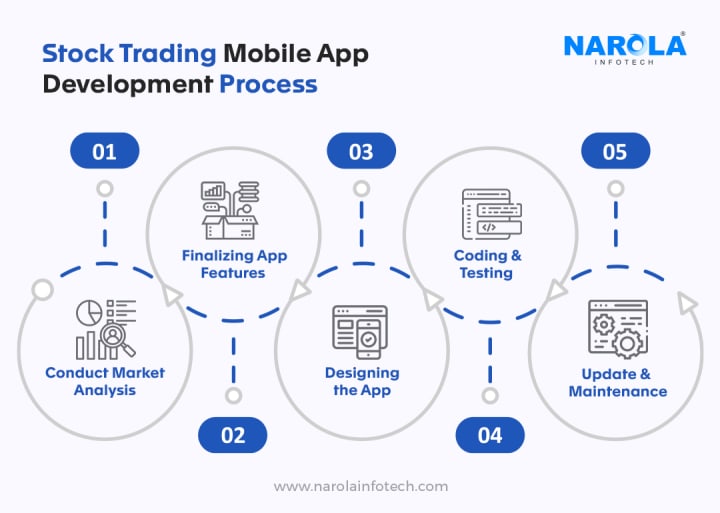
Step 1. In-Depth Market Study
Market research should be your first step when developing an app idea. To make your app idea competitive, know your product and target. Identify your competition and compare their strengths and shortcomings to yours to develop superior strategies. It's best to get expert advice.
Step 2. Complete the App's Features
Consider of the most critical and unique features your stock trading app should offer. Users demand basic functionality and your business needs to stand out. Payment APIs and dashboards should never be overlooked.
Step 3. Make Your App
Your stock trading app's design is critical, so make sure the designers don't goof up. For optimum results, get a solid UI/UX based on user perception.
Step 4. Coding and Testing
App development entails coding in your tech stack. Numerous organizations construct stock market web apps with Node and JavaScript. But, you can choose the tech stack based on your preferences and market situations. After coding, test your app.
We've written many blogs about MVP benefits. First creating an MVP might save money and time. Make sure your MVP or app is bug-free before launching.
Step 5. Improve Based on User Feedback
After your app launches, work continues. Stakeholders often neglect the need for improvement and updates. Depending on customer feedback, update and improve your app. To stay competitive and satisfy customers, Thai is essential.
We detailed the mobile app development process in a previous blog. If you want to understand this better, read this blog.
Create a Stock Trading App using Narola Infotech
We understand as a New York mobile app development business that producing an app in the current competitive market requires extra effort and experience. Narola Infotech's 350+ IT experts have 17 years of experience designing solid software solutions for multinational clients. We've satisfied over 1500 clients in 50+ countries.
You found everything, right? Our staff will deliver the greatest outcomes for your business. We'll contact you within 24 hours if you fill out the form below!
About the Creator
Narola Infotech
Narola Infotech is one of the leaders in IT outsourcing services. We are proficient in providing Web Application Development, Automation, Machine Learning, Mobile Apps Development, & Digital Marketing, etc.
Keep reading
More stories from Narola Infotech and writers in FYI and other communities.
5 Reasons Why Java Development is Best for Fintech Industry!
Businesses are now using Java application development Services widely in the fintech industry. And rightly so! It offers a safe and secure framework for developing fintech apps with strong architecture, clean code, and excellent unit testing coverage.
By Narola Infotech3 years ago in Lifehack
3 Impossible Planets That Defy the Laws of Astronomy
For as long as humans have looked up at the stars, we’ve tried to make sense of our place in the universe. We’ve found thousands of exoplanets orbiting distant suns, and we thought we had a pretty good handle on how they formed.
By Areeba Umairabout 5 hours ago in FYI
Do You have a Support Network?
Life is harder when you’re on your own. Human beings are social creatures, and we usually feel better when we have support from a strong social network around us. For most people, it’s our families that hold us together like glue.
By Elizabeth Woodsabout 12 hours ago in Psyche


Comments
There are no comments for this story
Be the first to respond and start the conversation.